A diesel fired chiller runs entirely on High Speed Diesel no steam supply, no gas grid, no dependence on the electricity network. For industries in remote locations, facilities with unreliable grid power, or plants where large electric chillers would overload contracted demand, it is one of the most practical cooling solutions available in India.
What Makes Diesel Different
When most people in India think of diesel-powered industrial equipment, they think of generator sets machines that convert diesel into electricity. A diesel fired absorption chiller does something fundamentally different. It burns diesel directly inside the machine to generate heat, and that heat drives a lithium bromide absorption refrigeration cycle to produce chilled water. Electricity plays almost no role.
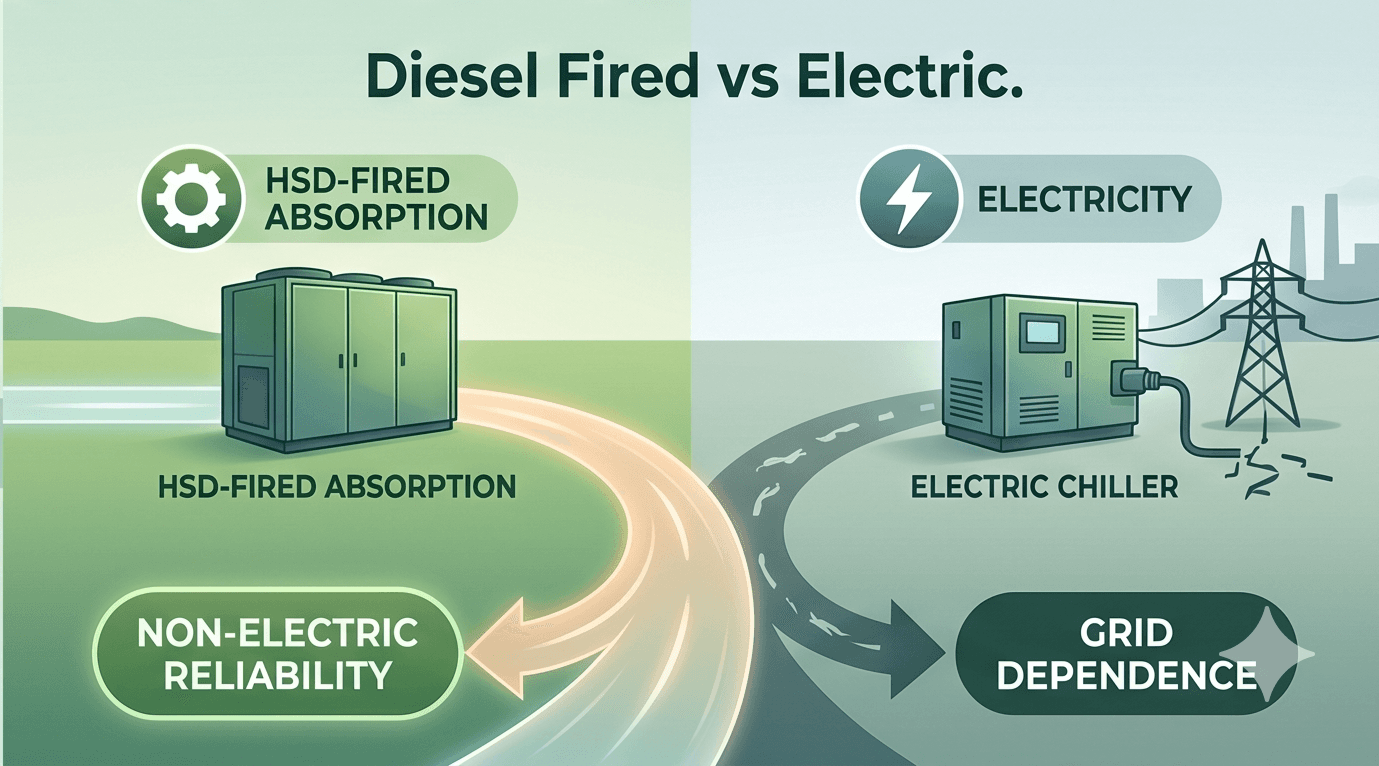
This distinction matters operationally. The machine is not dependent on a reliable power supply, an existing steam infrastructure, or access to a piped gas network. A diesel supply line, a cooling tower, and a chilled water circuit are all it needs to deliver cooling at capacities ranging from 66 TR to over 3,300 TR from a single unit.
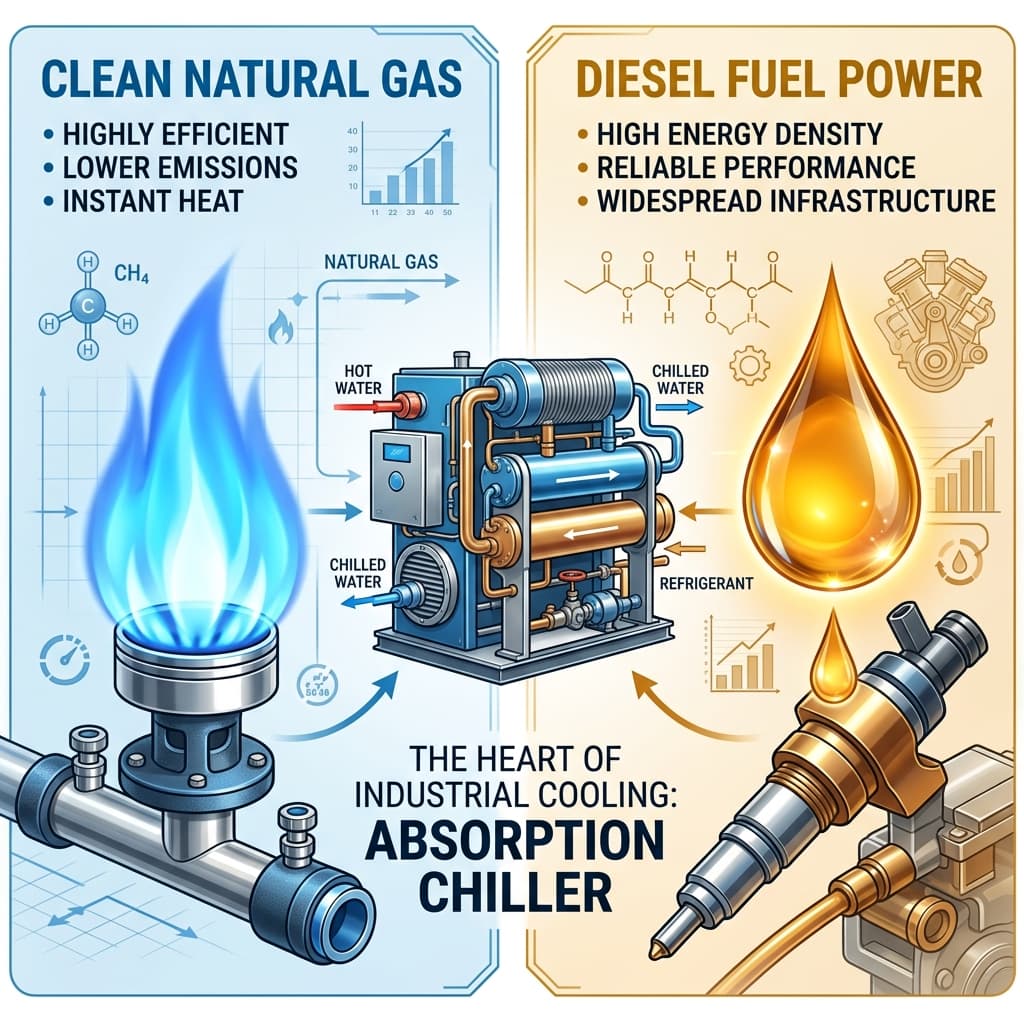
BROAD India's direct-fired chiller range accepts two fuel types from a dual-fuel burner: light fuel oil (High Speed Diesel or HSD) and natural gas. The same machine body can operate on either, which is significant for Indian industrial sites where gas availability may be planned but not yet commissioned.
How a Diesel Fired Absorption Chiller Works
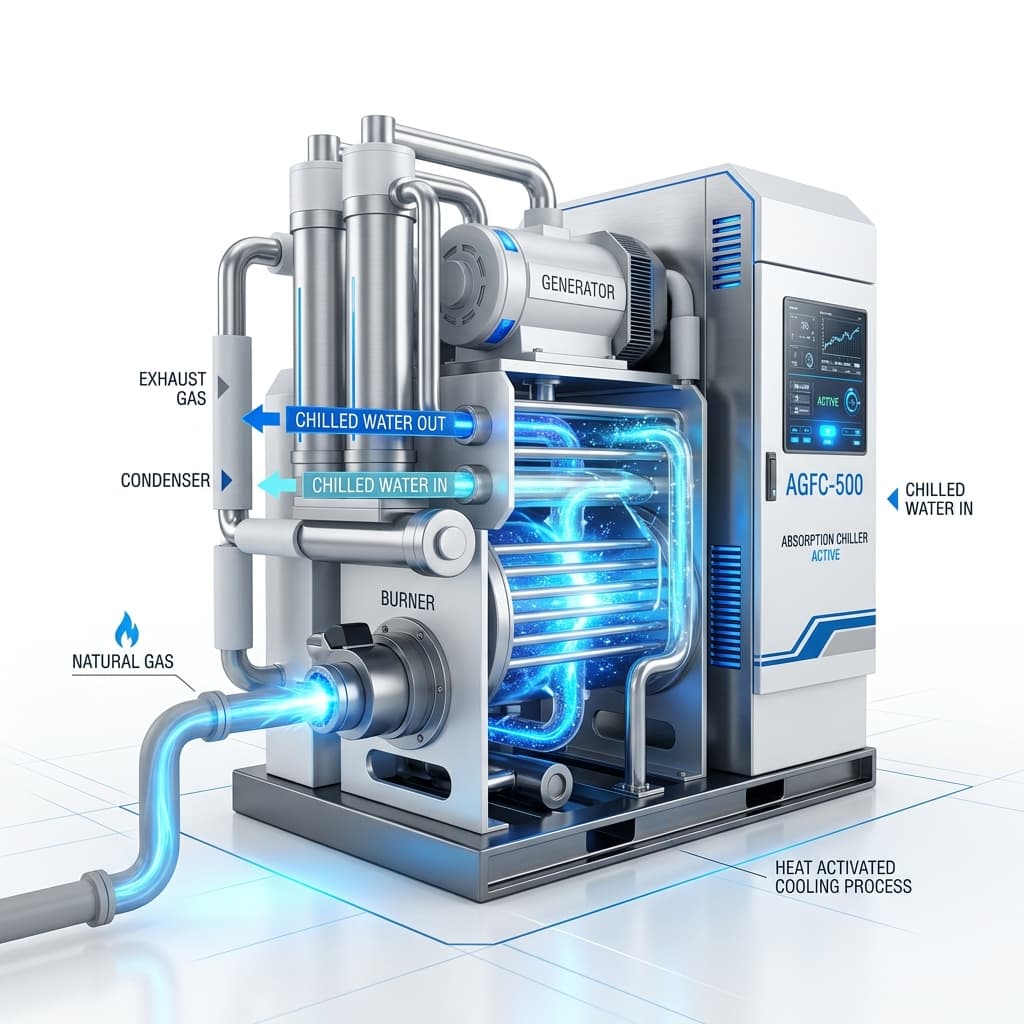
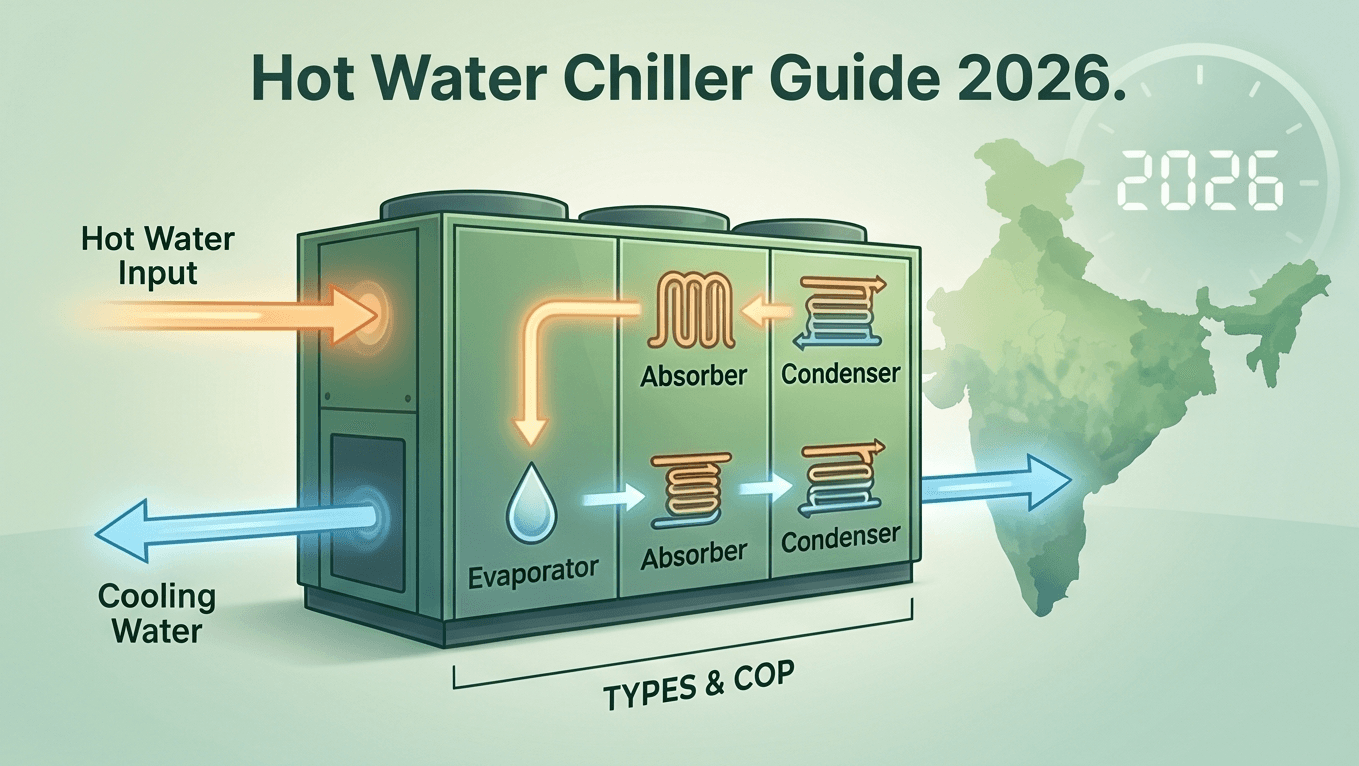
The working principle is the same LiBr absorption cycle used in hot water and steam-fired machines with one difference at the energy input stage. Instead of receiving heat from an external hot water or steam source, the machine contains an integrated burner and furnace that combusts diesel directly inside the high-temperature generator.
The furnace temperature reaches 850 to 950°C at the combustion zone, generating a high-temperature flue gas that heats the LiBr-water solution in the generator to drive the absorption cycle. A double-effect configuration is standard in direct-fired machines: the heat generated is used twice first in a high-temperature generator and then in a low-temperature generator achieving a thermal COP of 1.0 to 1.4. This is meaningfully more efficient than a single effect machine, and the higher efficiency partially offsets the cost of diesel as a fuel input.
Flue gas exits at 200 to 250°C and can be ducted to an exhaust heat recovery unit capturing additional energy for hot water generation up to 60 to 65°C. This simultaneous cooling and heating output is what makes direct-fired chillers the foundation of CCHP (Combined Cooling, Heating and Power) configurations.
The Double Effect Advantage in Diesel Fired Machines
All of BROAD India's diesel fired direct-fired chillers operate on the double effect cycle. The COP of 1.0 to 1.4 means that for every kW of diesel energy consumed, the machine delivers 1.0 to 1.4 kW of cooling. In a well-maintained double effect machine at rated conditions, COP of 1.2 to 1.3 is typical.
Compare this to the thermodynamic chain for an electric chiller:
- Diesel burned in a power station electricity generated at ~35 to 40% efficiency
- Electricity transmitted through the grid 8 to 10% transmission loss
- Electric chiller consuming the electricity at COP 5.5 effective source-to-cooling efficiency: ~0.35 × 0.90 × 5.5 = 1.73
The diesel fired chiller at COP 1.2 looks less efficient on paper but this comparison ignores the cost difference between diesel consumed on-site and grid electricity delivered to the meter, and it ignores the fact that many Indian industrial sites cannot access large blocks of grid power at any price.
When a Diesel Fired Chiller Is the Right Choice
Remote Industrial Sites and Mining Operations
Many of India's industrial mineral processing, steel, cement, and chemical plants are located in areas where grid connectivity is limited or where drawing several megawatts of contracted electrical demand for cooling is impractical. In these settings, a diesel fired chiller provides industrial-scale cooling without grid dependence. Diesel supply logistics trucks, storage tanks, dispensing infrastructure are standard at any remote industrial facility.
Facilities with High Peak Demand Penalties
Large electric chillers are significant contributors to peak electrical demand the maximum kW drawn in any 15-minute period, which determines demand charges on Indian HT tariffs. A 500 TR electric chiller draws approximately 350 to 600 kW at full load. In Maharashtra and Gujarat, demand charges can add ₹400 to 600 per kVA per month to the electricity bill.
A diesel fired absorption chiller drawing only 15 to 25 kW of electricity eliminates this load entirely. For facilities in Mumbai and Ahmedabad already operating near their contracted demand limits, the absorption chiller avoids costly demand renegotiation with the DISCOM while delivering the required cooling capacity.
No Steam or Gas Infrastructure Available
A direct-fired chiller is the appropriate choice for any site that needs large-scale absorption cooling but does not have an existing steam boiler to spare or access to a piped natural gas or CNG supply. It is self-contained: the fuel supply and combustion system are integral to the machine.
This describes a large portion of India's second-tier industrial cities manufacturing clusters in Rajasthan, Madhya Pradesh, UP, and parts of Maharashtra and Gujarat where gas distribution networks are still developing.
Standby and Backup Cooling Reliability
For critical facilities hospitals, pharmaceutical plants, data centres, cold chain logistics cooling reliability during grid outages is not optional. A diesel fired absorption chiller, operated on the same diesel supply that runs emergency generator sets, provides cooling continuity independent of grid availability. The near-zero electrical draw of the absorption chiller also means it places minimal burden on the emergency generator's capacity.
Want us to build this for you?
Talk to our teamTechnical Specifications: What to Expect
Typical ranges for BROAD India direct-fired, double effect machines: Cooling capacity 66 to 3,300 TR; Thermal COP 1.0 to 1.4; Fuel input HSD or natural gas; Chilled water outlet 5°C to 15°C (standard); Electricity consumption 15 to 25 kW for pumps only (500 TR).
What Diesel Fired Chillers Are Not Good For
An honest assessment requires acknowledging where the technology is not the right fit:
- When grid electricity is cheap and reliable: In states with subsidised industrial tariffs below ₹6/kWh and stable supply, a high-efficiency electric centrifugal chiller with VFD will almost always have lower OPEX than a diesel fired absorption machine.
- When diesel supply is uncertain: Remote locations with reliable diesel logistics are strong candidates; remote locations where diesel delivery is erratic are not unlike electricity, you cannot top up diesel remotely when a delivery is delayed.
- When very low chilled water temperatures are required: Single effect machines cannot reach below approximately 5°C. Double effect direct-fired machines can reach -2°C in brine configurations, but process applications requiring -10°C or lower need a different refrigeration technology.
Indicative Pricing in India (2026)
Indicative project cost range (all-in): 100 to 200 TR: ₹2.0 to 3.5 crore; 300 to 500 TR: ₹4.0 to 7.0 crore; 600 to 1,000 TR: ₹7.5 to 12 crore; 1,000 to 3,300 TR: ₹12 to 35 crore.
All-in cost includes equipment, cooling tower, fuel system, piping, civil works, and commissioning. Operating cost depends heavily on diesel price at ₹90/litre HSD and COP 1.2, a 500 TR machine running 6,000 hours/year consumes approximately ₹5.5 to 6.5 crore of diesel annually. This is why diesel firing is most appropriate for sites where the alternative is high-cost grid electricity or no viable alternative exists not as a default first choice where gas is available.
Frequently Asked Questions
Conclusion
A diesel fired absorption chiller is not the right choice for every Indian facility the operating fuel cost is real and significant. But for the right application remote industrial sites, facilities constrained by contracted electrical demand, operations without steam or gas infrastructure, and critical-use facilities requiring off-grid cooling reliability it solves a problem that no electric chiller can.
The dual-fuel capability makes it a particularly prudent investment in Indian conditions, where natural gas availability is expanding steadily. A machine specified and installed as a diesel unit today can transition to gas firing as the city gas distribution network reaches the facility without equipment replacement.
Contact BROAD India at akshay@broad.net or +91 94278 51584 to discuss your facility's cooling and fuel supply conditions.
Performance figures and pricing are indicative based on 2026 Indian market conditions.
Ready to optimize your industrial cooling?
Contact BROAD India's technical team to discuss your facility's cooling requirements and evaluate if absorption technology is the right fit.
Contact Us Today