
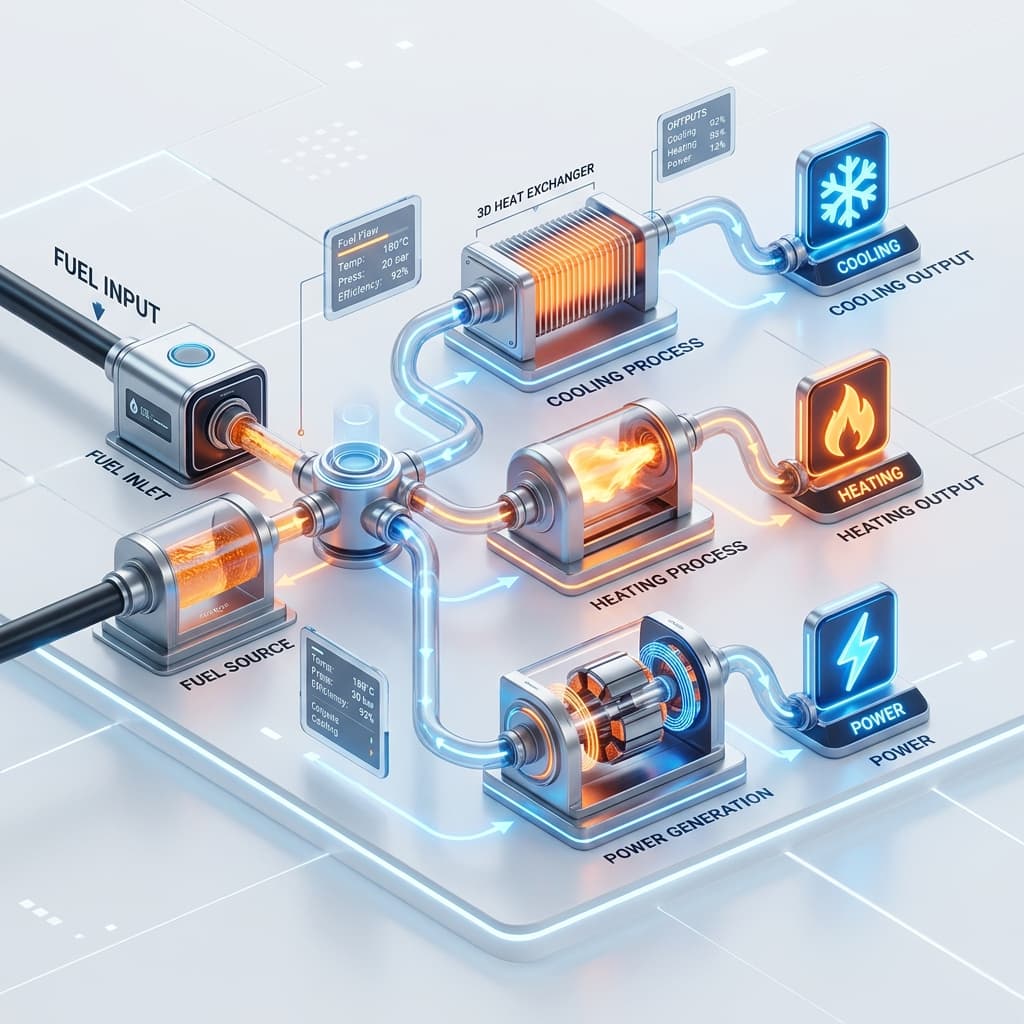
Direct Fired Chiller and CCHP: How Indian Factories Use Gas and Diesel VAM for Trigeneration
A single fuel input - natural gas or diesel - producing cooling, heating, and reduced power demand simultaneously. This is what trigeneration through a direct-fired absorption chiller delivers. For Indian industrial facilities paying separately for electricity, cooling, and thermal energy, it is one of the most efficient energy configurations available today.
The Problem with Treating Energy in Silos
Most Indian industrial facilities manage their energy in three separate silos: electricity, process heating, and HVAC cooling. Each silo has its own budget, its own vendors, and its own inefficiencies.
Combined Cooling, Heating and Power - CCHP - is the engineering solution to this silo problem. It integrates these three energy functions into a single system, extracting maximum useful work from every unit of fuel consumed.
What Is CCHP and Why Does a Chiller Drive It?
CCHP (Trigeneration) adds cooling to the standard heat-and-power mix. The addition of cooling is what makes a direct-fired absorption chiller the key enabling technology. Overall system efficiency reaches 70–85%, compared to 35–40% for electricity generation alone.
How a Direct-Fired Absorption Chiller Contributes to CCHP
- Chilled Water: Delivers water at 5–15°C for process cooling or air conditioning.
- Hot Water Recovery: Absorber circuit rejects heat at 45–60°C, perfect for laundry or process needs.
- Exhaust Recovery: A flue gas economiser captures additional energy at 60–80°C.
CCHP in Practice: Three Indian Configurations
1. Full Industrial CCHP
Gas engine + Exhaust-fired VAM. Common in Gujarat's petrochemical corridors and pharmaceutical clusters. Fuel utilization: 75–85%.
2. Commercial Co-gen
DG Set + Hot Water VAM. Popular in Delhi NCR IT parks and Mumbai hotels. Payback typically in 18–30 months.
3. Standalone Trigeneration
Direct-fired VAM producing chilled and hot water simultaneously. No engine required. Ideal for hospitals and food processors.
The Economics of CCHP at Indian Conditions
| Energy Need | Conventional (Separate) | CCHP (Direct-Fired VAM) |
|---|---|---|
| Cooling (400 TR) | ₹3.4 Cr (Electricity) | ₹1.4 Cr (Gas) |
| Hot Water (500 kW) | ₹60 Lakh (Gas boiler) | FREE (Recovery) |
| Demand Charges | ₹14 Lakh/year | ₹1 Lakh/year |
| Total Annual Cost | ₹4.14 Crore | ₹1.41 Crore |
Annual Saving: ₹2.73 Crore | Simple Payback: 28–35 Months
Frequently Asked Questions
Is it only for large industrial plants?
What if gas supply fails?
Does CCHP qualify for any government incentives in India?
Conclusion
CCHP through a direct-fired absorption chiller is the architecture that minimises total energy cost for any Indian facility needing both cooling and heating. Leaving the recovery potential uncaptured is leaving 20–30% of your fuel value on the table.
Explore CCHP Feasibility
Contact our engineering team to model the savings for your facility in Delhi, Mumbai, or Bengaluru.
Get a Technical StudyFrequently Asked Questions
What is a Vapour Absorption Chiller?
Can BROAD chillers run on waste heat?
Do you provide after-sales service in India?
Need Help With Your Cooling System?
BROAD India's engineering team can assess your facility's cooling requirements and recommend the most energy-efficient solution - from vapour absorption chillers to waste heat recovery systems.