
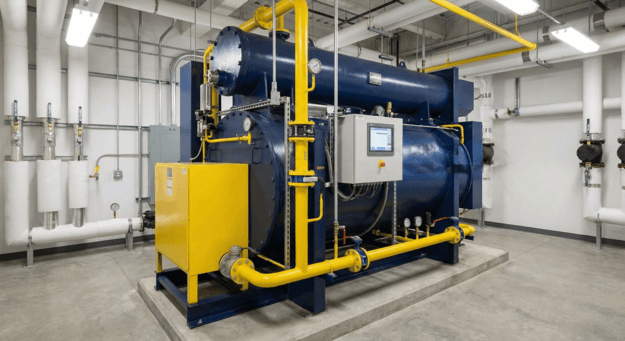
Direct Fired Vapour Absorption Chiller: When to Use Gas Instead of Electricity
Direct Fired Vapour Absorption Chiller: When to Use Gas Instead of Electricity
Quick Links: Gas vs. Electric Cost | Real Savings | Get a Quote
For facility managers battling rising energy costs, the direct - fired vapour absorption chiller offers a powerful solution: bypassing the electrical grid entirely. By understanding when gas economics beat electricity, facilities can unlock substantial operational savings.
What Makes Direct - Fired Different ?
Unlike VAMs requiring external steam or hot water, direct - fired vapour absorption chillers integrate the heat source directly. They burn natural gas, biogas, diesel, or fuel oil within the unit to drive the cooling cycle.
BROAD's direct-fired chillers achieve COP values of 1.2-1.3. This means every unit of fuel energy delivers significantly more cooling than burning fuel to generate electricity for an electric chiller.
When Gas Beats Electricity: The Economics
In industrial zones where electricity exceeds ₹8 - 12 per kWh, a 500 TR electric chiller costs ₹2, 400 - 3, 600 / hr to run.A direct - fired VAM costs ₹1, 750 - 2, 250 / hr using natural gasa 30 - 45 % reduction . Over 6,000 hours, this yields ₹40-80 lakhs in annual savings.
A 500 TR electric chiller adds ~1,000 kVA to your demand load.Direct - fired units consume under 50 kW for auxiliaries, reducing electrical demand by 95 % and saving lakhs in monthly fixed demand charges.
Direct - fired chillers operate independently of grid fluctuations.For pharmaceuticals and data centers, this reliability prevents costly production losses during outages without needing oversized diesel generators.
BROAD's Technology Leadership
- Low - NOx Burners: Clean combustion meeting strict environmental standards.
- Integrated Controls: Optimizes firing rates for high seasonal efficiency.
- Dual - Fuel Capability: Auto-switch between gas and diesel for security.
- Exhaust Recovery: Recovers 140-200°C exhaust for free hot water.
Real Results from Indian Facilities
Decision Framework: Gas or Electric ?
| Choose Direct - Fired When: | Choose Electric When: |
|---|---|
|
• Gas prices are favorable • High demand charges(> 30 % bill) • Grid is unreliable • Heating & cooling needed simultaneously |
• Electricity < ₹5 / kWh • No gas infrastructure • Seasonal / Low operating hours • Strict combustion permitting issues |
The Verdict
For facilities with natural gas access or high grid costs, direct - fired absorption cooling is often the optimal financial and environmental choice.BROAD's 30 years of experience ensures reliable, fuel-flexible cooling with attractive total cost of ownership.
BROAD India can analyze your fuel and electricity rates to calculate your precise savings potential.
Frequently Asked Questions
What is a Vapour Absorption Chiller?
Can BROAD chillers run on waste heat?
Do you provide after-sales service in India?
Need Help With Your Cooling System?
BROAD India's engineering team can assess your facility's cooling requirements and recommend the most energy-efficient solution - from vapour absorption chillers to waste heat recovery systems.