| Specification | DX Chiller | Absorption Chiller |
|---|---|---|
| Power Source | High Electricity | Waste Heat / Gas / Steam |
| Refrigerant | HFCs / CFCs (Global Warming Potential) | Water (Zero ODP, Zero GWP) |
| Compressor Wear | High | None (Thermal Compression) |
When facility engineers compare cooling options, the difference between DX and chiller systems comes up early and for good reason. These are two fundamentally different approaches to the same problem, and choosing the wrong one creates operational and financial consequences that compound over a 20–30 year system lifespan.
How Does a DX Chiller Work?
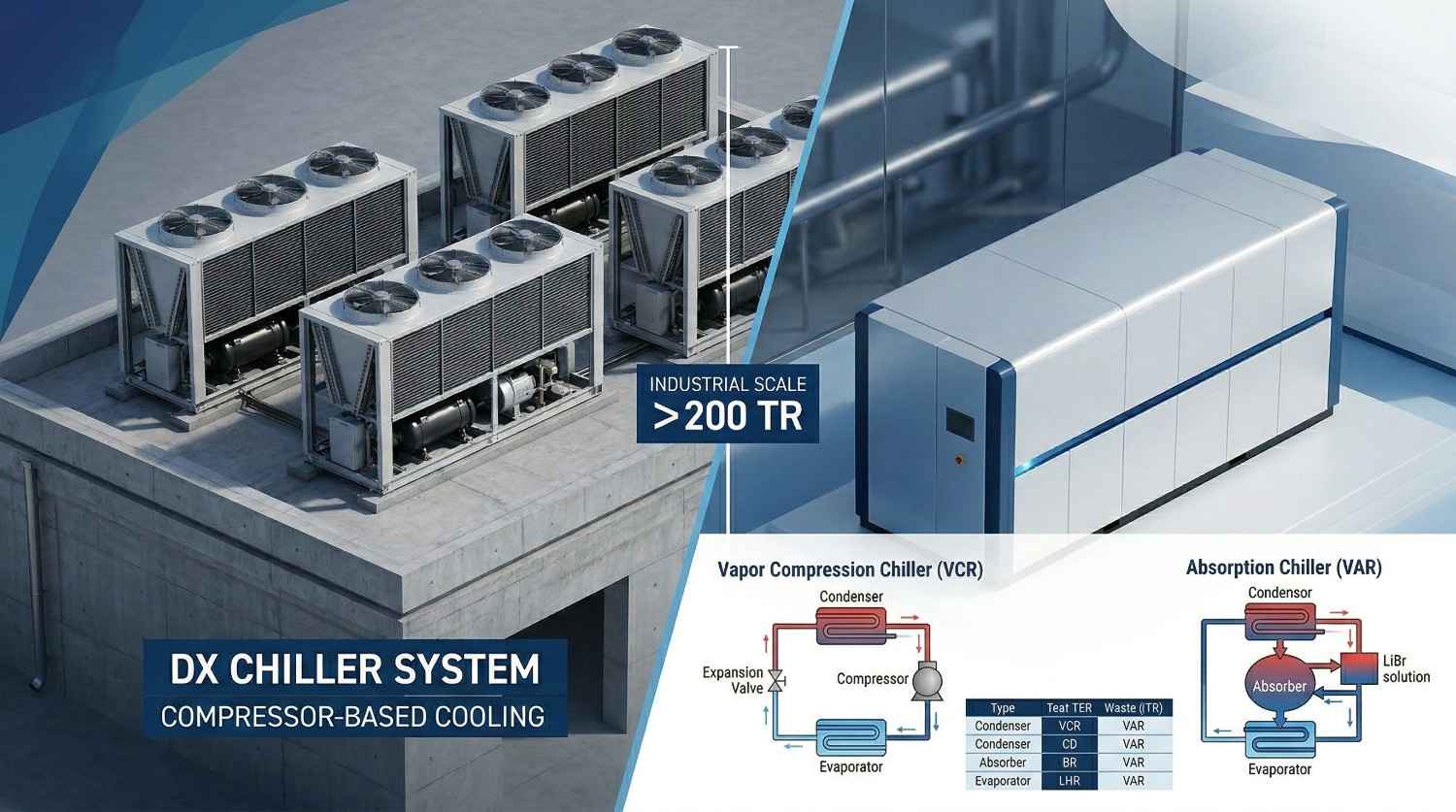
A DX chiller Direct Expansion cools air or process fluid by expanding refrigerant directly at the point of use. The refrigerant absorbs heat as it evapourates, travels to a remote compressor and condenser to reject that heat, and returns to repeat the cycle.
The key distinction: in a DX system, the refrigerant itself reaches the load. There is no intermediate chilled water loop. This makes DX systems compact and fast to commission but it distributes the entire refrigerant charge across the facility, requiring periodic servicing of compressors, expansion valves, and refrigerant pipework.
- Compressor (electric, hermetic or semi-hermetic)
- Condenser (air-cooled or water-cooled)
- Expansion valve (thermostatic or electronic)
- Evapourator coil at point of use
How an Absorption Chiller Works
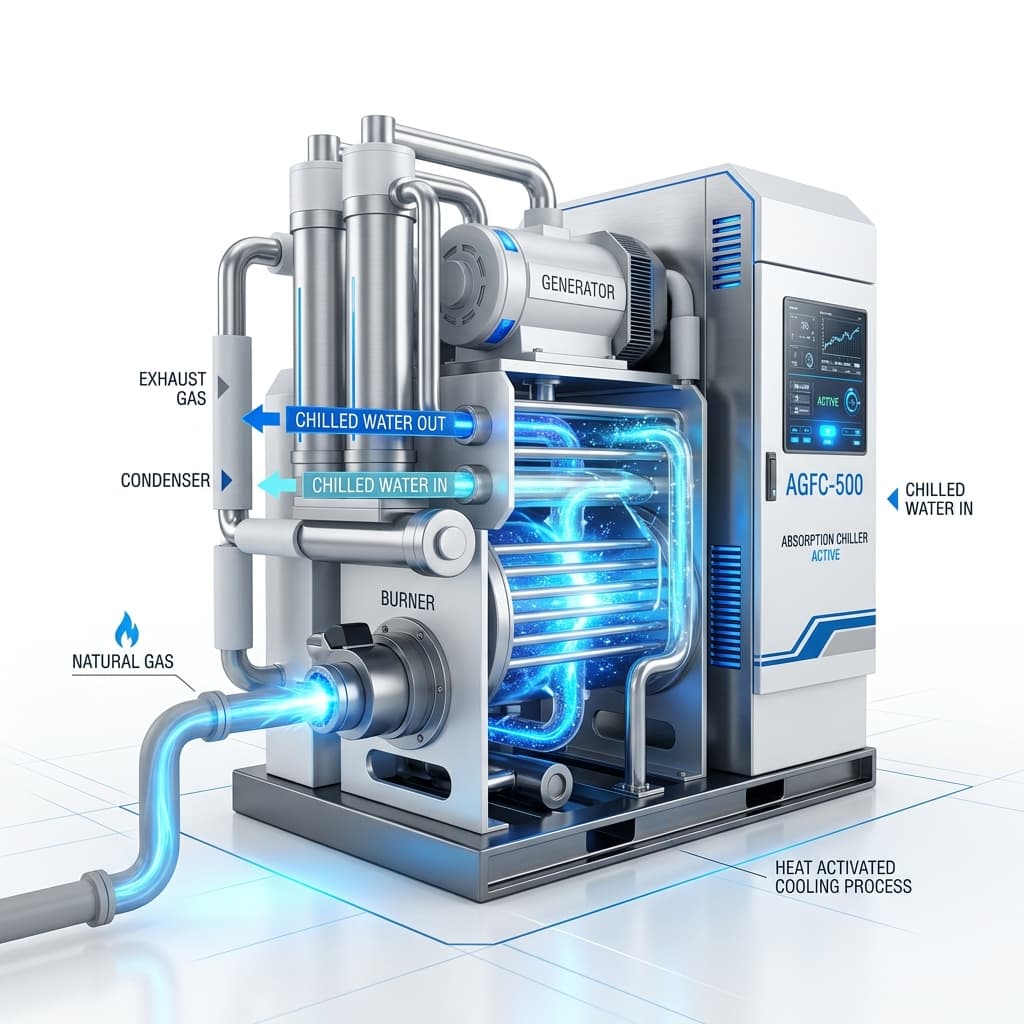
An absorption chiller specifically BROAD's lithium bromide-water vapour absorption system replaces the compressor with a thermal-chemical process. Water is the refrigerant. Lithium bromide is the absorbent. The cycle operates under deep vacuum where water evapourates at low temperatures, producing cooling. No electricity is needed for the core refrigeration process only auxiliary pumps and controls.
- Steam (0.2–2.5 kg/cm²)
- Hot water (80–95°C)
- Engine or turbine exhaust gases (400–550°C)
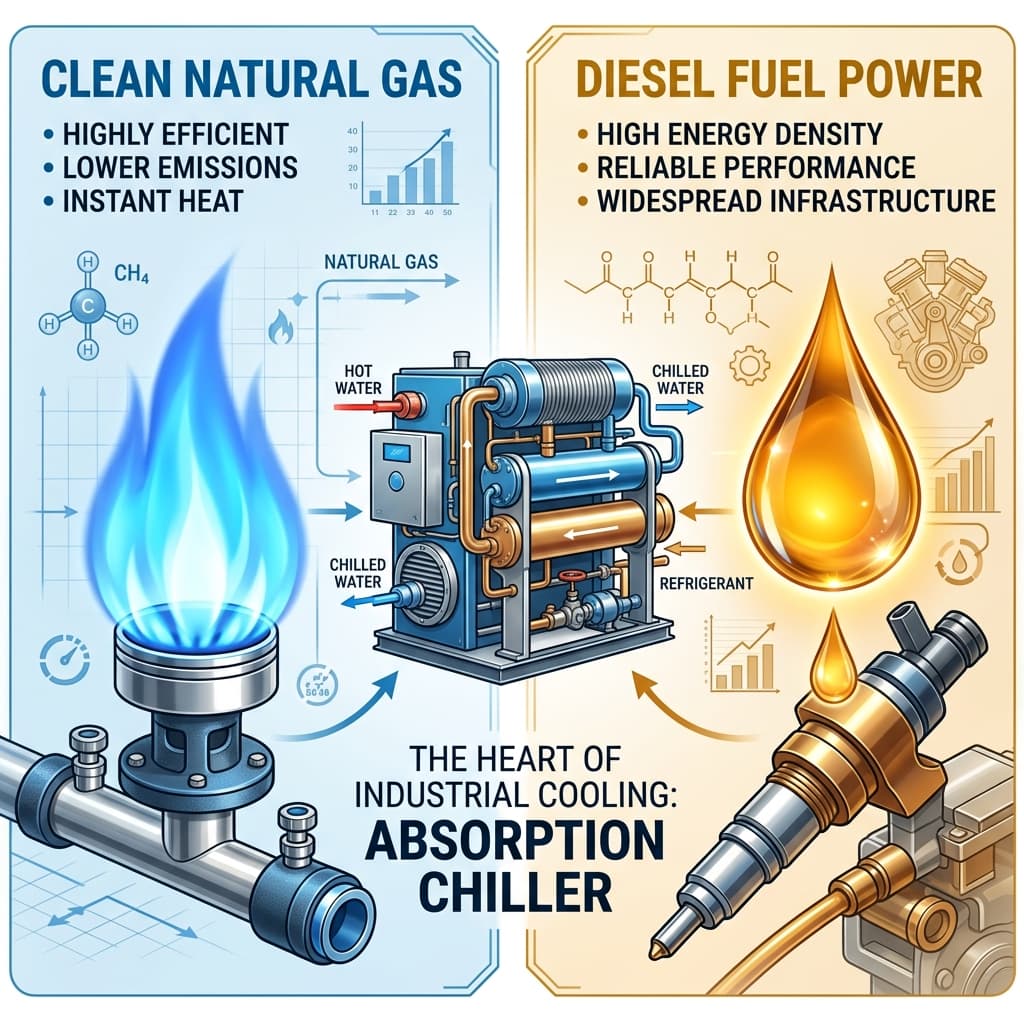
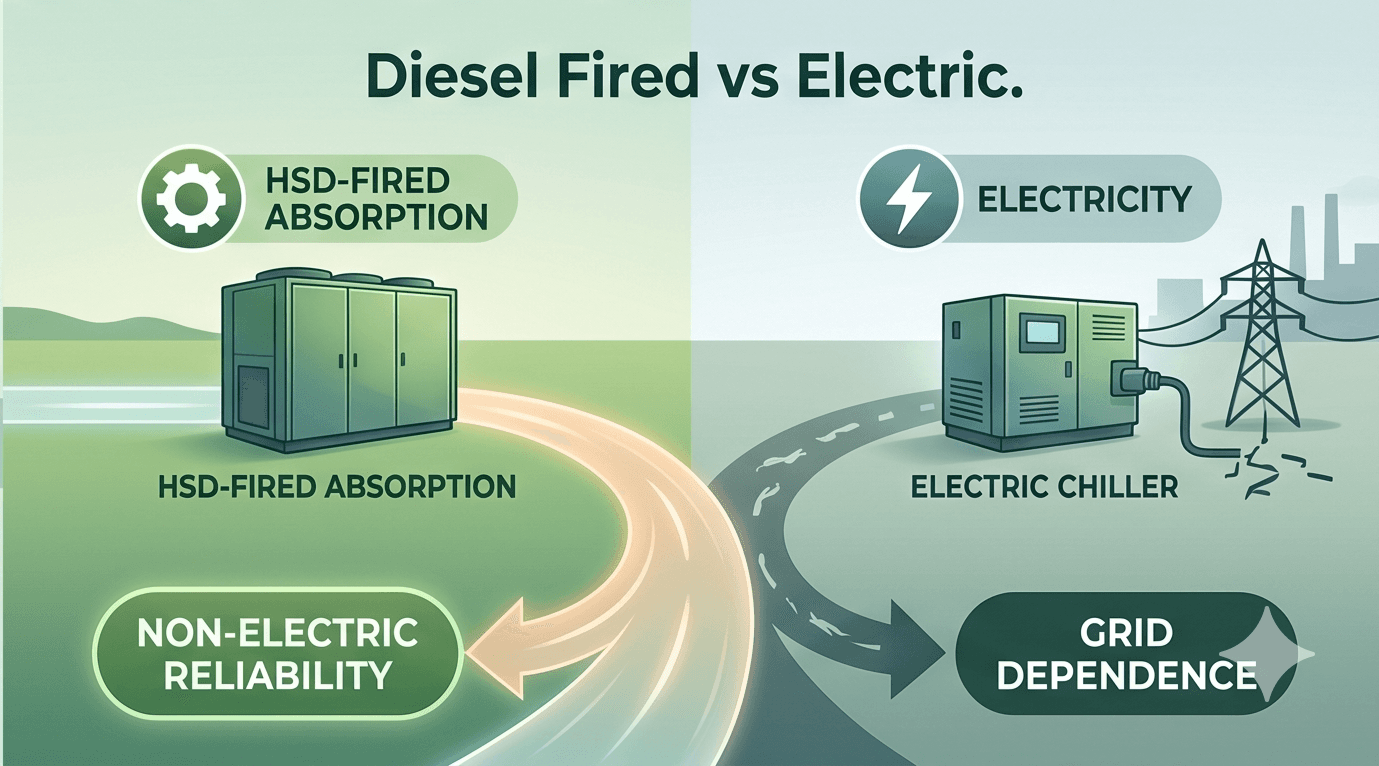
- Direct-fired natural gas, biogas, or diesel
The Core Difference Between DX and Chiller Systems
The fundamental difference between DX and chiller technology is where and how cooling is produced. DX systems bring refrigerant to the load efficient for distributed, smaller loads, but mechanically dependent on the compressor. Absorption chillers produce chilled water centrally and distribute it thermally driven, with no compressor to fail, maintain, or replace.
DX vs. Absorption: Direct Comparison
| Factor | DX System | BROAD Absorption Chiller |
|---|---|---|
| Capacity Range | Effective under 300 TR | 50 TR – 1,500 TR per unit |
| Energy Source | Grid electricity entirely | Waste heat, steam, exhaust, or direct fuel |
| Ambient Performance | Degrades above 40°C ambient | Consistent performance regardless of ambient |
| Refrigerant Risk | Synthetic refrigerants, phase-down schedules | Water zero ODP, zero GWP |
| Maintenance | Oil changes, refrigerant top-up, compressor overhaul | No compressor 25–35% lower annual cost |
| Operating Costs (500 TR) | Substantial electricity + demand charges | 70–90% reduction on waste heat, payback 3–5 years |
What Is the Full Form of DX in DX Cooling?
DX stands for Direct Expansion the direct evapouration of refrigerant at the cooling coil, without an intermediate fluid loop. A central chilled water system including all BROAD absorption chillers produces cooling centrally and distributes chilled water to air handling units or process exchangers.
For facilities where space is constrained and loads are under 150 TR, DX remains a practical choice. For continuous industrial loads above 200 TR, the chilled water distribution model of absorption technology offers better efficiency, lower lifecycle cost, and no refrigerant compliance burden.
Direct-Fired Absorption: When No Waste Heat Is Available
For facilities without existing steam or exhaust infrastructure, BROAD's direct-fired absorption chiller uses a natural gas, LPG, or diesel burner to heat the generator directly achieving COP 1.2–1.35. Even without waste heat, this eliminates electrical compressor dependency and reduces carbon intensity compared to grid-powered DX alternatives.
When BROAD Absorption Chillers Are the Stronger Choice
DX systems are appropriate for loads under 150 TR with distributed points and no accessible thermal energy. BROAD absorption chillers are the stronger choice for continuous industrial loads above 200 TR with any available thermal energy waste steam, generator exhaust, hot water from engine jackets, or direct fuel.
Get a Site-Specific DX vs. Absorption Analysis
Contact BROAD India for a comparison of DX and absorption cooling for your facility's load profile and available heat sources.
Talk to an Engineer