Why Indian Pharma & Textile Units Are Switching from Electric to Hot Water VAM Chillers
Why Indian Pharma & Textile Units Are Switching from Electric to Hot Water VAM Chillers
Quick Links: How Hot Water VAM Works | Pharma Case Study | Textile Case Study | Economics & Payback | Get Guidance
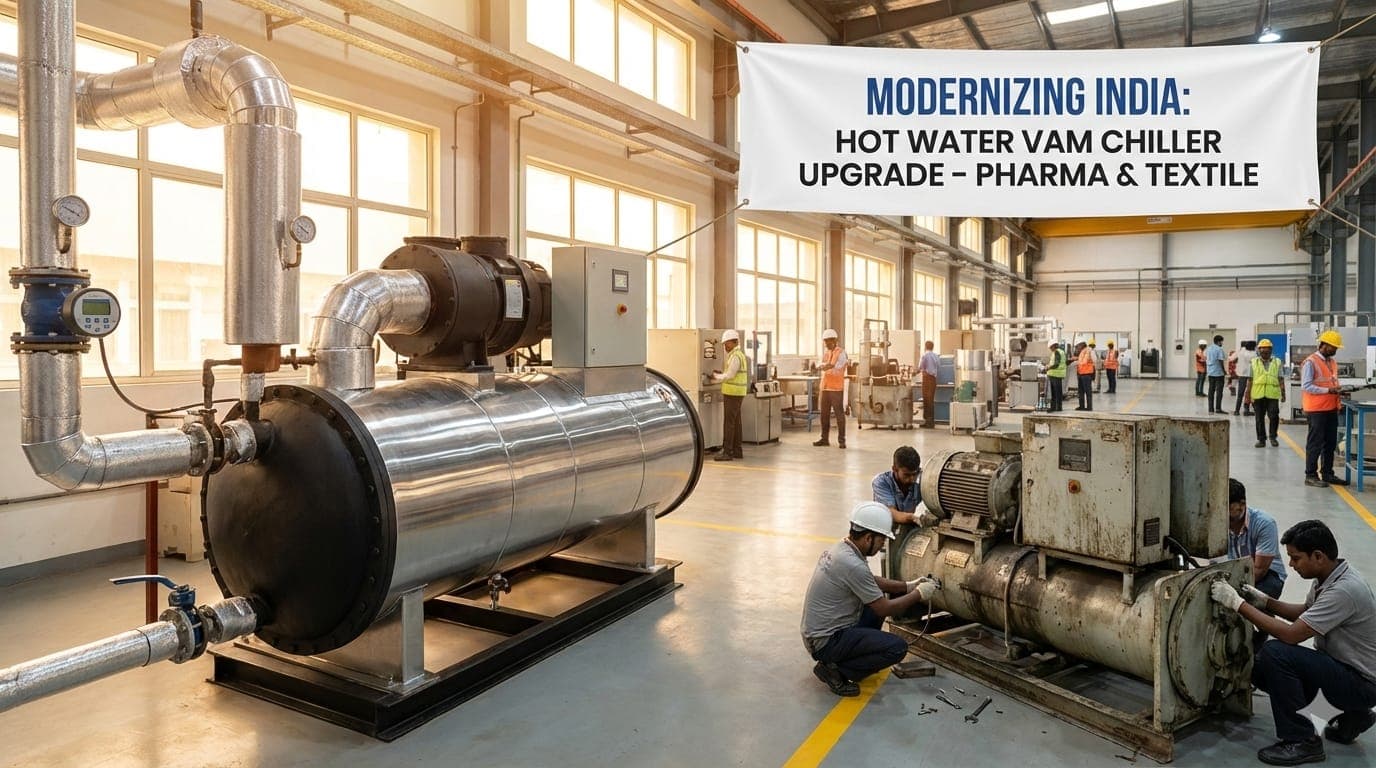
Across India's pharmaceutical and textile hubs, a quiet revolution is underway. Facilities once reliant on electric chillers are switching to hot water VAM (Vapour Absorption Machine) chillers and reaping massive operational and sustainability benefits. 🔥❄️
How Hot Water VAM Chillers Work
Hot water VAM chillers use industrial hot water(80 - 95°C) to drive a lithium bromide - water absorption cycle, producing chilled water for air conditioning or process cooling.
- Heat source: Hot water 80-95°C (often waste)
- COP: 0.70-0.75
- Electrical consumption: Minimal, only small pumps (0.01-0.02 kW/TR)
- Refrigerant: Water – natural, non-toxic, zero GWP
Why Pharmaceutical Manufacturing is Embracing Hot Water VAM
- Clean rooms: 20 - 25°C, 40 - 60 % RH
- Process cooling: API synthesis, tablet compression, packaging
- Cold storage: Temperature - sensitive raw materials & finished products
- Year - round operation: 8,000 + hours / year
Untapped Heat Sources in Pharma Facilities 🔬
- 💨 Autoclave & Sterilization Exhaust: 85-95°C
- ⚗️ Process Equipment Cooling: 75-90°C
- 💧 HVAC Condensate: 80-95°C
- 🔋 Backup Generator Jacket Cooling: 85-92°C
- Cooling: 600 TR
- Previous system: 420 kW electric chillers
- Operating hours: 8, 400 / year
- BROAD Hot Water VAM: 600 TR using autoclave & process heat
- Electricity eliminated: 3.53 million kWh / year
- Cost savings: ₹2.12 crores / year
- Carbon reduction: 2, 895 tons CO₂/year 🌱
- Payback period: 2.3 years ⏱️
- Grid independence maintained cooling during outages
Why Textile Mills Are Making the Switch
Textile units face high energy costs(15 - 25 % of manufacturing).Cooling needs include dye bath control, HVAC, humidification, and compressed air cooling.Meanwhile, processes generate abundant waste heat.
Hot Water Sources in Textile Operations 🏭
- 🌊 Dyeing Process Wastewater: 70-85°C
- 🔥 Boiler Economizer Output: 80-95°C
- ⚡ Thermic Fluid Systems: 80-90°C
- 💨 Stenter Machine Exhaust: 75-90°C
- Cooling: 400 TR
- Previous system: 280 kW electric screw chillers
- Operating hours: 7, 200 / year
- BROAD Hot Water VAM: 400 TR using dyeing wastewater & boiler economizer
- Electricity eliminated: 2.02 million kWh / year
- Cost savings: ₹1.62 crores / year
- Boiler efficiency improvement: 12 %
- Payback period: 1.9 years ⏱️
- Unexpected benefit: Improved dye consistency 🎨
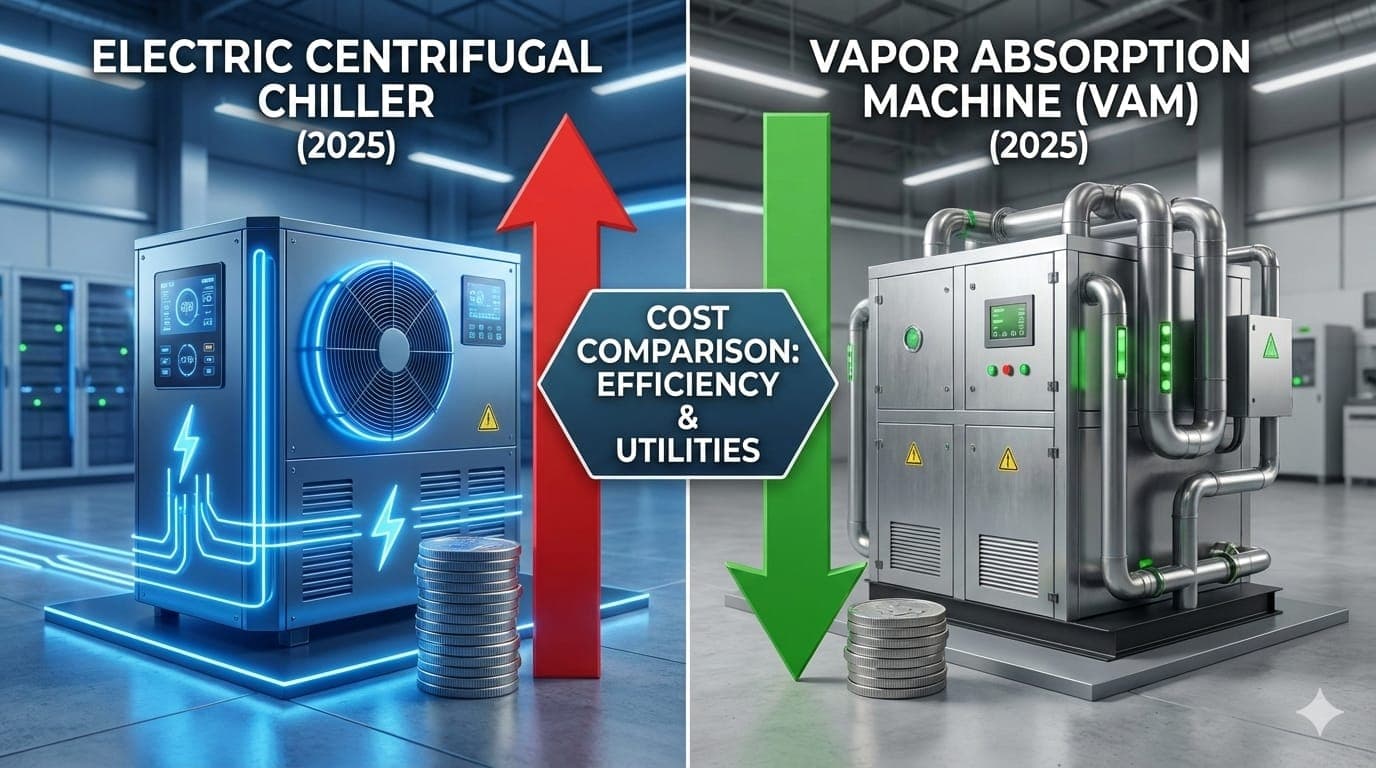
The Comparative Economics: Hot Water VAM vs.Electric Chillers
| System | CapEx | Annual Operating Cost | Notes |
|---|---|---|---|
| Electric Chiller | ₹4.5 - 5.5 crores | ₹2.22 crores | High electricity & demand charges |
| BROAD Hot Water VAM | ₹6.5 - 7.5 crores | ₹16 lakhs | Uses waste heat, minimal electrical load |
Technical Advantages Driving the Shift ⚡
- Grid independence maintains cooling during outages 🛡️
- Eliminates demand charges 💰
- Lower maintenance: No compressors, minimal moving parts 🛠️
- Environmental compliance: Reduces CO₂ & improves ESG metrics 🌱
Whether you have waste heat from autoclaves, boilers, or processes, BROAD has a VAM solution for your facility.
Frequently Asked Questions
What is a Vapour Absorption Chiller?
Can BROAD chillers run on waste heat?
Do you provide after-sales service in India?
Need Help With Your Cooling System?
BROAD India's engineering team can assess your facility's cooling requirements and recommend the most energy-efficient solution - from vapour absorption chillers to waste heat recovery systems.