
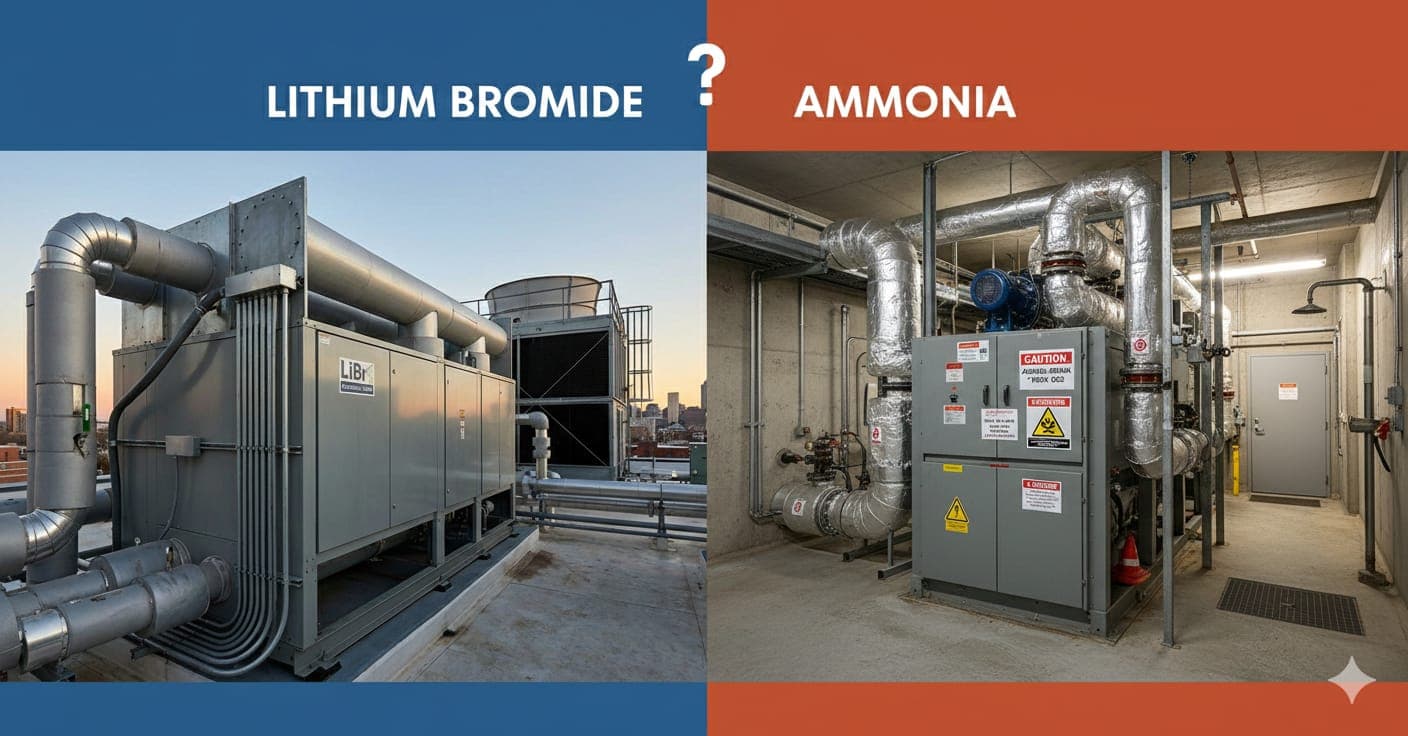
LiBr vs. Ammonia Absorption Chillers: Which is Safer for Your Facility?
LiBr vs.Ammonia Absorption Chillers: Which is Safer for Your Facility ?
Quick Links: Refrigerant Toxicity | Regulatory Burden | Operational Safety | Maintenance & Liability | Safety Matrix | Making the Safety - First Decision
The Core Safety Question: Refrigerant Toxicity
💧 Lithium Bromide Systems
LiBr absorption chillers use water as the refrigerant and LiBr salt as the absorbent.This eliminates the main safety concerns of conventional cooling:
- ✓ Water is non - toxic
- ✓ Zero flammability risk
- ✓ No toxicity hazards
- ✓ No special handling required
Leak scenario: minimal riskjust water vapour and salt solution.No hazmat teams, evacuations, or specialized PPE needed.
⚠️ Ammonia Systems
Ammonia(NH₃) is used as the refrigerant, with water as absorbent.Thermodynamically efficient but much higher risk:
- ✗ Highly toxic(OSHA PEL: 50 ppm, 8 - hour TWA)
- ✗ Flammable at 15 - 28 % concentration
- ✗ Severe irritation to eyes, skin, respiratory system
- ✗ Fatal exposures possible> 2, 500 ppm
Leaks trigger emergency response, evacuations, and regulatory scrutiny.
Regulatory and Compliance Burden
LiBr Systems: Minimal Oversight
- ✓ No EPA refrigerant reporting(water exempt)
- ✓ No PSM(Process Safety Management) requirements
- ✓ No RMP filings
- ✓ Standard industrial permits suffice
- ✓ No specialized operator certifications needed
Ammonia Systems: Heavy Framework
- ✗ OSHA PSM compliance(29 CFR 1910.119) for ≥10,000 lbs NH₃
- ✗ EPA RMP filings and worst -case scenario modeling
- ✗ Refrigeration operator licensing
- ✗ Annual third - party audits & inspections
- ✗ Emergency response planning with local fire departments
- ✗ Continuous monitoring and leak detection
Operational Safety Considerations
💨 Pressure & Crystallization Risks
- ✓ LiBr operates under vacuum(below atmospheric), minimal leak risk
- ✓ Air ingress triggers no refrigerant escape
- ✓ Crystallization manageable with BROAD controls
- ✗ Ammonia operates at positive pressure, leaks release toxic gas
- ✗ Pressure vessel regulations mandatory
- ✗ Robust containment required
🛠️ Material Compatibility
- ✓ LiBr: corrosive at high concentration, controlled by inhibitors, 20 + year equipment life achievable
- ✗ Ammonia: attacks copper, brass, zinc; requires expensive steel; ongoing corrosion monitoring essential
💥 Worst - Case Leak Scenarios
- ✓ LiBr: Water vapour + salt, minor skin / eye irritation, no evacuation, minimal environmental impact
- ✗ Ammonia: Toxic vapour cloud, immediate evacuation, emergency responders, regulatory investigation, potential fatalities
🏗️ Facility Location & Placement
- ✓ LiBr: Install adjacent to offices, basements, rooftops, mixed - use buildings
- ✗ Ammonia: Restricted setbacks, prohibited near hospitals / schools, specialized mechanical rooms required
Maintenance and Service Safety
LiBr Systems: Low - Risk Maintenance
- ✓ Non - hazardous fluids
- ✓ Standard PPE(gloves, safety glasses)
- ✓ Minimal training, no respiratory protection
- ✓ Wider contractor availability, no production interruption
Ammonia Systems: High - Risk Service
- ✗ Certified refrigeration technicians only
- ✗ SCBA standby and gas monitoring required
- ✗ Hot work permits, emergency response teams
- ✗ Maintenance 40 - 60 % more expensive
💰 Insurance & Liability
- ✓ LiBr: Standard property & liability rates, minimal interruption exposure
- ✗ Ammonia: Higher premiums(15 - 25 %), specialized coverage, elevated worker comp, potential exclusions
The Comparative Safety Matrix
| Safety Factor | BROAD LiBr Systems | Ammonia Systems |
|---|---|---|
| Refrigerant Toxicity | Non - toxic(water) | Highly toxic(NH₃) |
| Flammability | Non - flammable | Flammable(15 - 28 %) |
| Operating Pressure | Vacuum(safer) | Positive(higher risk) |
| Regulatory Burden | Minimal | Extensive(PSM / RMP) |
| Emergency Response | Not required | Mandatory planning |
| Leak Consequences | Minimal | Potentially catastrophic |
When Would Ammonia Systems Be Considered ?
- ✓ Large industrial facilities with dedicated refrigeration staff
- ✓ Food processing plants already operating ammonia refrigeration
- ✓ Remote locations with minimal population exposure
- ✓ Facilities with existing ammonia infrastructure & expertise
For most commercial, institutional, and light industrial applications, LiBr safety advantages outweigh ammonia’s marginal efficiency gains.
BROAD's Comprehensive Safety Approach
- ✓ Advanced corrosion protection
- ✓ Crystallization prevention systems
- ✓ Continuous vacuum integrity monitoring
- ✓ Global record: 25,000 + installations with zero catastrophic failures
BROAD LiBr absorption chillers deliver inherently safe refrigerant, minimal compliance burden, lower insurance, installation flexibility, and peace of mind for facility managers.
Frequently Asked Questions
What is a Vapour Absorption Chiller?
Can BROAD chillers run on waste heat?
Do you provide after-sales service in India?
Need Help With Your Cooling System?
BROAD India's engineering team can assess your facility's cooling requirements and recommend the most energy-efficient solution - from vapour absorption chillers to waste heat recovery systems.