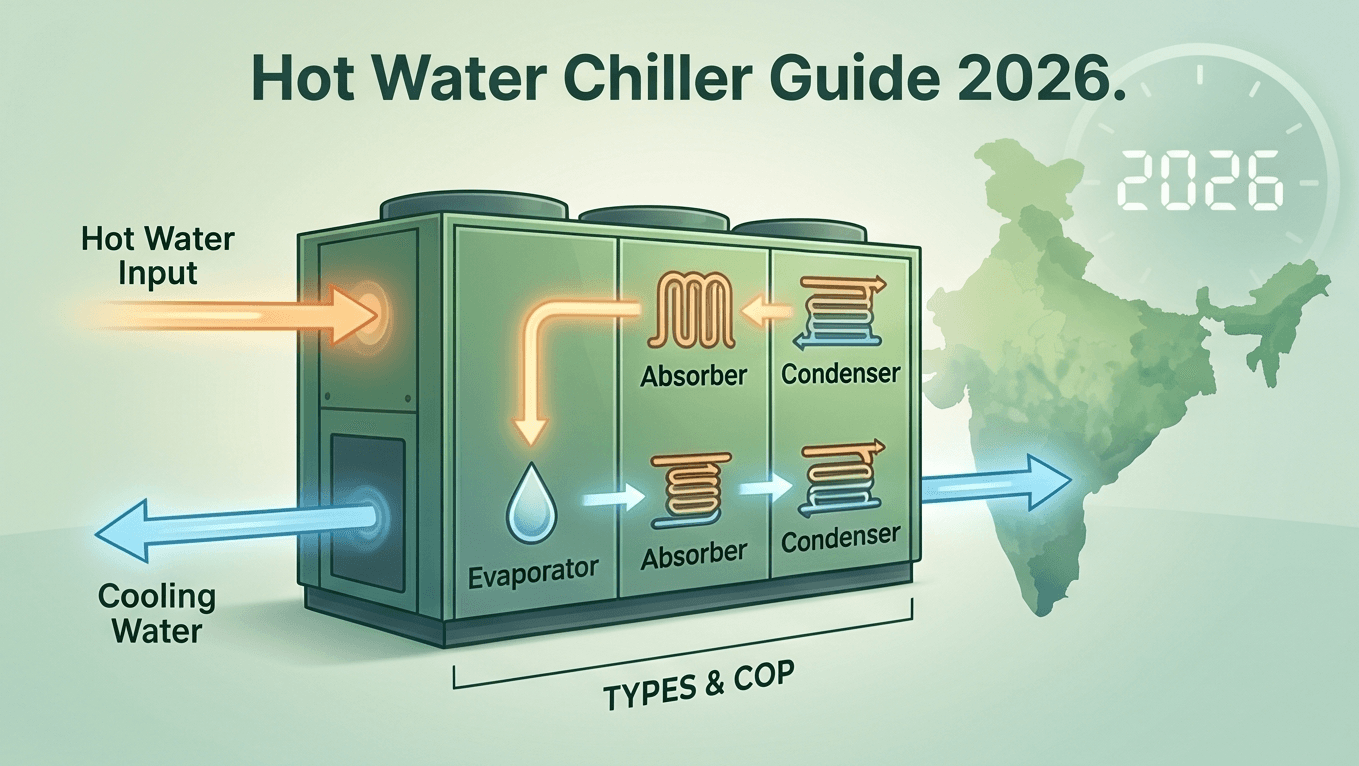
Natural Gas Fired Chiller: Complete Buyer's Guide for Indian Industries (2026)
India's city gas distribution network now covers over 630 districts. For industrial and commercial facilities in Delhi NCR, Mumbai, Ahmedabad, Pune, and Bengaluru with access to piped natural gas, a gas-fired absorption chiller offers one of the cleanest, most cost-effective large-scale cooling solutions available - with no compressor, near-zero peak electrical demand, and simultaneous hot water output.
Why Natural Gas Is Changing the Absorption Chiller Economics in India
When absorption chillers were first introduced to the Indian market, the primary energy sources were steam from industrial boilers and waste heat from process plants. Natural gas fired chillers existed, but the limited reach of India's gas distribution infrastructure kept them a niche option.
That has changed substantially. The Petroleum and Natural Gas Regulatory Board (PNGRB) has aggressively expanded city gas distribution (CGD) networks, and PNG is now commercially available for industrial and commercial consumers across India's most industrialised cities. For a commercial complex in Gurgaon, a pharmaceutical plant in Ahmedabad, or a hospital in Mumbai, piped natural gas is now a routine utility - like water or electricity.
This infrastructure shift creates a straightforward opportunity: replace electrical cooling load with gas-fired absorption cooling. The economics work because natural gas, used directly in an absorption chiller at 80% thermal efficiency, delivers cooling at a lower cost per kW-hr than electricity from the grid in most Indian industrial tariff categories.
What Is a Natural Gas Fired Chiller?
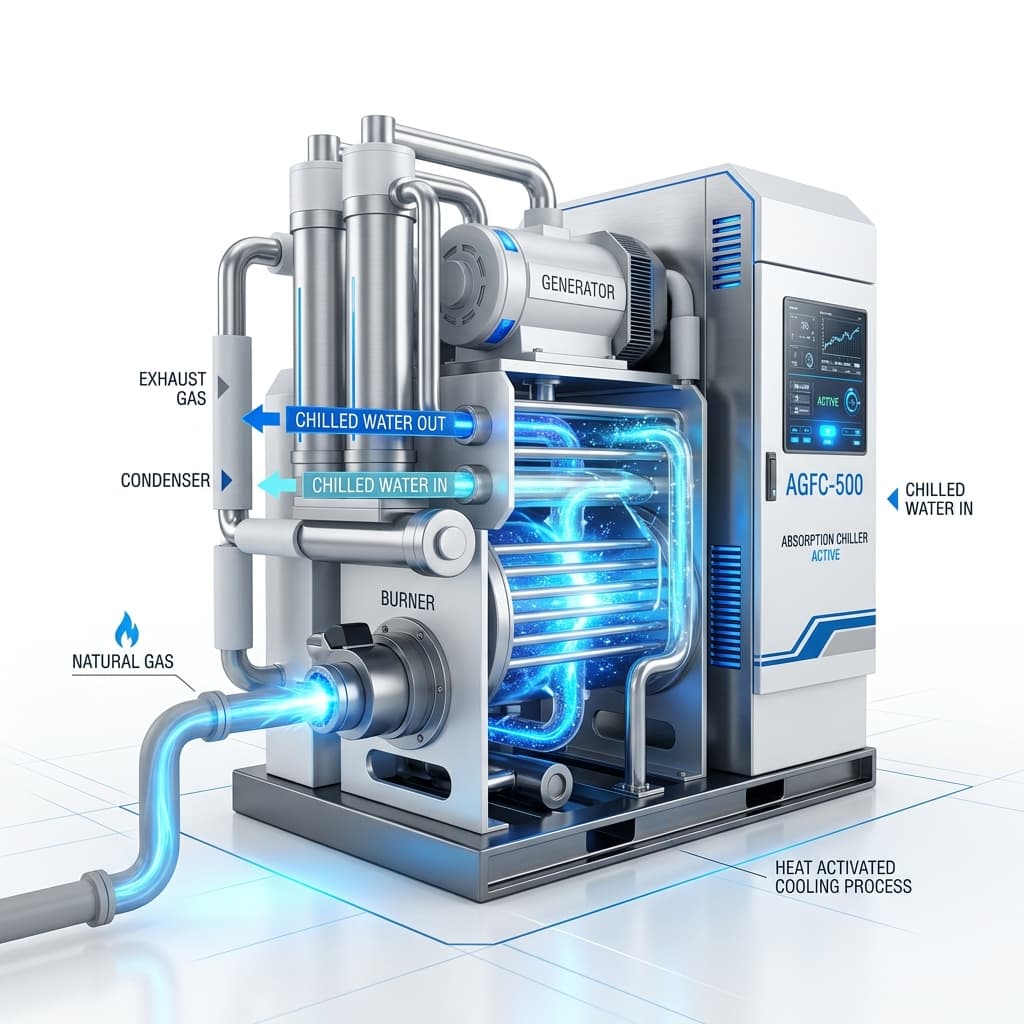
A natural gas fired absorption chiller is a direct-fired vapour absorption machine (VAM) that combusts natural gas in an integrated burner to generate the heat that drives the LiBr absorption refrigeration cycle.
Key distinctions from other absorption types:
- Integrated System: Does not require a separate steam boiler or hot water supply.
- Double Effect Cycle: Operates at COP 1.0–1.4, providing high efficiency through two-stage generation.
- Simultaneous Output: Produces hot water at up to 65°C alongside cooling.
- Fuel Flexibility: BROAD units accept both natural gas and HSD (diesel) from the same burner.
How It Works: The Double Effect Gas-Fired Cycle
Natural gas combusts in the integrated burner at temperatures above 900°C. This high-temperature energy drives a high-temperature generator in the first stage of the double effect cycle, producing water vapour and concentrated LiBr solution. The vapour from the first stage then acts as the heat source for a second, lower-temperature generator - effectively extracting two refrigeration cycles from a single combustion event.
The result: a COP of 1.0–1.4 versus 0.65–0.75 for a single effect hot water machine. Every cubic metre of natural gas consumed delivers 1.0–1.4 kW-hr of cooling.
Where Natural Gas Chillers Make Sense in India
Commercial & IT Parks
Ideal for Delhi NCR, Gurgaon, and Bengaluru. Replaces high-tariff electricity (₹9–12/kWh) with cost-effective PNG, eliminating massive demand charges.
Hotels & Hospitality
Uses CCHP configuration to deliver guest room cooling and laundry/kitchen hot water simultaneously from a single gas input.
Healthcare Facilities
Provides 24/7 cooling reliability. Continued operation during grid outages without overloading emergency DG sets.
Technical Specifications at a Glance
| Parameter | Specification (BROAD India) |
|---|---|
| Cooling capacity | 66 TR to 3,300 TR |
| COP (cooling) | 1.0 – 1.4 |
| Fuel | Natural gas (PNG/CNG), LPG, or dual-fuel |
| Hot water output | Up to 65°C simultaneously |
| Gas consumption | 0.07–0.09 SCM per TR-hour |
| Equipment life | 20–25 years |
Gas vs Electricity: The Cost Comparison
At current Indian pricing, natural gas at ₹45–55 per SCM delivers cooling at approximately ₹3.5–5.0 per kW-hr from a gas-fired absorption chiller (COP 1.2). While grid electricity at ₹10/kWh might look comparable on paper, the demand charges change the equation.
A 500 TR electric chiller adds 350+ kVA of contracted demand, costing ~₹16.8 lakh/year in fixed charges that a gas absorption chiller avoids entirely. At electricity tariffs above ₹8/kWh, the gas chiller wins decisively on total cost of ownership.
Frequently Asked Questions
What PNG pressure is required?
Can it operate on Biogas?
How does it support ESG goals?
Conclusion
The expansion of India's city gas distribution network has transformed the natural gas fired chiller into a mainstream choice for commercial and industrial cooling. For facilities where PNG is available and electricity tariffs exceed ₹8/kWh, the TCO case is compelling.
Ready to assess your facility?
Contact BROAD India for a technical feasibility study and gas-to-electricity price analysis.
Talk to an EngineerFrequently Asked Questions
What is a Vapour Absorption Chiller?
Can BROAD chillers run on waste heat?
Do you provide after-sales service in India?
Need Help With Your Cooling System?
BROAD India's engineering team can assess your facility's cooling requirements and recommend the most energy-efficient solution - from vapour absorption chillers to waste heat recovery systems.
Related Articles
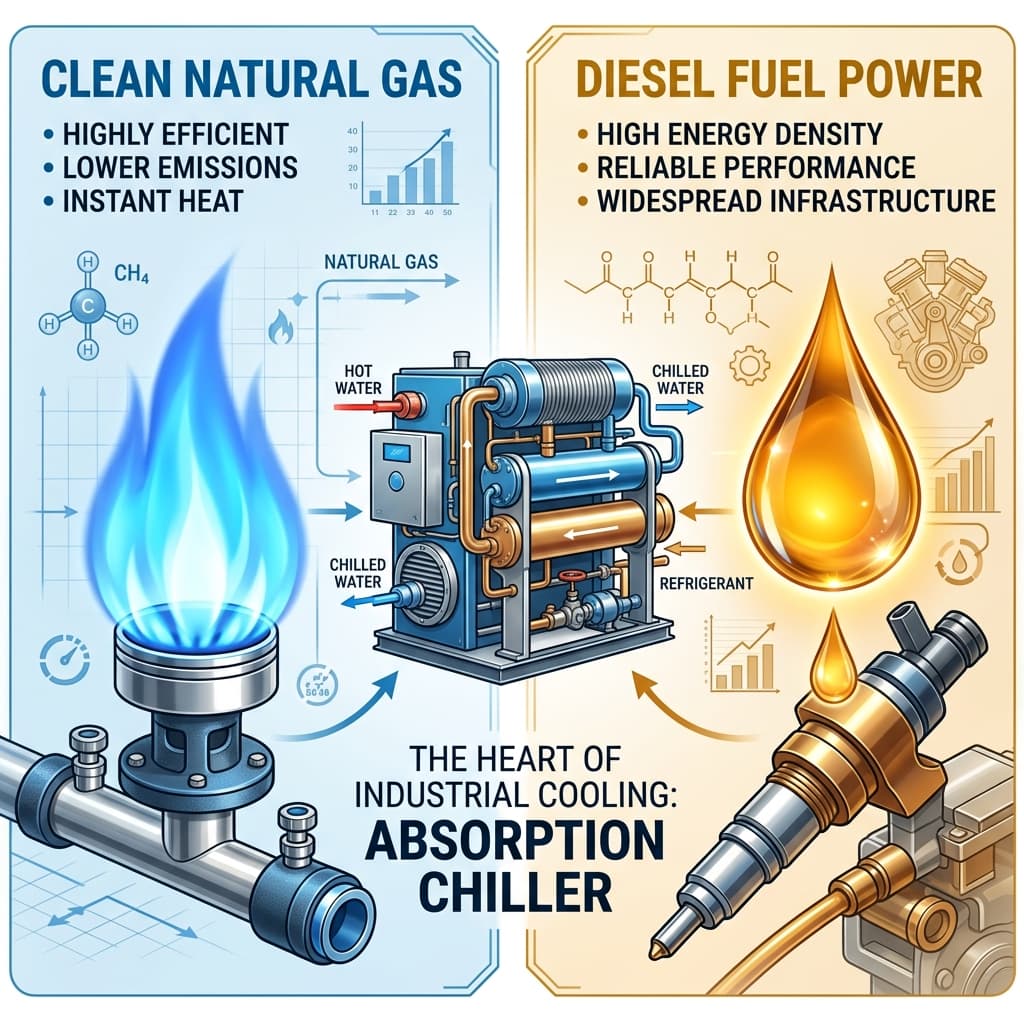
Natural Gas vs Diesel Fired Chiller: Which Is Better for Your Indian Facility?
Read Post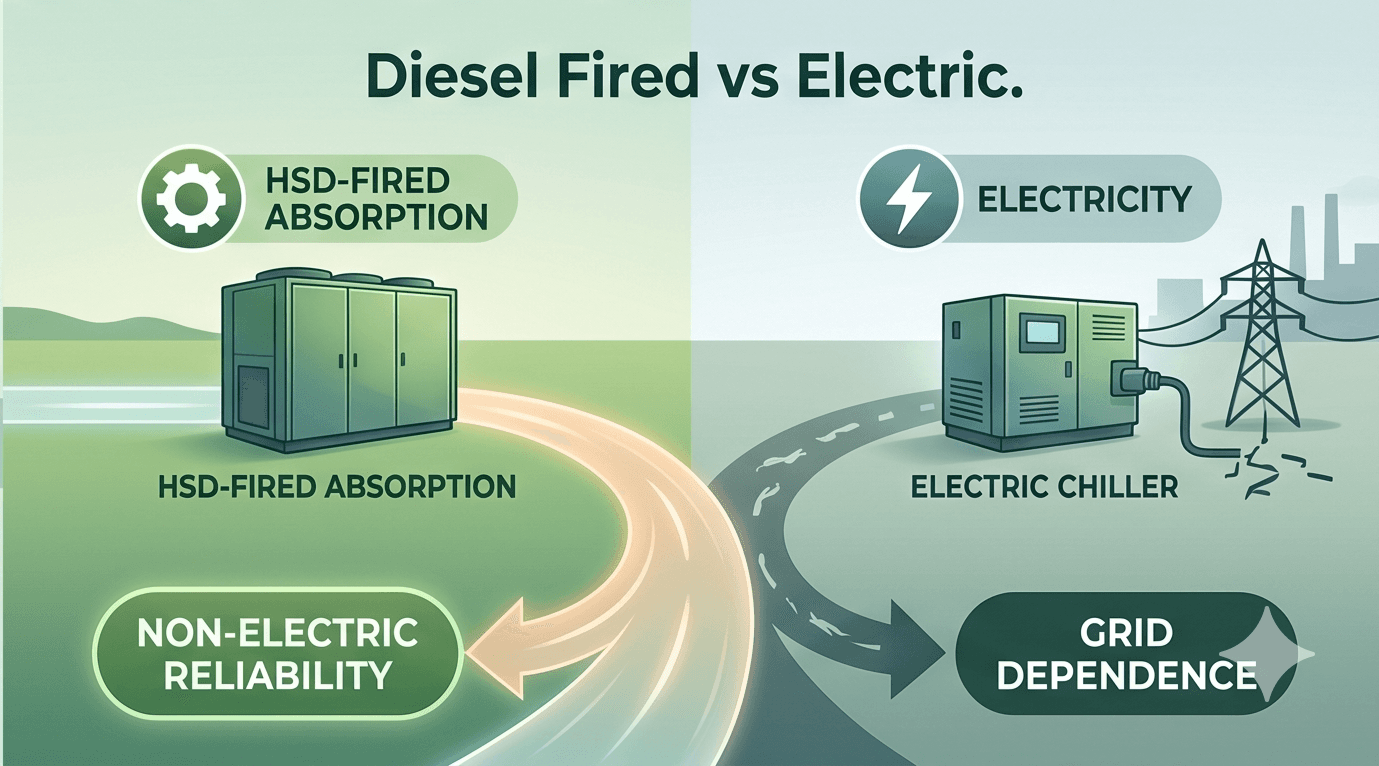
Diesel Fired Chiller Explained: When and Why to Choose HSD-Fired Absorption Over Electric
Read Post