Superheat in Refrigeration: Why VAR Systems Eliminate This VCR Problem
Superheat in Refrigeration: Why VAR Systems Eliminate This VCR Problem
For facility engineers in India's pharmaceutical, food processing, and industrial sectors, temperature instability is more than an inconvenience - it's a compliance risk, a product-loss event, and a maintenance headache. At the heart of this instability in conventional systems lies a thermodynamic phenomenon called superheat in refrigeration.
What Is Superheating and Why Does It Happen?
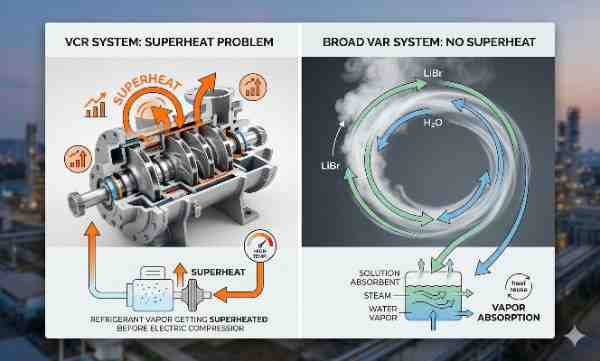
Superheating refers to the condition where a refrigerant vapour is heated beyond its saturation temperature. In a Vapour Compression Refrigeration (VCR) system, a controlled degree of superheat at the compressor suction inlet is intentional: it protects the compressor from liquid slugging, a catastrophic condition where liquid refrigerant enters the compressor and causes mechanical damage.
The problem is that India's climate makes superheat control notoriously difficult. In cities like Mumbai, Chennai, Kolkata, and Surat - where ambient temperatures often exceed 40°C - the refrigerant cycle faces extreme external heat loads that shift the superheat curve unpredictably. This variability is simply unacceptable for critical applications like pharmaceutical clean rooms.
The Key Difference Between VCR and VAR: No Compressor
To understand why Vapour Absorption Refrigeration (VAR) sidesteps superheat issues entirely, it helps to identify the core difference between VCR and VAR:
VCR System
- Requires intentional superheat to protect mechanical compressor
- Uses sensitive expansion valves to control superheat
- Ambient conditions constantly fight the superheat setpoint
BROAD VAR System
- No mechanical compressor; no liquid slugging risk
- Absorption process maintains low pressure passively
- Stable ±0.5°C control regardless of ambient heat loads
Working Principle of the Absorption Valve
The working principle of the absorption valve is elegant: its role is simply to reduce the pressure of liquid refrigerant from condenser pressure to evapourator pressure. Since there is no downstream compressor to protect, the system does not need to hunt for superheat. Refrigerant (water) evapourates under vacuum and is absorbed by the lithium bromide solution, making the entire cycle thermally self-regulating.
Advantage for Pharmaceutical Precision Cooling
In peak Indian summer, VCR systems often struggle with supply temperature stability, often swinging ±1-2°C. BROAD India's VAR installations have demonstrated ±0.5°C chilled water supply temperature stability even in 45°C ambient conditions. This reliability is crucial for sterile manufacturing areas and API synthesis zones.
Eliminate Instability at the Source
A transition to VAR technology does not just eliminate the superheat problem - it reorients your cooling strategy around operational resilience and lower costs.
Talk to a SpecialistFrequently Asked Questions
What is a Vapour Absorption Chiller?
Can BROAD chillers run on waste heat?
Do you provide after-sales service in India?
Need Help With Your Cooling System?
BROAD India's engineering team can assess your facility's cooling requirements and recommend the most energy-efficient solution - from vapour absorption chillers to waste heat recovery systems.
Related Articles
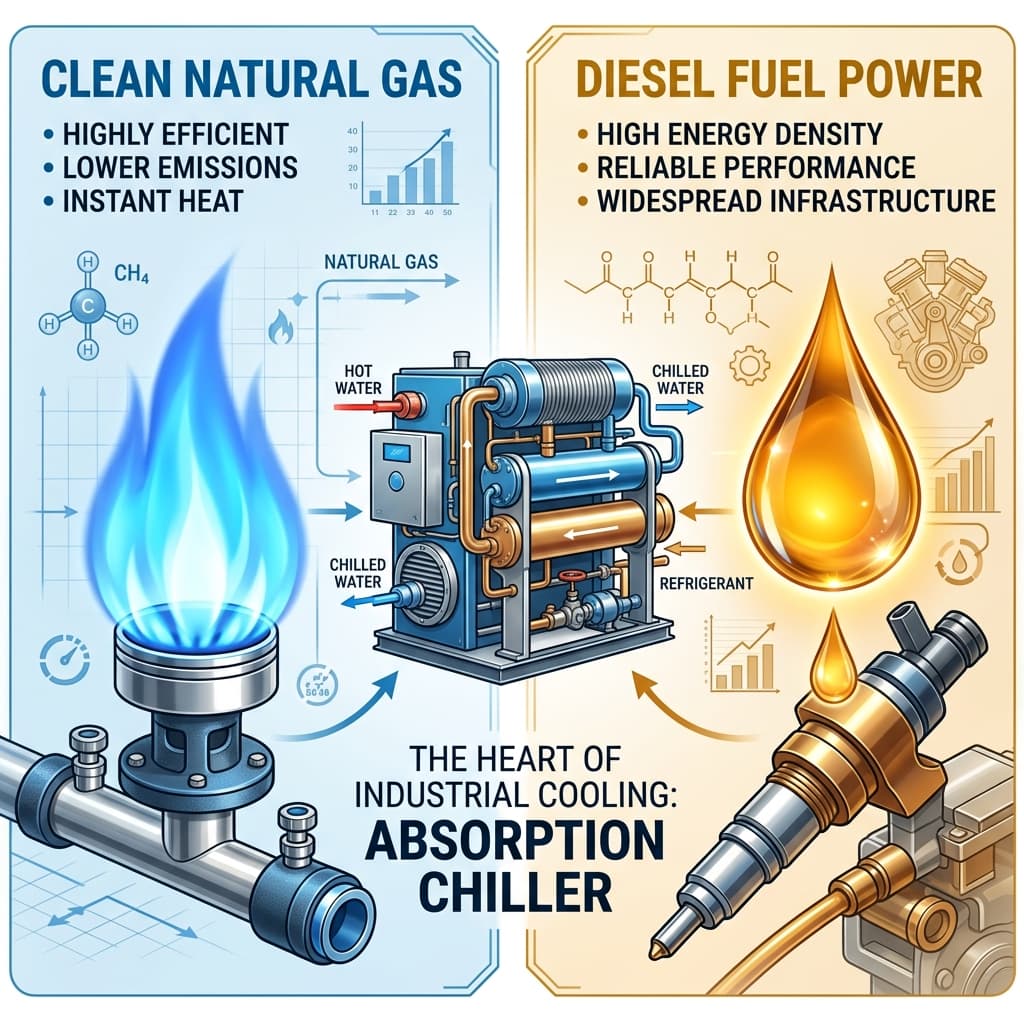
Natural Gas vs Diesel Fired Chiller: Which Is Better for Your Indian Facility?
Read Post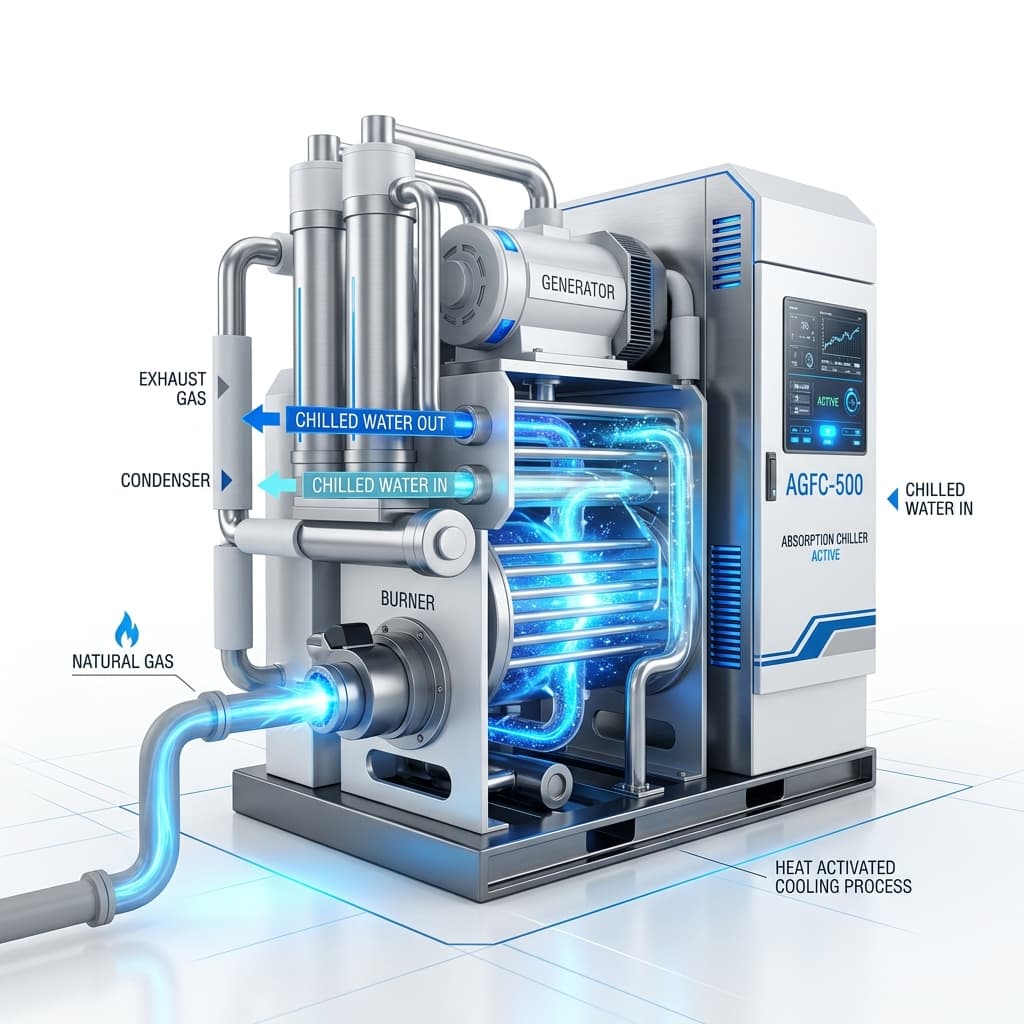
Natural Gas Fired Chiller: Complete Buyer's Guide for Indian Industries (2026)
Read Post