COP in Absorption Chillers: Real ROI Numbers for India
Real-World COP Data for Vapour Absorption Chillers
- Direct-Fired VAMs: COP of 1.4 to 1.8 (using natural gas or diesel)
- Steam-Driven VAMs: COP of 1.3 to 1.5 (utilizing low or high-pressure steam)
- Waste Heat VAMs: COP of 0.7 to 0.8 (producing "free cooling" from otherwise wasted thermal energy, leading to immediate ROI)
*While absorption COP is lower than electric VCR systems, the driving energy (waste heat/gas) is significantly cheaper or free, resulting in drastically lower operating costs.
Understanding COP in Absorption Chillers: How BROAD VAR Systems Maximize ROI in Indian Climate
Engineers evaluating vapour absorption refrigeration systems encounter a confusing metric: COP (Coefficient of Performance). When comparing COP of vapour absorption system versus vapour compression refrigeration, the numbers seem to favor compression - VCR achieves COP 5.0-6.5 while COP of the vapour absorption cycle of a chiller reaches only 0.70-1.35. Does this mean absorption technology is inferior?
Understanding what is COP of the vapour absorption system and why is COP of VARs less than VCR reveals why this apparent disadvantage actually represents superior economics for facilities with thermal energy sources - especially in demanding Indian industrial climates.
What is COP in Refrigeration Systems?
Coefficient of Performance (COP) measures cooling system efficiency as the ratio of cooling output to energy input. Higher COP values indicate greater efficiency - more cooling per unit of energy consumed.
COP = Cooling Effect (kW) ÷ Energy Input (kW)
However, COP of vapour absorption system and COP of vapour compression refrigeration measure fundamentally different energy forms, making direct comparison misleading.
COP of Vapour Compression Refrigeration (VCR)
VCR COP calculation: COP = Cooling Output (kW) ÷ Electrical Input (kW)
Typical values: 5.0-6.5 for modern centrifugal and screw chillers. This electrical COP measures how efficiently high-grade energy (grid electricity) converts to cooling. A 500 TR centrifugal chiller with COP 6.0 consumes approximately 293 kW of electrical power.
COP of Vapour Absorption System (VAR)
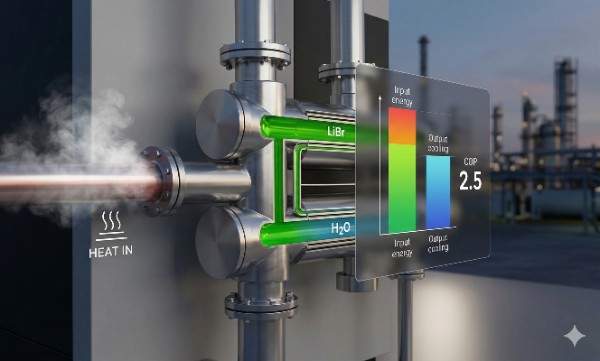
VAR COP calculation: COP = Cooling Output (kW) ÷ Thermal Energy Input (kW)
- BROAD single-effect systems: COP 0.70-0.75
- BROAD double-effect systems: COP 1.20-1.35
This thermal COP measures how efficiently low-grade energy (steam, hot water, exhaust heat) converts to cooling. A 500 TR BROAD single-effect VAR with COP 0.72 requires 2,442 kW of thermal energy.
Why Is COP of VARs Less Than VCR?
The answer lies in thermodynamics and energy quality. VCR systems use high-grade electrical energy which can perform work directly. BROAD VAR systems use low-grade thermal energy - waste heat or steam. Lower COP reflects thermal energy's different characteristics, not technological inferiority.
The Economic Reality: COP vs. Operating Costs
| Annual Cost (500 TR) | VCR (COP 6.0) | BROAD VAR (COP 0.72) |
|---|---|---|
| Energy Cost | ₹1.11 Crores (@ ₹9/kWh) | ₹0 (Waste Steam) |
| Demand Charges | ₹42 Lakhs | ₹5 Lakhs (Auxiliary) |
| Total Annual Cost | ₹1.53 Crores | ₹5 Lakhs |
The "inferior" COP 0.72 saves 97% versus "superior" COP 6.0 when waste heat is utilized.
COP Performance in Indian Climate Conditions
Indian industrial facilities face unique challenges. BROAD engineering ensures stable performance across various conditions:
- Ambient Temperature: BROAD maintains COP 0.70-0.72 even at 45°C ambient, whereas competitors often degrade significantly.
- Monsoon Humidity: Absorption technology is less sensitive to humidity variations than VCR.
- Altitude: BROAD engineers account for lower atmospheric pressure in elevated industrial zones like Pune or Bangalore.
Calculating Real ROI: COP in Context
Example: 500 TR Pharmaceutical Facility
Additional CAPEX: ₹1.5 Crores
Annual Savings: ₹1.41 Crores
Simple Payback: 13 Months
5-Year ROI: 370%
The Bottom Line on COP
For industrial facilities, COP comparison is the wrong question. Total operating cost and ROI are what matter. BROAD VAR systems consistently outperform VCR systems on these metrics.
Get ROI AnalysisFrequently Asked Questions
What is a Vapour Absorption Chiller?
Can BROAD chillers run on waste heat?
Do you provide after-sales service in India?
Need Help With Your Cooling System?
BROAD India's engineering team can assess your facility's cooling requirements and recommend the most energy-efficient solution - from vapour absorption chillers to waste heat recovery systems.
Related Articles
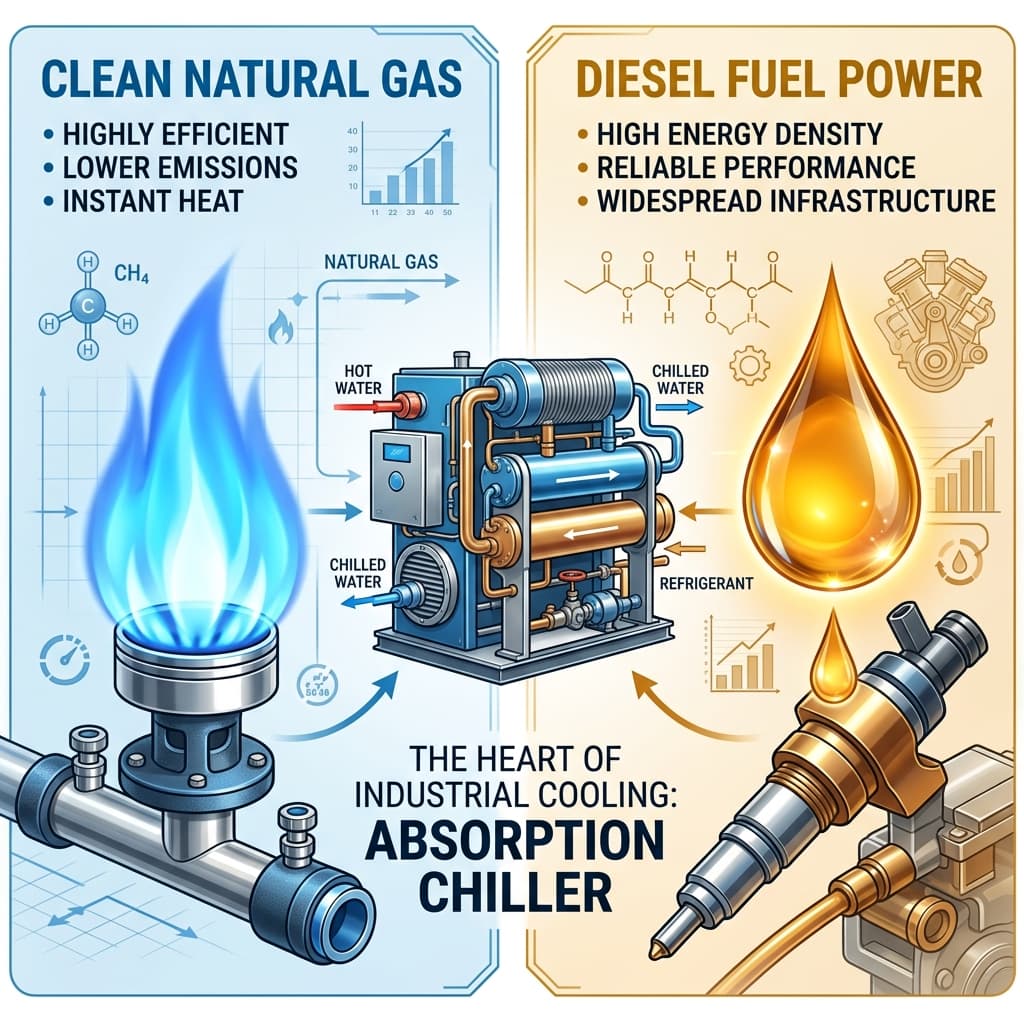
Natural Gas vs Diesel Fired Chiller: Which Is Better for Your Indian Facility?
Read Post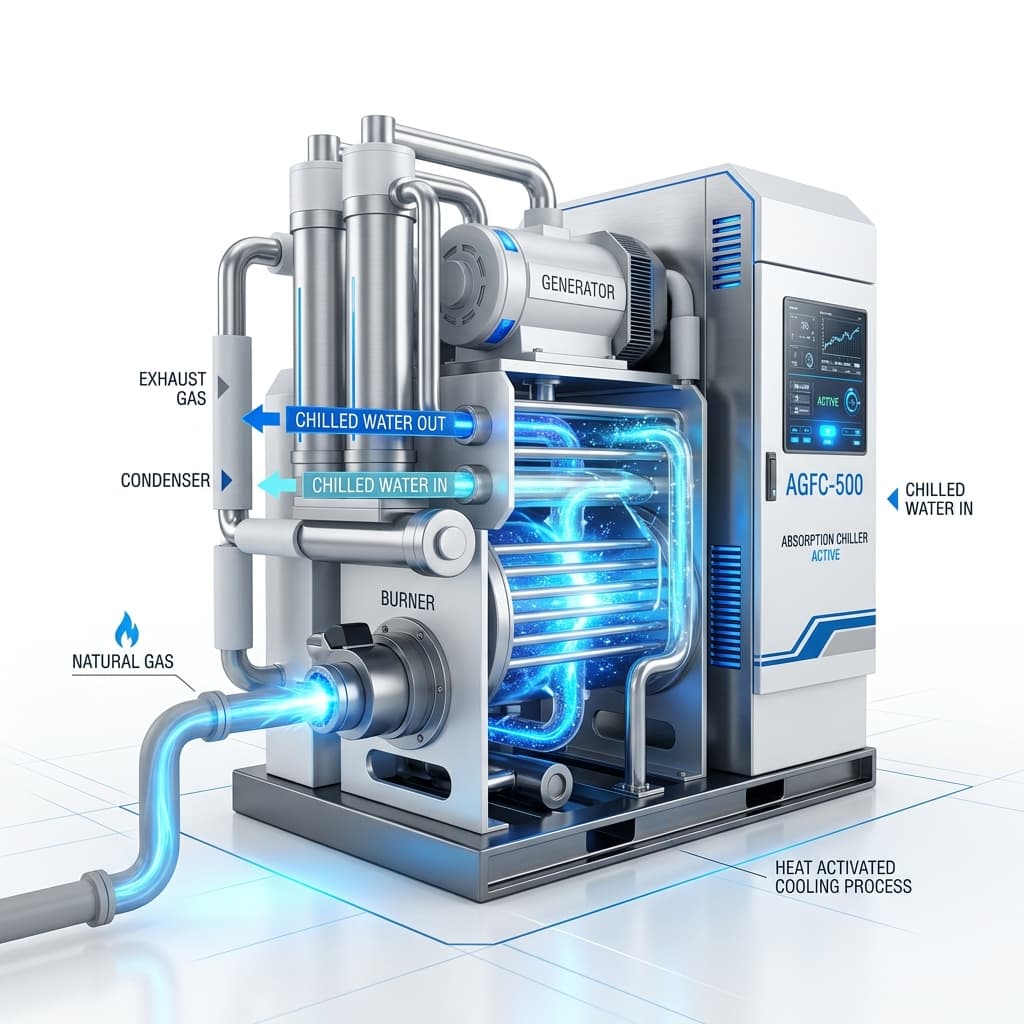
Natural Gas Fired Chiller: Complete Buyer's Guide for Indian Industries (2026)
Read Post