Understanding LiBr Absorption Chillers: A Deep Dive into Lithium Bromide Technology
Understanding LiBr Absorption Chillers: A Deep Dive into Lithium Bromide Technology
Quick Links: What Makes LiBr Different | LiBr Absorption Cycle | Single vs Double Effect | Key Components | Applications | Maintenance & Environment
What Makes LiBr Absorption Chillers Different ?
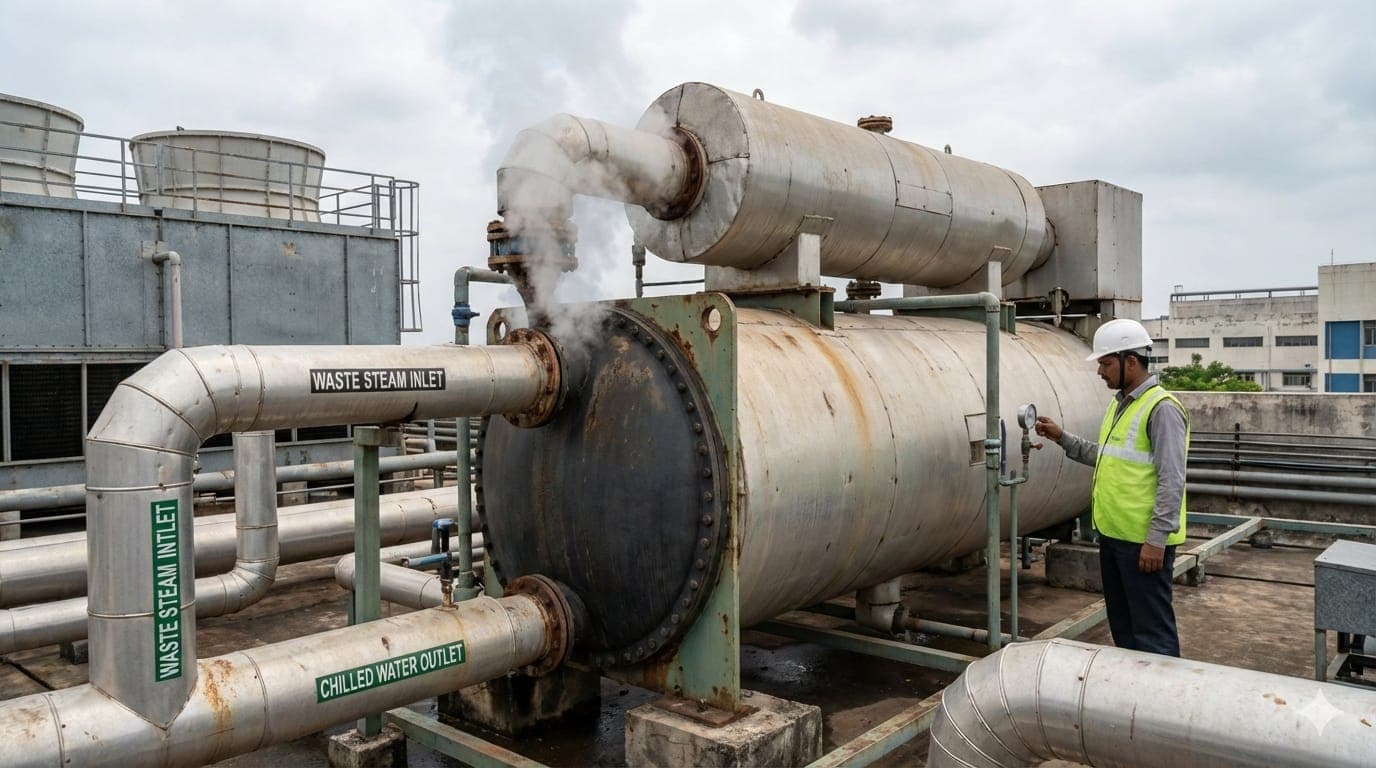
Unlike conventional chillers that rely on electricity - driven compressors, LiBr absorption chillers use thermal energysteam, hot water, natural gas, or waste heatto drive a chemical absorption cycle that produces chilled water.
The magic happens between two substances:
- Water: Acts as the refrigerant.
- Lithium Bromide: Acts as the absorbent salt, a molecular sponge with high affinity for water vapour.
How the LiBr Absorption Cycle Works
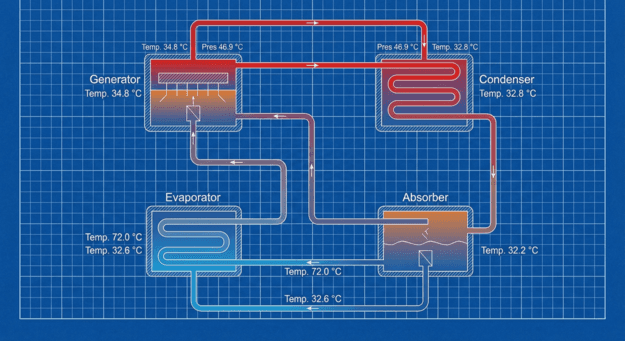
The system operates across four interconnected chambers, each performing a critical thermodynamic role:
Heat energy from steam, exhaust gases, or burners warms the dilute LiBr solution(50 - 60 % concentration), causing water to evapourate and separate.Concentrated solution(~64 - 66 %) flows to the absorber, while water vapour rises to the condenser.
Temperature range: 80-180°C depending on single or double-effect design.
Water vapour from the generator is cooled by cooling tower water, condensing back to liquid.Operating pressure is ~7 - 10 kPa(near vacuum).
Near - vacuum pressure(~1 kPa) lowers water boiling point to 4 - 7°C.Evapouration absorbs heat from chilled water circuit(12°C → 7°C), which circulates through the building.
Concentrated LiBr absorbs water vapour, releasing heat removed by cooling tower water, diluting the solution, and maintaining vacuum.Diluted solution returns to the generator via pump.
Single - Effect vs Double - Effect: Understanding Performance
| Type | Heat Source | COP |
|---|---|---|
| Single - Effect | Low - temp heat(80 - 95°C) | 0.7 - 0.75 |
| Double - Effect | High - temp heat(140 - 180°C), two - stage generators | 1.2 - 1.4 |
Note: COP indicates efficiency: 0.7 COP means 1 unit of heat yields 0.7 units of cooling. Using waste heat effectively reduces fuel costs to near zero.
The Vacuum Secret: Why Pressure Matters
- At 1 kPa, water boils at 7°Cideal for chilled water production.
- Different chambers operate at varying pressures to drive refrigerant flow.
- BROAD's vacuum systems maintain pressure balance for 20+ years of reliable operation.
Key Components That Maximize Efficiency
- Solution Heat Exchanger: Preheats dilute solution using heat from returning concentrated solution, boosting efficiency 15-20%.
- Solution Pump: Only major moving part; hermetically sealed, low electricity usage (0.01-0.02 kW/ton), minimal maintenance.
- Purge System: Removes non-condensable gases to maintain vacuum integrity, preventing performance degradation.
Why BROAD Leads in LiBr Technology
- Advanced Corrosion Protection: Proprietary inhibitors and materials ensure 20+ year equipment life.
- Crystallization Prevention: Multi-stage monitoring prevents LiBr solidification.
- Industry - Leading COP: Heat exchanger optimization yields 4-7% higher COP than competitors.
- Global Proven Performance: Installations in 80+ countries, uptime>99.5% in critical applications.
Applications Where LiBr Chillers Dominate
- Process Industries with Waste Heat: Petrochemical, steel, refineries.
- Facilities with Steam Infrastructure: Utilize low-pressure steam efficiently.
- Combined Cooling, Heating & Power(CCHP): Integrates with cogeneration systems, achieving 75-85% overall efficiency.
- Green Building Projects: Supports LEED, IGBC certifications with minimal electricity consumption.
Maintenance & Environmental Advantage
Annual requirements are minimal:
- Solution sampling and analysis
- Cooling tower water monitoring
- Vacuum leak testing
- Heat exchanger cleaning every 3 - 5 years
Unlike electric chillers, LiBr chillers have no compressors.Preventive maintenance averages 0.5 - 1 % of equipment value annually.
Environmental Advantage:
- Zero Ozone Depletion Potential(ODP)
- Zero Global Warming Potential(GWP)
- Water as the refrigerantcompletely natural and safe
Discover how BROAD's LiBr absorption chillers can transform your facility’s cooling infrastructure efficiently and sustainably.
Frequently Asked Questions
What is a Vapour Absorption Chiller?
Can BROAD chillers run on waste heat?
Do you provide after-sales service in India?
Need Help With Your Cooling System?
BROAD India's engineering team can assess your facility's cooling requirements and recommend the most energy-efficient solution - from vapour absorption chillers to waste heat recovery systems.