When engineers first look at VCR vs VAR performance data, the numbers create an apparently clear verdict: VCR achieves COP 5.0–6.5, VAR reaches only 0.70–1.35. The conclusion seems obvious.
It isn't. The COP comparison between VCR and VAR is one of the most misread metrics in industrial cooling because the two numbers measure fundamentally different things.
The Difference Between VCR and VAR
The essential difference between VCR and VAR lies in how each system drives refrigerant circulation.
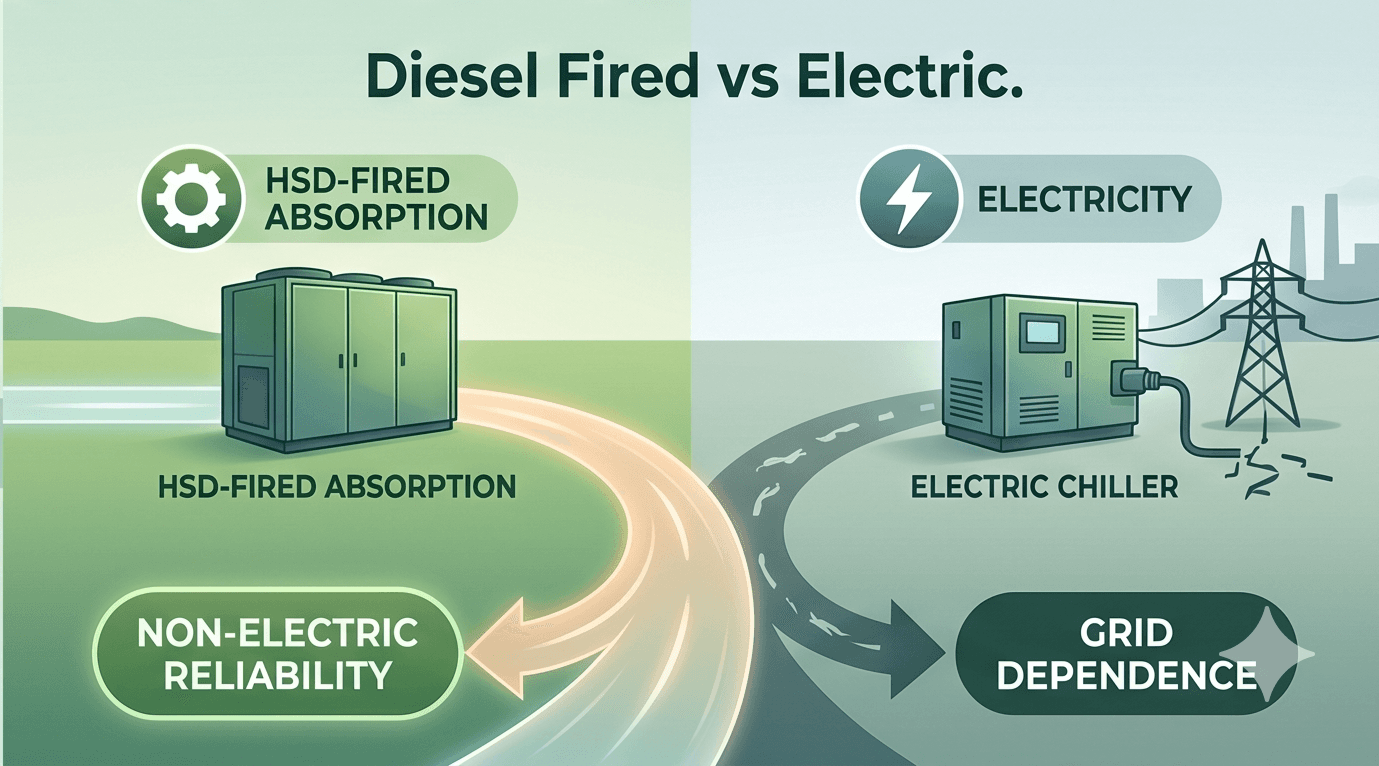
- Vapour Compression Refrigeration (VCR): Uses a mechanical compressor powered by grid electricity. Typically 85–90% of total system power goes to the compressor. High-grade electrical energy input.
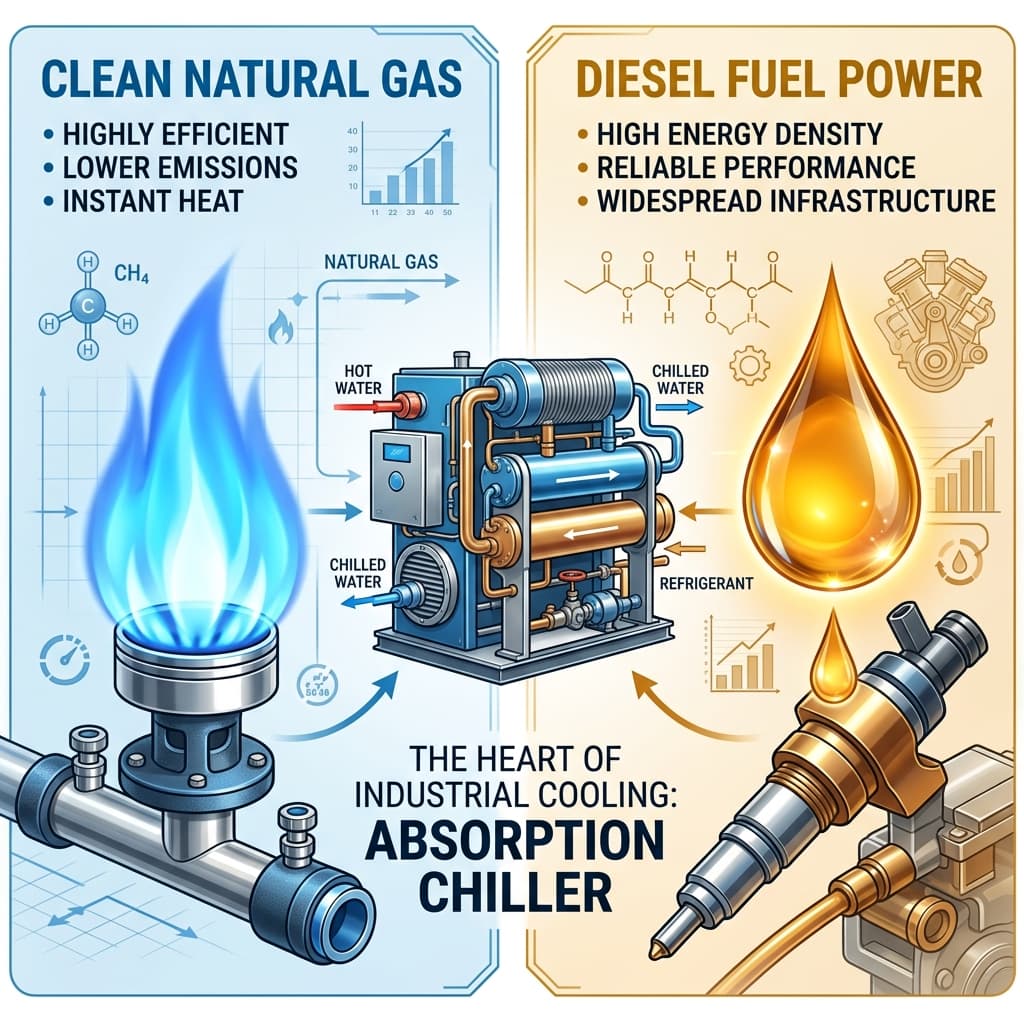
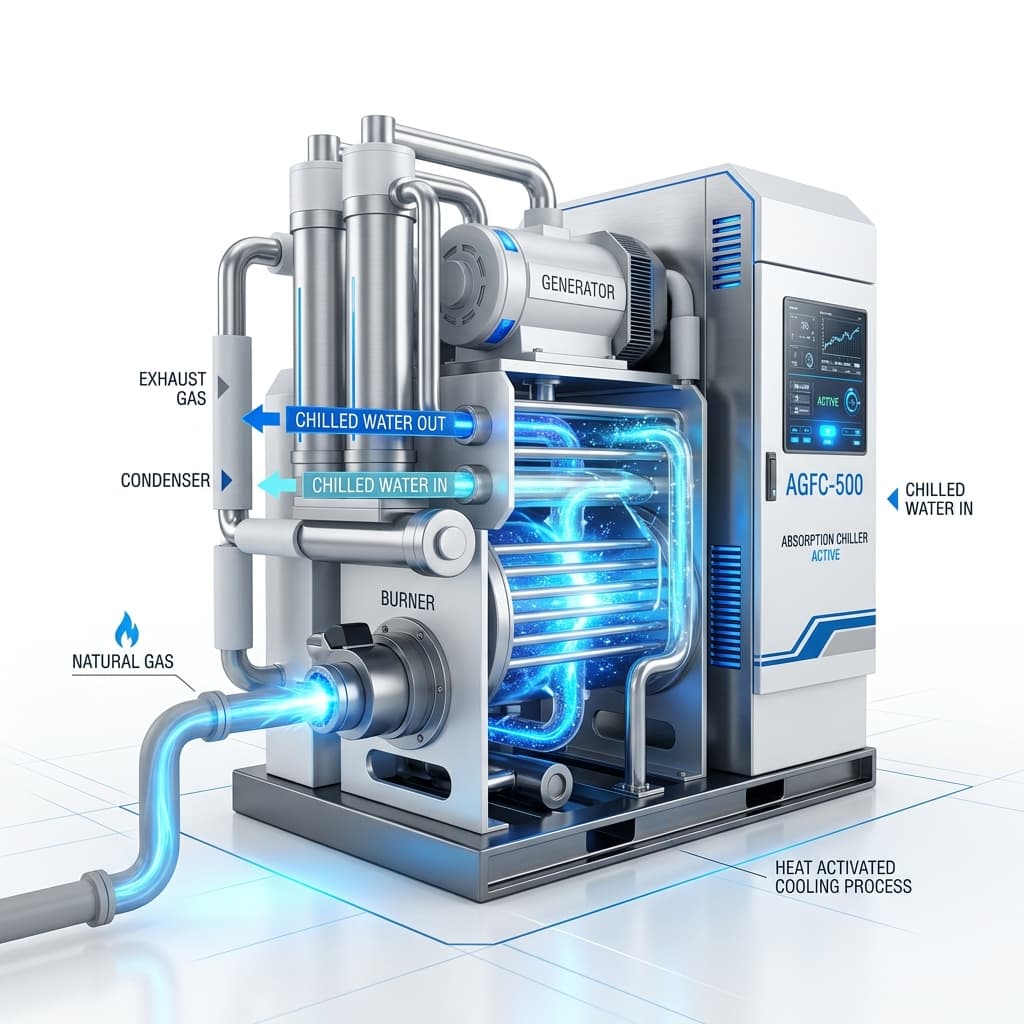
- Vapour Absorption Refrigeration (VAR): Replaces the compressor with a thermal-chemical process. Generator heated by steam, hot water, exhaust gas, or direct combustion. Electrical demand limited to auxiliary pumps and controls.
VCR consumes high-grade electrical energy. VAR consumes low-grade thermal energy often heat already being produced and discarded by industrial processes.
Why Is COP of VARs Less Than VCR?
COP (Coefficient of Performance) = Cooling Output ÷ Energy Input.
The reason VCR vs VAR COP numbers look so different is that the energy inputs are not equivalent:
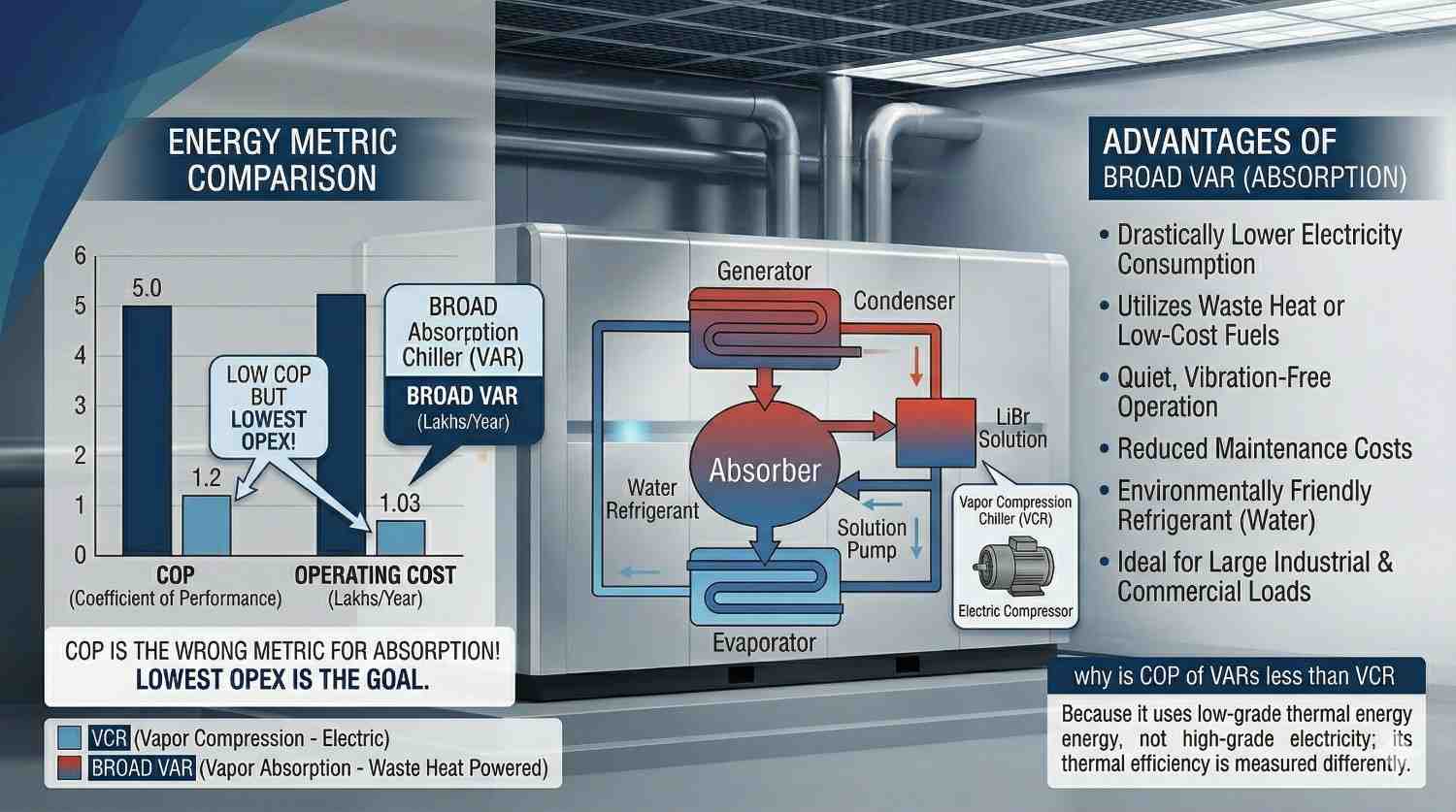
- VCR COP measures cooling output against electrical input. Electricity is high-grade energy this is why VCR achieves COP 5.0–6.5.
- VAR COP measures cooling output against thermal input. Steam, hot water, and exhaust gases are low-grade energy, thermodynamically limited by their supply temperature. BROAD single-effect systems achieve COP 0.70–0.75; double-effect systems reach 1.20–1.35.
So why is COP of VARs less than VCR? Because COP is calculated against the heat input, not against equivalent electrical energy. The two systems are not competing on the same energy currency. The comparison is structurally misleading.
What Is the Difference Between VCM and VAM?
A VCM (Vapour Compression Machine) is a compressor-based chiller consuming electrical energy. A VAM (Vapour Absorption Machine) is BROAD's thermally driven alternative. The difference between VCM and VAM is not just mechanical it is a fundamental divergence in operating economics. VCM converts expensive electrical energy into cooling. VAM converts waste or low-cost thermal energy into cooling.
The Operating Cost Reality
The advantages of VARs over VCRs become financially decisive when operating costs replace COP as the decision metric.
Annual Cost Comparison (500 TR):
Want us to build this for you?
Talk to our team- Electrical Consumption: VCR System (COP 6.0) ~293 kW | BROAD VAR (COP 0.72, Waste Steam) 15–25 kW (auxiliary only)
- Heat Source Cost: VCR System - Significant grid tariff | BROAD VAR - Near zero (waste steam)
- Annual Maintenance: VCR System - Premium compressor rates | BROAD VAR - 25–35% lower, no compressor
The "inferior" COP 0.72 produces cooling at a fraction of the VCR system's operating cost when waste heat is available. COP never captured this because it cannot compare a waste heat input against a grid electricity input.
BROAD's exhaust-fired VAM installations at facilities operating diesel generator sets have demonstrated payback periods of 2–3 years, recovering the system's capital cost through eliminated electricity consumption and reduced generator fuel burn.
COP of the Vapour Absorption System in Real Operation
In practice, COP of the vapour absorption system varies based on:
- Heat source temperature and quality higher temperature enables double-effect operation
- Cooling tower water temperature lower tower water improves COP
- Chilled water setpoint higher setpoint reduces generator load
- Ambient conditions affecting cooling tower performance
BROAD India installations operating on exhaust heat from diesel generator sets have delivered contractually guaranteed COP performance consistently across high-ambient industrial environments, including facilities in Gujarat, Tamil Nadu, and Maharashtra running 8,000+ hours annually.
The Right Comparison for Your Facility
The VCR vs VAR decision comes down to one practical question: what is your available energy source? If your facility produces steam, hot water, generator exhaust, or any waste heat above 75°C and cooling load exceeds 200 TR the economics consistently favour BROAD VAR technology. The COP number will be lower. The operating cost will not be.
Ready to optimize your industrial cooling?
Contact BROAD India's technical team to discuss your facility's cooling requirements and evaluate if absorption technology is the right fit.
Contact Us Today