How Much Can VAR Chillers Save Over VCR? A Cost Analysis
| Metric | Vapour Absorption (VAR) | Vapour Compression (VCR) |
|---|---|---|
| Primary Energy | Waste Heat / Steam / Gas | Grid Electricity |
| Electricity Cost | ~90% Lower | High (Peak Tariffs) |
| Maintenance | Low (Few moving parts) | High (Compressor wear) |
VCR vs VAR Systems: Which Delivers Lower Operating Costs for Indian Industries?
Industrial facilities evaluating vapour compression refrigeration (VCR) systems versus vapour absorption refrigeration (VAR) systems face a critical decision affecting operational costs for decades. Understanding the difference between VCR and VAR systems - and knowing the advantages of VARs over VCRS - determines whether your cooling investment becomes an asset or liability.
Here's the comprehensive VCR vs VAR comparison that reveals which technology delivers lower total costs for pharmaceutical, textile, food processing, and petrochemical operations across industrial zones.
Understanding VCR and VAR Systems: Core Differences
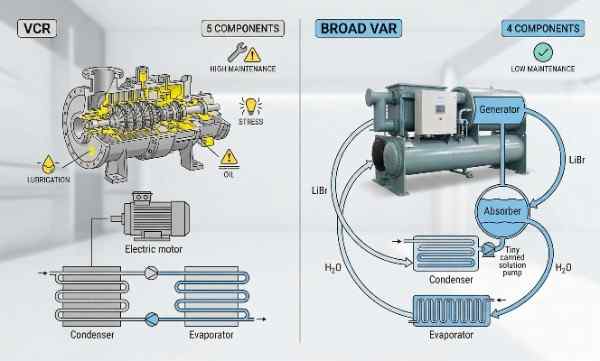
Vapour Compression Refrigeration (VCR) systems use electric motor-driven compressors to create refrigeration. The 4 major components of vapour compression refrigeration system include compressor, condenser, expansion valve, and evapourator. High-grade electrical energy powers the compression process.
Vapour Absorption Refrigeration (VAR) systems eliminate the compressor entirely. Instead, the 5 components of vapour cycle machine - generator, absorber, condenser, evapourator, and solution pump - use thermal energy (steam, hot water, or exhaust heat) to drive refrigeration through chemical absorption.
This fundamental difference between VCR and VAR (VCM and VAM) creates distinct operational and economic profiles for industrial facilities.
The Components Comparison: Mechanical Complexity
VCR System (5 Main Parts)
- Compressor - Consumes 85-90% of total system power
- Condenser - Rejects heat to cooling water or air
- Expansion valve - Reduces refrigerant pressure
- Evapourator - Produces cooling effect
- Refrigerant control - Manages system operation
The compressor - the heart and weakness of VCR - requires substantial electricity and periodic rebuilds every 10-15 years.
BROAD VAR System (4 Main Parts)
- Generator - Uses heat to separate refrigerant
- Absorber - Chemically absorbs refrigerant vapour
- Condenser - Condenses refrigerant
- Evapourator - Produces cooling effect
One of the advantages of VARs over VCRS: Fewer moving parts means 30-40% lower maintenance costs and 20-30 year operational life versus 15-20 years for VCR systems.
Operating Cost Analysis: The Decisive Factor
| Annual Cost (500 TR) | VCR (Electric) | BROAD VAR (Waste Heat) |
|---|---|---|
| Annual Energy Cost | ₹1.62 Crores (@ ₹9/kWh) | ₹0 (Utilizing Process Steam) |
| Demand Charges | ₹43.2 Lakhs | ₹5 Lakhs (Auxiliary only) |
| Maintenance | ₹12-15 Lakhs | ₹7 Lakhs |
| Total Operating Cost | ₹2.17 - ₹2.20 Crores | ₹12 Lakhs |
Even with purchased fuel (Natural Gas), BROAD VAR systems deliver 51% lower operating costs. Utilizing waste steam (any temperature 80°C+) provides up to 94% savings.
COP Comparison: Understanding Efficiency Metrics
What is COP of the Vapour Absorption System? It measures cooling output versus energy input. However, the difference between VCR and VAR COP requires understanding different energy forms:
- VCR Systems: COP 5.0-6.5 (High-grade electrical energy)
- BROAD VAR Systems: COP 1.20-1.35 (Double-effect thermal energy)
Why is COP of VARs less than VCR? Because thermal COP measures a different energy form. The critical question isn't COP comparison - it's total energy cost. Indian reality: Using waste steam (₹0 cost) at COP 0.72 costs infinitely less than grid electricity at COP 6.0 (₹9/kWh).
The Advantages of VARs Over VCRS in Industrial Context
1. Energy Independence
Grid reliability challenges in many industrial zones make VAR's heat-driven operation a massive advantage. Maintain cooling during power outages without oversized backup generators.
2. Demand Charge Elimination
VAR systems reduce facility peak electrical demand by 95% compared to VCR systems, saving ₹32-50 lakhs annually in demand charges alone.
3. Waste Heat Utilization
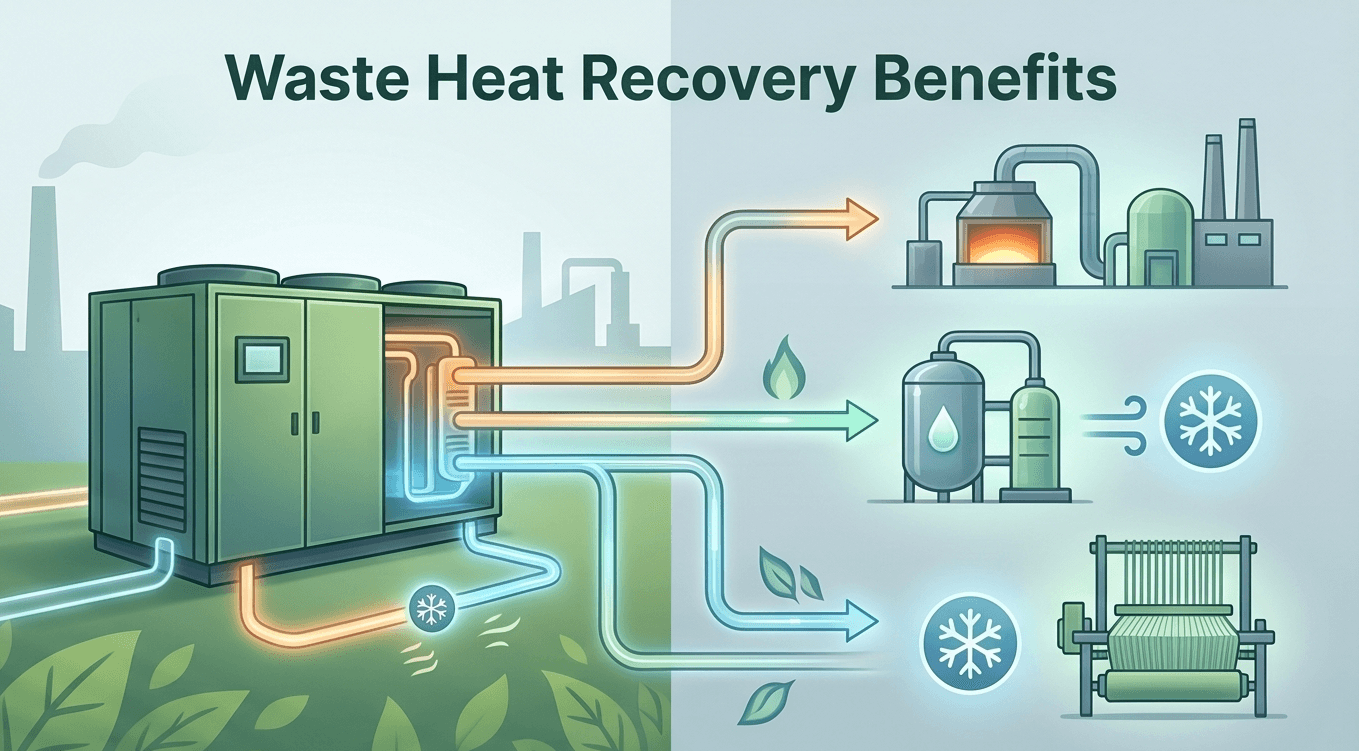
BROAD VAR captures waste energy and converts it to productive cooling - process steam exhaust (85-95°C), generator exhaust (400-550°C), or boiler blowdown heat.
Application-Specific Insights
Utilizes autoclave and sterilization waste steam. Maintains cooling during power outages, crucial for clean room compliance.
Captures dyeing process wastewater heat (75-90°C) and boiler economizer integration. Reduces annual cooling costs by ₹1.6+ crores.
Utilizes pasteurization waste heat and biogas compatibility. Prevents product spoilage during grid failures.
Capital Cost vs Operating Cost Reality
Initial CAPEX: VCR ₹4.5-5.5 Cr | BROAD VAR ₹6.0-7.0 Cr
Simple Payback: 9-18 months based on energy savings.
20-Year Total Cost: VCR lifecycle ₹7.6 Cr | BROAD VAR lifecycle ₹6.3-7.1 Cr.
When VCR Makes Sense (The Honest Assessment)
VCR remains optimal if: No thermal energy is available, fuel supply is impractical, or electricity rates are extremely low (< ₹5/kWh). Otherwise, the advantages of VARs over VCRS deliver unbeatable economics and 56-96% lower carbon emissions.
The BROAD VAR Recommendation
For facilities with waste heat sources and year-round cooling requirements, BROAD systems deliver unbeatable economics and operational resilience. Contact us for a lifecycle cost analysis.
Talk to an EngineerThinking about upgrading your plant? If you already have a chiller and are weighing your options, read our guide on Chiller Retrofit vs Replacement in India to determine the most cost-effective path forward.
Frequently Asked Questions
What is a Vapour Absorption Chiller?
Can BROAD chillers run on waste heat?
Do you provide after-sales service in India?
Need Help With Your Cooling System?
BROAD India's engineering team can assess your facility's cooling requirements and recommend the most energy-efficient solution - from vapour absorption chillers to waste heat recovery systems.