Absorption Heat Pump: How Plants Save 20-41% on Heat
Two power plants in South Korea now heat homes using 48 megawatts of heat they used to vent straight into the air.
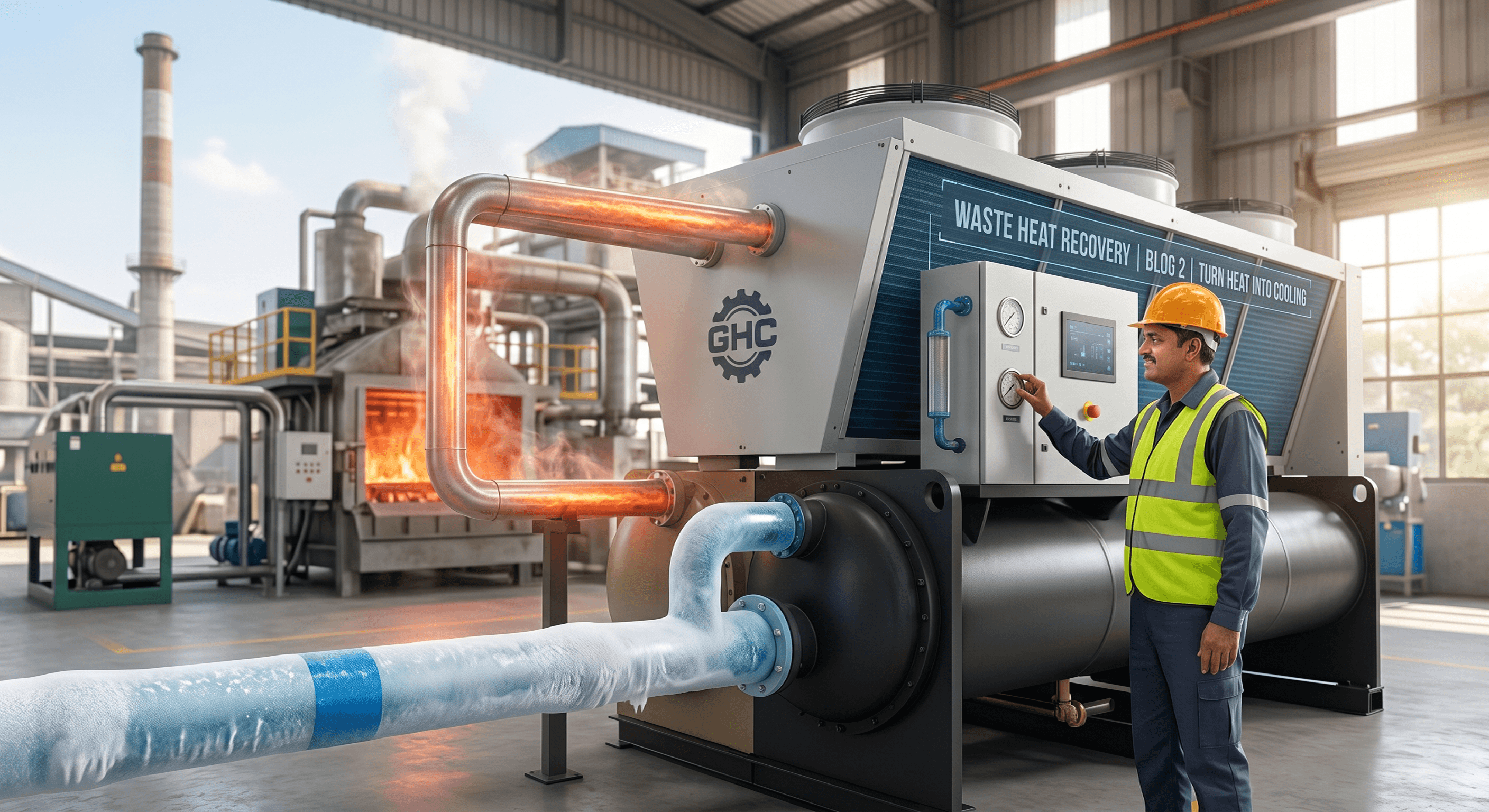
That heat came from condenser cooling water, a stream every power plant produces and almost none of them use. An absorption heat pump captures exactly that kind of low-grade waste heat and upgrades it into hot water, with documented industrial deployments reporting savings of 20% to 41%. This isn't a lab projection - it's running today across paper mills, dyeing plants, and district heating networks in three countries. This guide breaks down how the technology works and what five real installations actually achieved.
From Wasted Heat to Hot Water: How Plants Save 20-41%
An absorption heat pump converts low-grade waste heat - typically 15-50°C cooling water or process discharge - into usable hot water at 70-95°C, using a heat-driven cycle instead of an electric compressor. For industrial plants and district heating operators, that conversion routinely delivers energy savings of 20% to 41%, and it is already running at meaningful scale across multiple countries. This guide walks through how the technology works and what five real deployments actually achieved.
How does an absorption heat pump turn waste heat into hot water?
It uses the same lithium bromide-water absorption cycle found in absorption chillers, but configured to deliver heat output instead of cooling. Low-grade waste heat - from a power plant's cooling water, a process discharge stream, or flue gas - drives the cycle, while the heat absorbed during the process is upgraded and delivered as hot water at a higher, usable temperature.
This upgrade is the core trick: a heat pump doesn't just transfer heat, it raises its temperature using additional driving heat, much as a mechanical heat pump raises temperature using electricity. The single-effect absorption design used in most industrial deployments carries a typical rated heating COP of 1.7, accepting heat sources as low as 15°C and delivering supply temperatures up to 95°C, according to peer-reviewed analysis published on ScienceDirect.
What deployments prove this works at industrial scale?
Five independently documented BROAD absorption heat pump installations, verified in ScienceDirect's review of industrial heat-pump technology, show the range of scale and application. A paper factory in Thailand recovers 3.3 MW of low-temperature waste heat from cooling water to produce water at 85°C for preheating makeup water.
Two thermal power plants in South Korea jointly recover about 48 MW of heat rejected by condenser cooling water. A dyeing-process eco-park, also in South Korea, recovers roughly 24 MW of heat to deliver water at 83°C for district heating, while a separate South Korean energy plant recovers 24 MW from gas-turbine exhaust for the same purpose. In Beijing, a district heating center recovers 4.7 MW from boiler exhaust to produce water at 60°C for the city network.
| Deployment | Heat recovered | Output temperature | Application |
|---|---|---|---|
| Thailand paper mill | 3.3 MW | 85°C | Makeup water preheating |
| South Korea (2 power plants) | 48 MW | 80°C | District heating |
| South Korea eco-park | 24 MW | 83°C | District heating (dyeing process heat) |
| South Korea energy plant | 24 MW | 61°C | District heating (gas turbine exhaust) |
| Beijing district center | 4.7 MW | 60°C | District heating (boiler exhaust) |
What savings can a facility realistically expect?
Documented industrial deployments report energy savings in the range of 20% to 41%, depending on the temperature and consistency of the waste-heat source and how the recovered hot water is used on-site. The lower end applies where waste heat is modest or intermittent; the higher end applies where a large, steady low-grade stream - such as condenser cooling water in a power plant - is available continuously.
The economics work because the input is heat the facility has already paid for once. Unlike a conventional boiler, which burns new fuel to make hot water, an absorption heat pump uses heat that was otherwise being rejected to atmosphere or cooling towers, so the marginal cost of the hot water it produces is largely the cost of the small pumps that move fluid through the cycle.
Which facilities and processes fit this technology?
Any site with a large, continuous low-grade heat source and a genuine need for hot water is a strong candidate. Power plants are a natural fit, since condenser cooling water is a near-constant 15-50°C stream that would otherwise be discarded entirely. Process industries with hot effluent - paper, textile dyeing, and chemical plants among them - fit the same pattern.
District heating operators represent a growing application, particularly where networks run on supply temperatures the absorption cycle can comfortably reach. Heat recovered this way works alongside waste-heat-driven chillers and steam or exhaust-gas-driven absorption systems as part of the same underlying principle: convert energy already produced on-site into the cooling or heating the facility actually needs, instead of buying more fuel or power for it.
Frequently Asked Questions
What is an absorption heat pump used for?
How much energy can an absorption heat pump save?
What is the COP of an absorption heat pump?
What temperature waste heat is needed for an absorption heat pump?
Can absorption heat pumps be used for district heating?
Is an absorption heat pump different from an absorption chiller?
Turn Your Plant's Waste Heat Into Hot Water
If your facility already produces low-grade waste heat - from cooling water, process discharge, or exhaust - that energy could be heating water instead of being lost. BROAD India's engineers assess waste-heat streams and size absorption heat pump systems for Indian industrial conditions, with 200+ installations nationwide.
Talk to BROAD India's HVAC engineersFrequently Asked Questions
What is a Vapour Absorption Chiller?
Can BROAD chillers run on waste heat?
Do you provide after-sales service in India?
Need Help With Your Cooling System?
BROAD India's engineering team can assess your facility's cooling requirements and recommend the most energy-efficient solution - from vapour absorption chillers to waste heat recovery systems.