
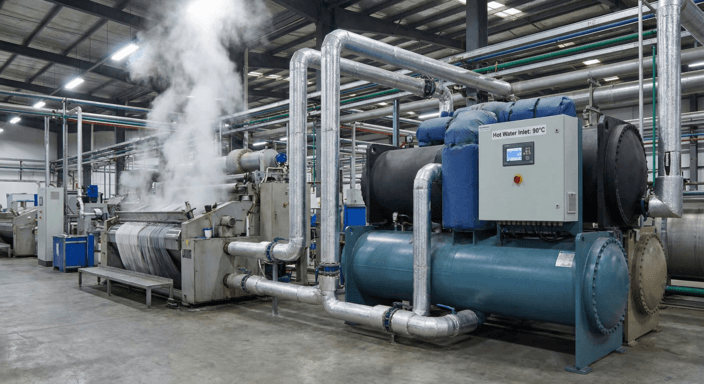
Hot Water Absorption Chiller: Applications in Textile & Food Processing
Hot Water Absorption Chiller: Applications in Textile & Food Processing
Quick Links: Textile Solutions | Food Processing | ROI Snapshot | Contact Experts
Textile mills and food processing plants generate massive amounts of hot waterthen pay premium rates for electric cooling. Hot water absorption chillers solve this by turning 80-95°C waste water into powerful refrigeration.
The Technology Advantage
Operating on low - temperature heat(80 - 95°C), BROAD's hot water VAM chillers unlock waste heat sources that steam chillers cannot use, such as boiler economizers, engine jackets, and process discharge. With a COP of 0.7-0.75, they turn "free" waste heat into valuable cooling.
Why Textile Mills Are Perfect Candidates
- Abundant Waste Heat: Dyeing and finishing consume 200-400m³ of hot water daily.
- Process Integration: Dyeing discharge (60-70°C) and boiler economizers provide ideal heat sources.
- Consistent Demand: Mills require year-round cooling for manufacturing floors.
Common Applications:
- Dyeing Process Cooling: Use waste heat to generate chilled water for fabric cooling baths.
- Floor Conditioning: Cool worker areas using boiler economizer heat.
Result: Saved ₹1.2 crores/year.Reduced boiler fuel by 18 %. Payback: 2.1 years.
Food Processing: Turning Heat into Cold
Food plants ironically burn fuel for heating(pasteurization) while buying electricity for cooling(refrigeration).Hot water VAMs bridge this gap.
- Pasteurization & Sterilization: Reclaim 85-95°C water after process use.
- CIP Systems: Utilize hot water from cleaning cycles.
- Cold Storage: Drive refrigeration for dairy/meat storage using process waste heat.
Result: Saved ₹1.65 crores/year.Reduced water use by 35 %.
Technical Integration Strategies
- Boiler Economizers: Upgrade to feed 85-95°C water to chillers.
- Cascading Heat: Use hot water for cooling first (90°C→80°C), then for boiler feedwater.
- Solar Thermal: Augment waste heat with solar collectors for near-zero operational costs.
Economics: The 400 TR Financial Snapshot
Total CAPEX: ₹3.7 Crores
(Includes equipment, integration, commissioning)
Annual Savings: ₹2.12 Crores
(Electricity + Demand Charges + Fuel)
Payback Period: 1.75 Years
Why Choose BROAD ?
- Low - Temp Efficiency: High performance even at 80-95°C sources.
- Variable Flow Logic: Handles 30-100% flow variations common in batch processes.
- Corrosion Defense: Specialized materials for process water contaminants.
- Compact Footprint: 30% smaller than conventional designs.
The question isn't whether hot water chillers make sensethey do. It's whether you can afford to keep wasting thermal energy.
BROAD India offers comprehensive energy audits to identify your hot water recovery potential.
Frequently Asked Questions
What is a Vapour Absorption Chiller?
Can BROAD chillers run on waste heat?
Do you provide after-sales service in India?
Need Help With Your Cooling System?
BROAD India's engineering team can assess your facility's cooling requirements and recommend the most energy-efficient solution - from vapour absorption chillers to waste heat recovery systems.