Ammonia Chiller vs Absorption Chiller: Key Differences Engineers Should Know
Ammonia Chiller vs Absorption Chiller: Key Differences Engineers Should Know
The terms get tangled easily. "Ammonia chiller" can mean either an ammonia-water absorption system or a conventional compressor chiller using ammonia as refrigerant. "Absorption chiller" typically refers to water-lithium bromide systems but technically includes ammonia-water variants. Engineers evaluating cooling options need clarity on what these technologies actually are and where each makes sense.
Here's the definitive comparison between ammonia-based refrigeration and BROAD's water-lithium bromide absorption technology, clarifying the confusion and revealing which applications favor each approach.
Defining the Technologies
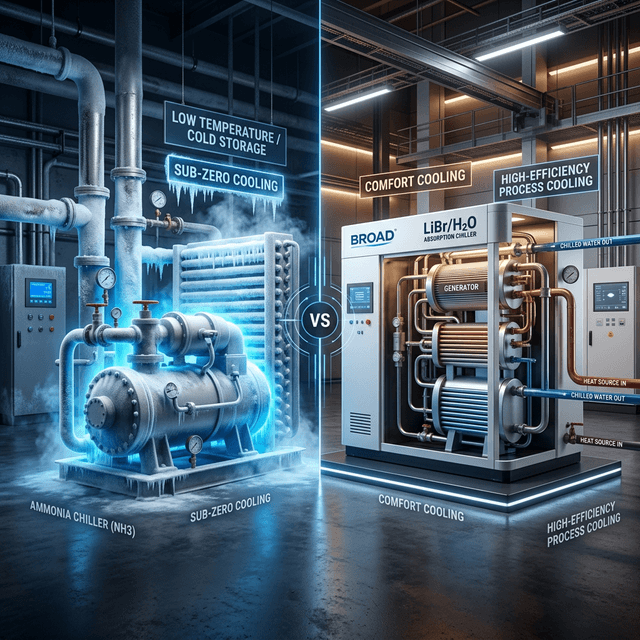
Ammonia Vapour Compression
Conventional electric chillers using ammonia (NH₃) as refrigerant. Best for industrial freezing and cold storage requiring sub-zero temperatures.
BROAD Water-LiBr Absorption
Thermal-powered using water as refrigerant (no toxins). standard for HVAC and process cooling above 4°C.
The Critical Distinction: Temperature Range
Temperature range is the primary dividing line for engineers:
- BROAD Water-LiBr Absorption: Chilled water down to 4-5°C (above freezing).
- Ammonia Systems: Can achieve -30°C or lower. Necessary for food industrial freezing and sub-zero storage.
Safety & Regulation: The Deciding Factor
| Topic | Ammonia Systems (NH₃) | BROAD Water-LiBr |
|---|---|---|
| Toxicity | Highly Toxic (IDLH: 300 ppm) | None (Water) |
| Flammability | Flammable (15-28% range) | Non-flammable |
| Compliance | PSM/RMP Mandatory | Standard Mechanical Permits |
| Insurance | Higher Premiums (+15-25%) | Standard Rates |
The 90/10 Rule
Approximately 90% of cooling applications require chilled water at 7-12°C for air conditioning or process cooling. For this majority, BROAD water-LiBr delivers optimal safety and simplicity. The remaining 10% (cold storage, freezing) genuineley need ammonia's sub-zero capabilities.
Installation & Operation
- Ammonia: Restricted setback distances; often requires separate mechanical buildings; needs certified specialized operators.
- BROAD: Can be located adjacent to occupied spaces (hotels, hospitals); standard HVAC service technicians; minimal regulatory burden.
Safety or Sub-Zero?
Contact BROAD India for a technical application review and help matching the right technology to your facility's requirements.
Talk to an EngineerFrequently Asked Questions
What is a Vapour Absorption Chiller?
Can BROAD chillers run on waste heat?
Do you provide after-sales service in India?
Need Help With Your Cooling System?
BROAD India's engineering team can assess your facility's cooling requirements and recommend the most energy-efficient solution - from vapour absorption chillers to waste heat recovery systems.
Related Articles
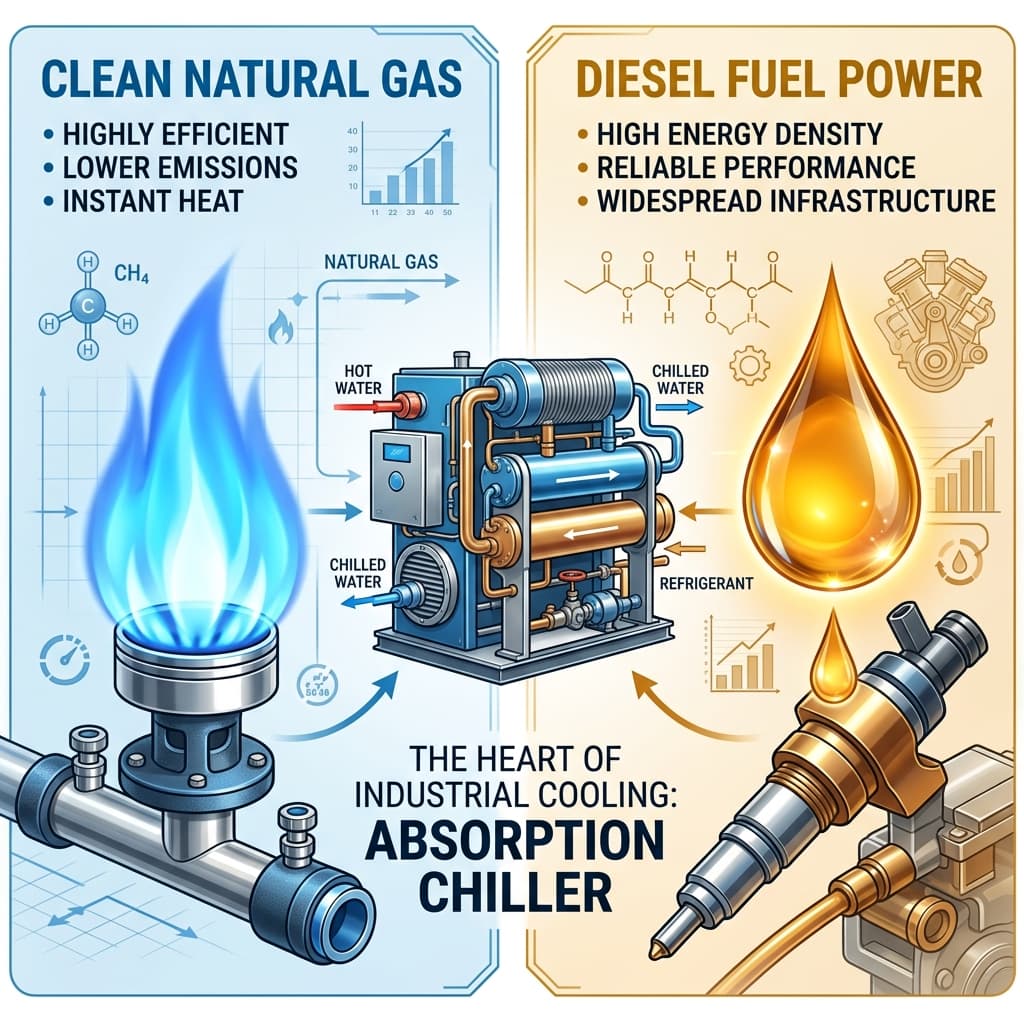
Natural Gas vs Diesel Fired Chiller: Which Is Better for Your Indian Facility?
Read Post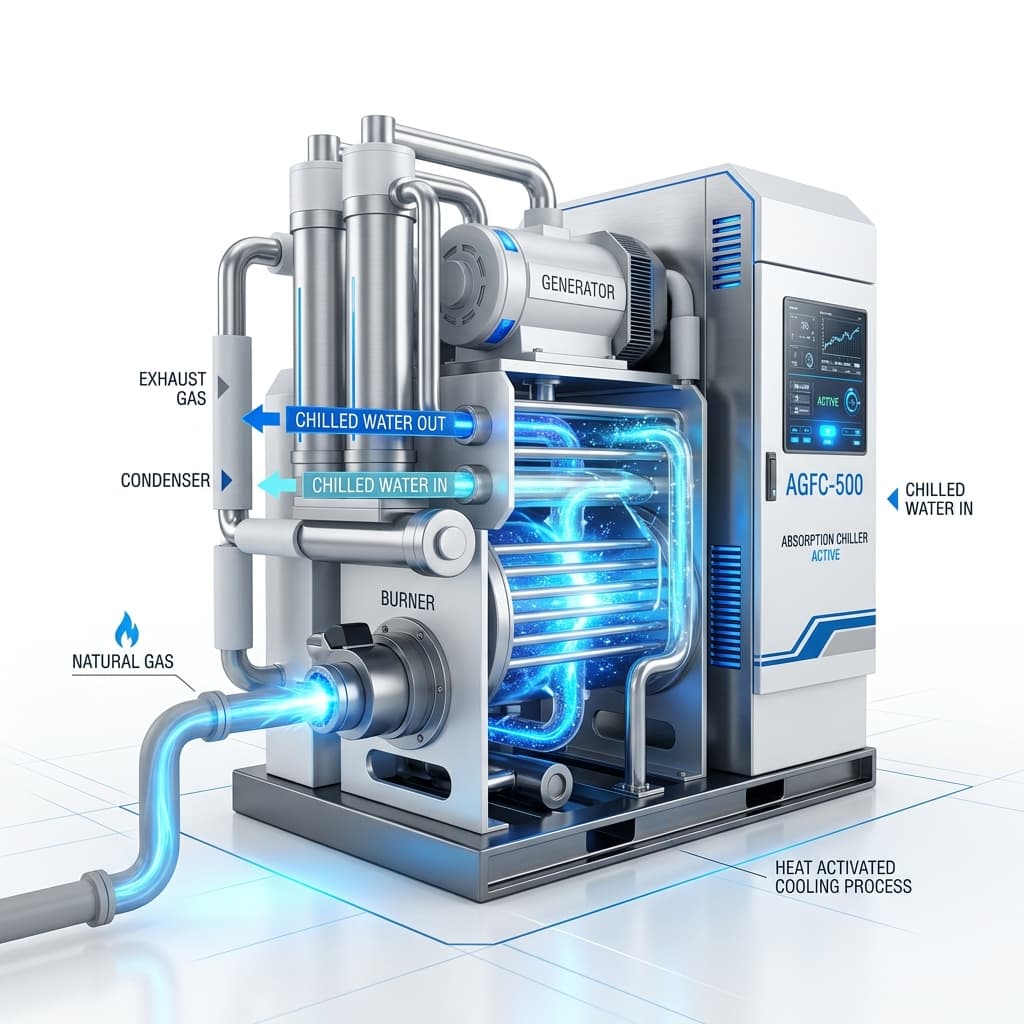
Natural Gas Fired Chiller: Complete Buyer's Guide for Indian Industries (2026)
Read Post