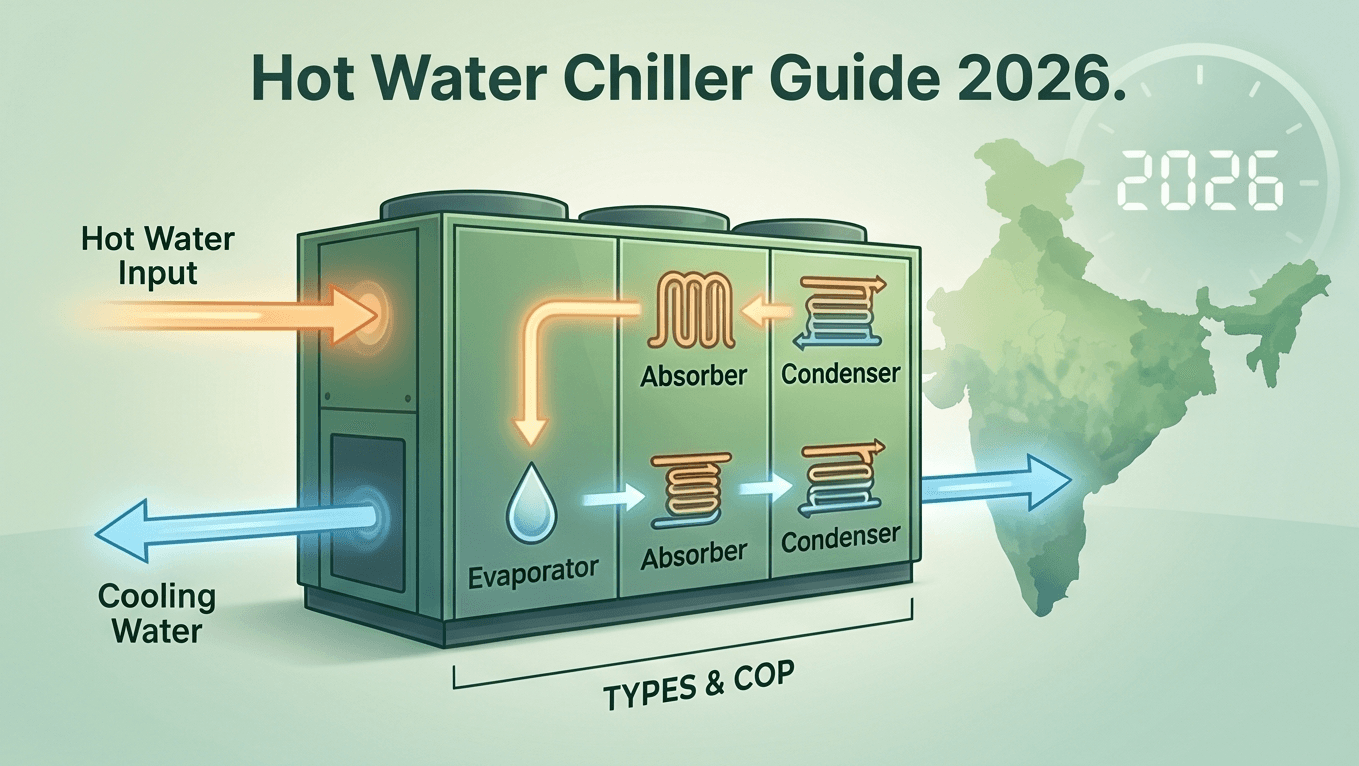
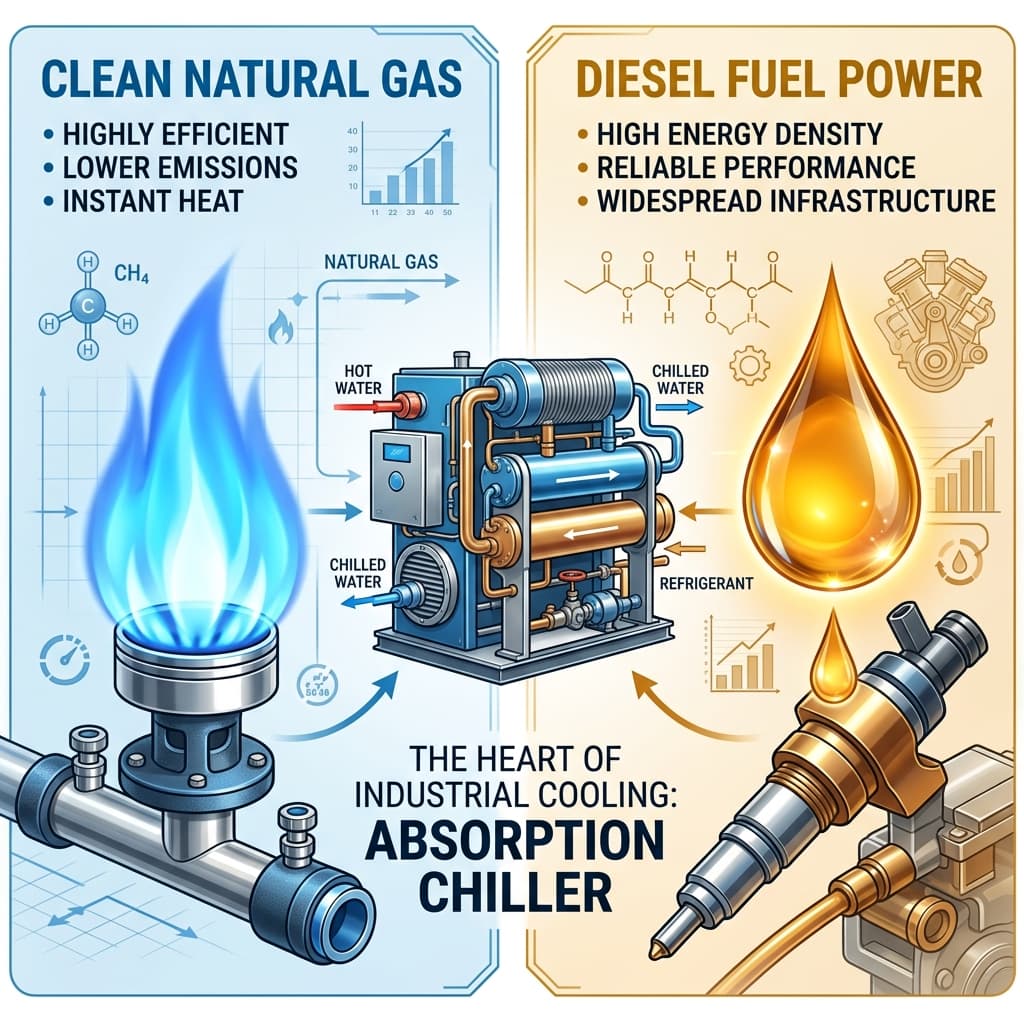
Natural Gas vs Diesel Fired Chiller: Which Is Better for Your Indian Facility?
Both natural gas and diesel can fire the same absorption chiller body. The machine is largely identical - the burner and fuel supply are the only differences. But over the life of an installation, those differences in fuel cost, infrastructure dependency, emissions profile, and operational risk add up to millions of rupees. This article makes the comparison direct and clear.
The Same Machine, Two Different Energy Conversations
BROAD India's direct-fired vapour absorption chillers come with a dual-fuel burner as standard. A single machine can operate on natural gas or High Speed Diesel - or switch between them. The variable is the fuel you burn in the burner.
This means the gas vs diesel decision is not a technology choice. It is an energy procurement and infrastructure decision. The right answer depends entirely on what is available at your facility, what it costs, and how reliable you need it to be.
Fuel Cost: The Dominant Variable
Over a 20-year operating life at large capacity, fuel cost accounts for 60–70% of the total lifecycle cost of a direct-fired absorption chiller.
| Fuel | Unit price | Energy content | Cost per kWh heat |
|---|---|---|---|
| Natural gas (PNG) | ₹45–55 per SCM | ~10.5 kWh/SCM | ₹4.3–5.2 |
| CNG (cascade) | ₹75–90 per kg | ~13.5 kWh/kg | ₹5.6–6.7 |
| HSD (diesel) | ₹88–95 per litre | ~10.0 kWh/L | ₹8.8–9.5 |
For a 500 TR machine, switching from diesel to PNG can save ₹1.0–1.5 crore annually in fuel costs alone.
Infrastructure & Operational Risk
Natural Gas (PNG)
- Pipeline-dependent (IGL, MGL, GAIL)
- Lower cost, no on-site storage
- Risk: Supply continuity during pipeline repair
- Requires medium-pressure supply
Diesel (HSD)
- Available everywhere via road tanker
- On-site storage provides fuel buffer
- Risk: High price volatility (deregulated)
- Requires PESO tank approval
Emissions: A Growing Procurement Factor
| Metric | Natural gas | Diesel (HSD) |
|---|---|---|
| CO2 per kWh heat | 0.20 kg | 0.27 kg |
| NOx emissions | Lower | Higher |
| Scope 1 emission factor | ~34% lower | Baseline |
The Decision Matrix: Gas or Diesel?
| Scenario | Recommended fuel |
|---|---|
| PNG available at adequate pressure | Natural gas |
| PNG available but supply continuity is critical | Natural gas + Diesel backup |
| No PNG currently, but planned in 2–3 years | Dual-fuel config (start on diesel) |
| Remote location / No gas pipeline | Diesel |
Maintenance Comparison
Burner maintenance differs due to fuel cleanliness:
Gas Burner
Nozzle cleaning annually. Cleaner combustion leaves less residue in the chamber.
Diesel Burner
Nozzle cleaning every 2,000–3,000 hours. More frequent particulate filters and valves inspection.
Frequently Asked Questions
Can I switch from diesel to gas mid-life?
Conclusion
If PNG is available at adequate pressure, gas is almost always the better economic and environmental choice. The machine is the same, but the 20-year fuel cost difference can exceed ₹20 crore at 500 TR scale.
Fuel Infrastructure Assessment
Contact BROAD India to confirm gas availability and run a fuel-cost comparison for your facility.
Frequently Asked Questions
What is a Vapour Absorption Chiller?
Can BROAD chillers run on waste heat?
Do you provide after-sales service in India?
Need Help With Your Cooling System?
BROAD India's engineering team can assess your facility's cooling requirements and recommend the most energy-efficient solution - from vapour absorption chillers to waste heat recovery systems.
Related Articles
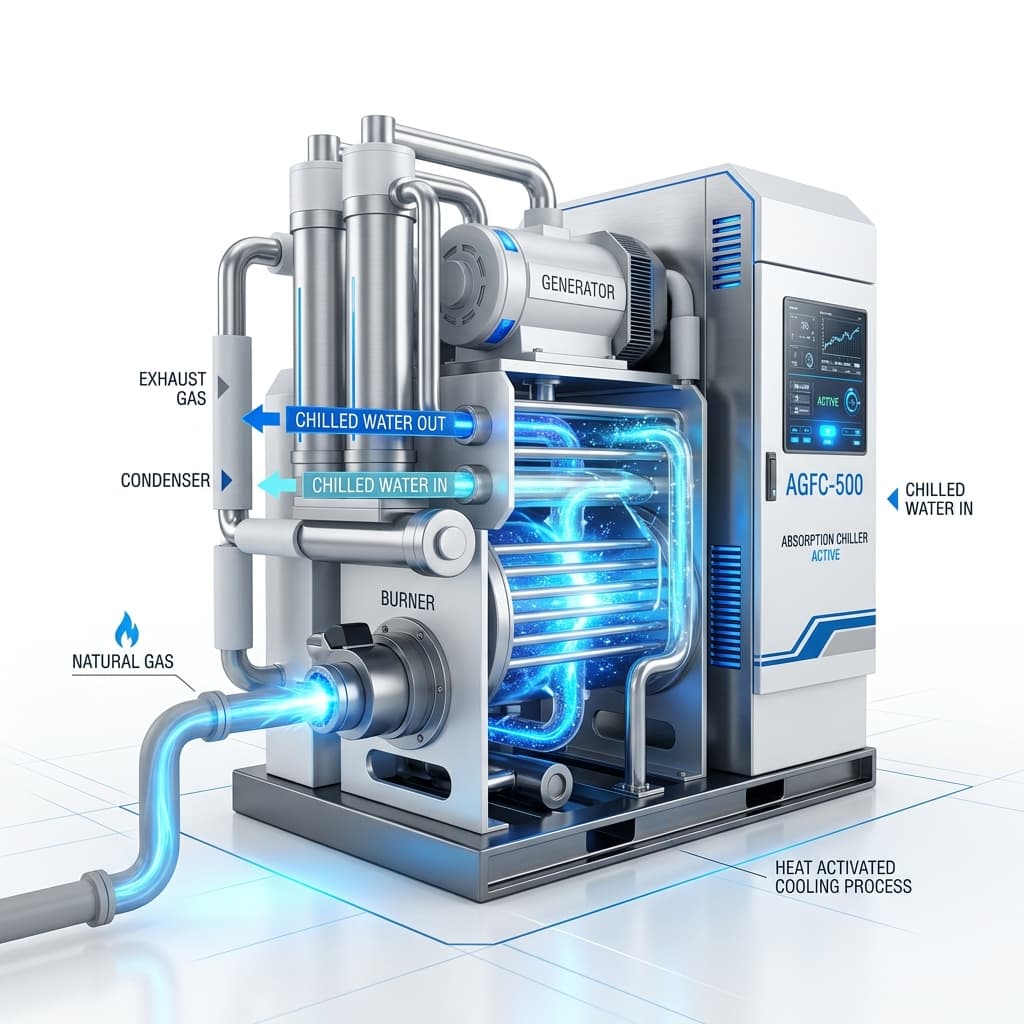
Natural Gas Fired Chiller: Complete Buyer's Guide for Indian Industries (2026)
Read Post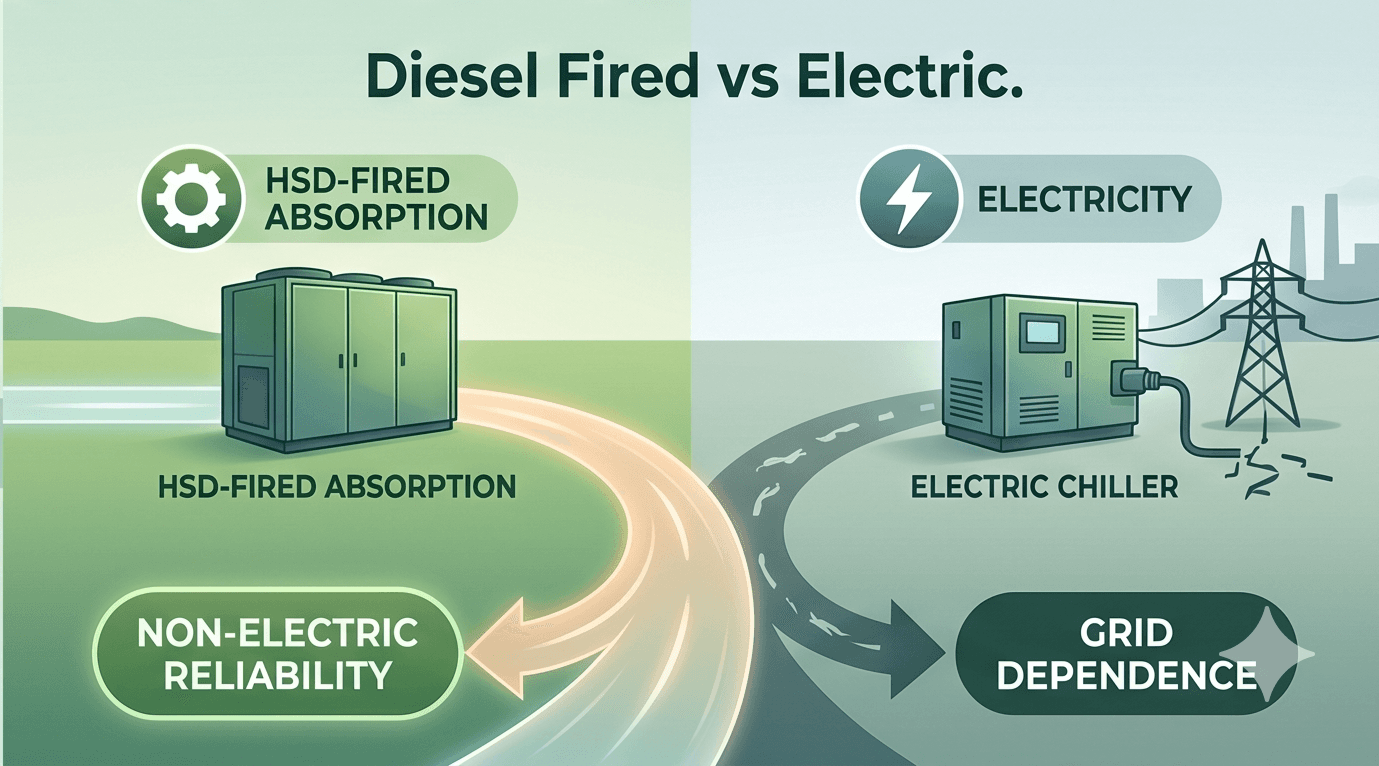
Diesel Fired Chiller Explained: When and Why to Choose HSD-Fired Absorption Over Electric
Read Post