
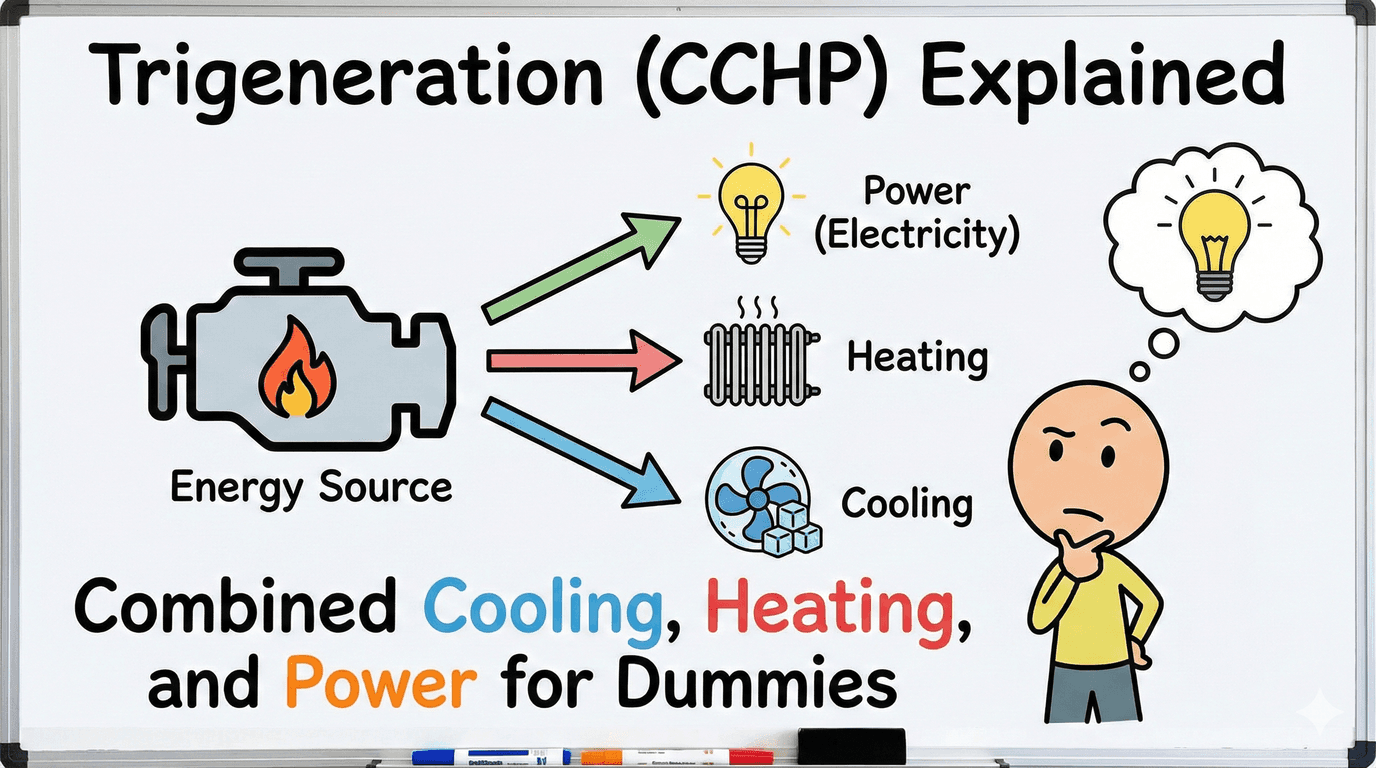
Trigeneration (CCHP) Explained: Combined Cooling, Heating, and Power for Dummies
Trigeneration(CCHP) Explained: Combined Cooling, Heating, and Power for Dummies
Quick Links: CCHP Systems | VAM Chillers | Absorption Heat Pumps | Get a Consultation
Introduction: The Energy Revolution in Your Facility
If you've ever walked through an industrial facility and wondered why some factories generate their own electricity, heating, and cooling all at once, you've encountered trigeneration.Also known as Combined Cooling, Heating, and Power(CCHP) , this technology is fundamentally changing how industries manage energy in India.
Let's break down what trigeneration means, why it matters for your business, and how companies like BROAD India are making it accessible for industrial uses across the country.
What is Trigeneration(CCHP) ?
Think of trigeneration as amulti - tasking energy system . While traditional power plants produce electricity and waste about 60-70% of energy as heat, trigeneration captures that wasted heat and puts it to use by providing three forms of useful energy from one fuel source:
| Energy Type | Source / Method | Application |
|---|---|---|
| ⚡ Power(Electricity) | Generated through combustion engines or gas turbines | Industrial equipment, machinery, lighting |
| 🔥 Heating | Hot water or steam from heat recovery | Industrial processes, space heating, sterilization |
| ❄️ Cooling | Air conditioning via absorption chillers | Process cooling, refrigeration, comfort cooling |
- Conventional Systems: 45-50% efficiency
- CCHP Systems: 80-90% efficiency
- Energy Recovery Rate: 30-45% improvement in overall system efficiency
How Does a CCHP System Work ? A Step - by - Step Guide
The process follows a clear sequence to maximize energy use:
A prime mover, usually a gas engine, gas turbine, or diesel generator, burns fuel to create mechanical energy, which drives an electrical generator.This is the power component of your CCHP system.
The combustion process produces exhaust gases at temperatures between 400°C and 600°C . Instead of letting this heat go, a heat recovery system captures it, producing:
- Hot water(80 - 95°C)
- Steam(up to 180°C for high - pressure applications)
This is where it gets interesting.The recovered heat powers a vapour absorption chiller(VAM) , which creates chilled water for air conditioning or process cooling without using more electricity.This is where BROAD's expertise is truly invaluable.
Breaking Down CCHP Components in Simple Terms
The engine or turbine that generates electricity.Think of it as theheart of the system .
Captures exhaust heat that would typically go to waste.This acts as yourenergy recycler .
Uses heat instead of electricity for cooling.BROAD's non-electric chillers shine here, turning waste heat into valuable cooling.
The part that optimizes performance across all three outputs based on real - time demand .
Real - World CCHP Applications in India
Trigeneration isn't just a concept; it's solving real problems for Indian industries today:
A pharmaceutical plant in Gujarat uses CCHP to power equipment, sterilize areas with steam, and maintain controlled environments for drug storage. Their energy costs dropped 35 % within the first year.
Dairy facilities need refrigeration for milk storage, steam for pasteurization, and electricity for operations.CCHP systems manage all three at the same time, using natural gas or biogas as fuel.
Large hotels and hospitals in cities like Mumbai and Delhi use trigeneration to provide air conditioning, hot water, and backup power, significantly cutting electricity bills during peak tariff hours.
These energy - heavy facilities require steam for dyeing, cooling for manufacturing, and steady power for machinery.CCHP integration lowers dependency on grid electricity by 60 - 70 % .
The Economics: Why CCHP Makes Financial Sense
Let's discuss numbers plainly. Consider a medium-sized industrial facility with these energy needs:
- 💡 Electricity consumption: 500 kW
- ❄️ Cooling requirement: 350 TR (tons of refrigeration)
- 🔥 Steam / hot water demand: 2 tons per hour
| Approach | System Components | Monthly Cost |
|---|---|---|
| Traditional Approach(Separate Systems) |
• Grid electricity for power • Electric chillers for cooling • Boiler for steam |
₹40 - 45 lakhs |
| CCHP Approach(Integrated) |
• Gas engine generator for power • Waste heat for steam production • BROAD VAM chiller for cooling |
₹28 - 32 lakhs |
- Monthly Savings: ₹8-13 lakhs
- Annual Savings: ₹96-156 lakhs
- Payback Period: 3-5 years (depending on fuel costs and operational hours)
Environmental Impact: Beyond Cost Savings
Trigeneration isn't just financially appealing; it's also a powerful way to reduce carbon emissions.Because CCHP systems extract more useful energy from each unit of fuel, they produce fewer greenhouse gas emissions per unit of output.
- A typical 1 MW CCHP installation can cut CO₂ emissions by 1,500-2,000 tons annually compared to separate conventional systems
- For companies tracking emission goals or aiming for net - zero, documented carbon savings show clear progress toward sustainability targets
- BROAD India's Impact: CCHP installations have collectively prevented over 100,000 tons of CO₂ emissions in industrial setups nationwide, equivalent to removing about 22,000 cars from Indian roads each year
BROAD's Approach to CCHP Systems
What makes BROAD stand out in the trigeneration market is their integration of advanced vapour absorption machines . While many CCHP providers focus primarily on power generation, BROAD has refined the cooling aspect through decades of expertise in VAM technology.
- Performance Coefficient of Performance(COP): 0.7-1.3 depending on heat source temperature
- Heat Sources Compatibility:
- Exhaust gases from diesel or gas engines(400 - 550°C)
- Hot water from engine cooling systems(80 - 95°C)
- Steam from industrial processes(0.2 - 2.5 kg / cm² pressure)
- Operational Benefits:
- Lithium bromide - water absorption cycle requires minimal maintenance
- No risk of oil contamination(unlike electric chillers)
- Quieter operation – important for continuous industrial work
Key Considerations Before Installing CCHP
While trigeneration offers many benefits, it's not a one-size-fits-all solution. Here are critical points to consider:
| Consideration | What to Evaluate |
|---|---|
| Energy Load Profile | CCHP works best when you have simultaneous needs for power, heating, and cooling.Facilities with balanced loads year - round see the most benefit. |
| Fuel Availability & Cost | Natural gas is the main fuel in India, but diesel, biogas, and producer gas from coal gasification can work too.Consistent fuel supply and stable pricing help improve ROI. |
| Space Requirements | CCHP systems need room for the prime mover, heat exchangers, and absorption chillers.Plan for around 150 - 200 square meters for a 500 kW system . |
| Maintenance Capabilities | While BROAD's VAM chillers require little attention, the prime mover (engine or turbine) needs regular maintenance. Consider the availability of skilled technicians or service contracts. |
| Grid Connection & Regulations | Most states need approval for connecting to the grid for distributed generation.Understand your state's rules and processes for captive power. |
The Future of Trigeneration in India
India's industrial sector faces pressure from rising electricity costs, carbon emission targets, and energy security issues. Trigeneration addresses all three simultaneously.
- Government Programs: Production Linked Incentive (PLI) schemes and renewable energy mandates are encouraging industries toward self-sufficiency
- Technology Advancement: BROAD is developing next-generation absorption chillers that work well at lower heat temperatures, making CCHP practical for applications that were previously marginal
- Integration Opportunities: Combining with solar thermal systems and biomass boilers is enhancing the renewable potential of trigeneration
Making Trigeneration Work for Your Facility
If you're considering CCHP for your industrial facility, start with an energy audit. Understanding your power, heating, and cooling needs throughout different seasons and production schedules is crucial.
- Thorough site assessments reviewing utility bills, production timelines, and current equipment
- Create tailored trigeneration solutions combining tested VAM technology with suitable prime movers
- Complete solutions, including installation, commissioning, and operator training
- Implementation Timeline: 6-12 months from design approval to commissioning, depending on system complexity and site preparation
Conclusion: Simplifying the Complex
Trigeneration may sound complicated, but the idea is simple: use fuel once and get three valuable outputs . It's efficient, cost-effective, and increasingly essential for competitive industrial operations in India.
As energy costs continue to rise and accountability for carbon emissions becomes necessary, CCHP systems are shifting from optional upgrades to essential strategies.The technology has matured from early - adopter statusit's proven, practical, and profitable.
Whether you're running a pharmaceutical plant, food processing facility, textile mill, or commercial building, trigeneration deserves your consideration. The combination of:
- ✔ Lower operating costs
- ✔ Reduced emissions
- ✔ Energy independence
...creates a strong case that grows with every tariff increase and regulatory change.
Let BROAD India's experts design a tailored CCHP solution for your industrial needs.
Explore CCHP Systems | Learn About VAM Chillers | Schedule Your Free Consultation
Frequently Asked Questions
What is a Vapour Absorption Chiller?
Can BROAD chillers run on waste heat?
Do you provide after-sales service in India?
Need Help With Your Cooling System?
BROAD India's engineering team can assess your facility's cooling requirements and recommend the most energy-efficient solution - from vapour absorption chillers to waste heat recovery systems.