
Overview
About the Solar-Driven Vapour Absorption Chiller
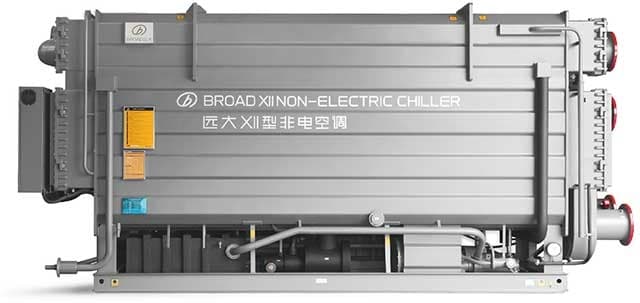
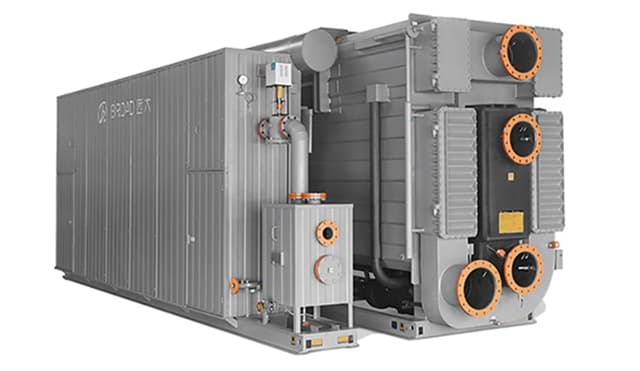
Solar-Driven Absorption Chiller
A solar-driven absorption chiller uses solar thermal collectors (such as parabolic troughs or evacuated tubes) to heat water to 70–95°C. This solar-heated water is then fed directly into a single-stage lithium bromide absorption chiller to drive the cooling cycle. It is a highly synergistic technology: maximum cooling demand typically occurs during peak solar irradiance, meaning the sun provides the exact energy needed, precisely when it's needed most.
The BROAD Solar-Driven Vapour Absorption Chiller represents the pinnacle of sustainable HVAC technology. By pairing our highly efficient single-stage absorption chillers with advanced solar thermal collectors, facilities can achieve what was previously thought impossible: large-scale, commercial air conditioning powered entirely by renewable solar energy, with virtually zero electricity consumption.
Unlike solar PV (photovoltaic) systems that convert sunlight to electricity (with significant energy losses) to run conventional compressors, a solar thermal cooling system uses the sun's heat directly. This direct thermal-to-thermal conversion is significantly more efficient and requires far less physical space for the collector array. When paired with a thermal storage tank, the system can even provide continuous cooling through the night or during cloudy periods.
Key specifications
Performance at a glance
- Cooling capacity
- 100–3,300 TR
- Energy source
- Solar Thermal
- Hot water input
- 70–95°C
- Carbon emissions
- Zero
How it works
The absorption cycle, step by step
- 1
Heat input
Steam, hot water, exhaust gas or a gas/oil burner heats the generator. No compressor is needed.
- 2
Generator
The heat boils water vapour (the refrigerant) out of the lithium bromide solution.
- 3
Condenser & evaporator
The vapour condenses, then evaporates under deep vacuum, pulling heat out of the chilled-water circuit.
- 4
Absorber
Concentrated lithium bromide re-absorbs the vapour and the solution returns to the generator.
- 5
Chilled water out
Chilled water leaves for process cooling or air conditioning, with water as a zero-ODP, zero-GWP refrigerant.
Model finder
Model Specifications
| Model | Cooling Capacity | Dimensions (L×W×H) | Energy Input |
|---|---|---|---|
| Solar Single-Stage | 100 - 3,300 TR | Varies by capacity | Solar Thermal (70–95°C) |
Engineering
Key Features
Direct Thermal Utilization
Uses solar heat directly to drive the cooling cycle, avoiding the efficiency losses associated with PV-to-electric-to-mechanical conversion.
Hybrid Capability
Can be configured as a multi-energy system to automatically switch to natural gas or grid-steam backup during extended periods of low sunlight.
Thermal Storage Integration
Seamlessly integrates with insulated hot water or chilled water storage tanks to bridge the gap between solar availability and cooling demand.
Ultra-Low Power Consumption
The chiller requires less than 2 kW of electricity for internal pumps and controls - easily covered by a tiny off-grid PV panel if desired.
Zero Global Warming Potential
Uses water as the refrigerant and lithium bromide as the absorbent - 100% natural, zero ODP, and zero GWP.
Business case
Core Benefits
Ultimate Sustainability
Achieve net-zero cooling, drastically reduce scope 2 emissions, and secure highest-tier LEED or IGBC green building certifications.
Immune to Tariff Hikes
Lock in your cooling energy costs for the next 25 years. You own the energy source, completely shielding your facility from grid electricity price volatility.
Perfect Load Matching
Cooling demand naturally peaks when solar radiation is strongest, resulting in highly efficient, self-balancing system operation.
Long-Term Reliability
With no large mechanical compressors to wear out, the chiller is designed for a 25+ year lifespan with minimal maintenance.
Where it’s used
Applications
- Green Commercial Buildings
- University Campuses
- Eco-Resorts & Hotels
- Healthcare Facilities
- Government & Public Buildings
- Sustainable Manufacturing
Case studies
Recent BROAD installations
Selected projects from across India.
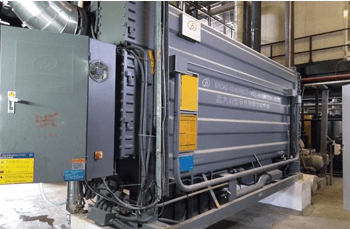 Textile
Surat, Gujarat· 2019–20
Kejriwal Geotech Pvt Ltd
1,200 TR · 7-month payback
1,200 TR of process cooling from waste CP steam
Read case study Steel
SteelBellary, Karnataka
JSW Bellary Steel Complex
500 TR Cooling Capacity
500 TR cooling capacity via waste heat recovery
Read case study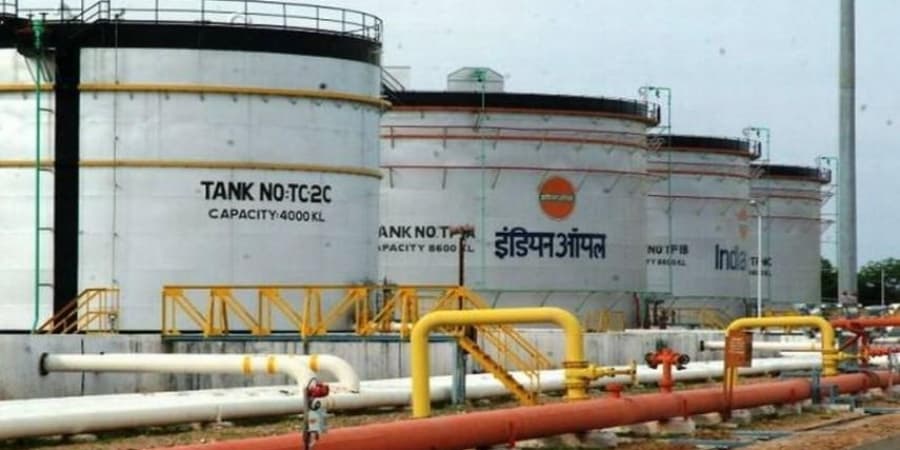 Oil & Gas
Vadodara, Gujarat
Indian Oil Corporation
Waste Heat Recovery
Refinery waste heat converted into chilled water
Read case studyFrequently Asked Questions
How does solar thermal cooling differ from using solar panels (PV) with an electric chiller?
What happens on cloudy days or at night?
What temperature does the solar hot water need to be?
Request a Quote
Get custom pricing and engineering specifications for the Solar-Driven Vapour Absorption Chiller.