Overview
About the Two-Stage Absorption Chiller
Two-Stage Absorption Chiller
A two-stage absorption chiller is an advanced cooling system that uses two sequential absorption-regeneration cycles to extract more energy from the driving heat source. This dual-cycle design achieves a higher Coefficient of Performance (COP) than single-stage models - typically 1.1–1.4 versus 0.7–0.8 - delivering more cooling per unit of input energy while using lithium bromide and water as natural, zero-GWP working fluids.
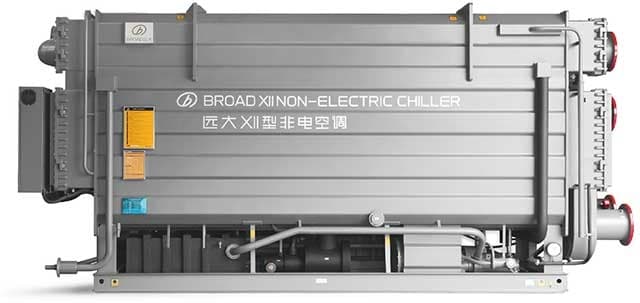
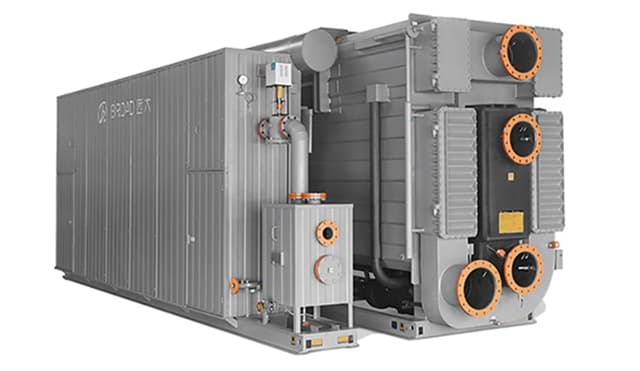
The BROAD Two-Stage Absorption Chiller is an advanced, dual-cycle system designed for high efficiency, reliability, and superior energy savings in industrial and commercial HVAC applications. Using innovative lithium bromide-water absorption technology and a two-stage process, it achieves an outstanding Coefficient of Performance (COP) of 1.1–1.4 while maintaining precise temperature control and robust part-load operation.
How the Two-Stage Process Works
In a two-stage absorption chiller, the driving heat source (gas flame, steam, hot water, or exhaust gas) first enters a high-temperature generator, where it vaporises refrigerant (water) from the concentrated lithium bromide solution. The remaining heat from this first stage then passes to a second, lower-temperature generator, where it drives a second round of vaporisation. This cascading process extracts significantly more useful cooling from the same heat input compared to a single-stage machine.
For example, a facility with 10 MW of available waste heat at 180°C can produce approximately 12–14 MW of cooling with a two-stage chiller, versus only 7–8 MW with a single-stage unit - nearly doubling the cooling output without any additional fuel consumption. This makes two-stage technology the preferred choice for facilities prioritising energy efficiency and return on investment.
Key specifications
Performance at a glance
- Cooling capacity
- 30–3,300 TR
- Efficiency
- COP 1.1–1.4
- Hot water input
- 138–180°C
- Energy source
- Gas / Steam / Exhaust
How it works
The absorption cycle, step by step
- 1
Heat input
Steam, hot water, exhaust gas or a gas/oil burner heats the generator. No compressor is needed.
- 2
Generator
The heat boils water vapour (the refrigerant) out of the lithium bromide solution.
- 3
Condenser & evaporator
The vapour condenses, then evaporates under deep vacuum, pulling heat out of the chilled-water circuit.
- 4
Absorber
Concentrated lithium bromide re-absorbs the vapour and the solution returns to the generator.
- 5
Chilled water out
Chilled water leaves for process cooling or air conditioning, with water as a zero-ODP, zero-GWP refrigerant.
Model finder
Model Specifications
| Model | Cooling Capacity | Dimensions (L×W×H) | Energy Input |
|---|---|---|---|
| BZ Model (Gas Fired) | 30–3,300 TR | Varies by capacity | Gas (0.16–0.51 kg/cm²) |
| BS Model (Steam Driven) | 30–3,300 TR | Varies by capacity | Steam (4.2–10.5 kg/cm²) |
| BE Model (Exhaust Driven) | 40–3,300 TR | Varies by capacity | Exhaust (280–532°C) |
| BH Model (Hot Water Driven) | 30–3,300 TR | Varies by capacity | Hot Water (138–180°C) |
Engineering
Key Features
Two-Stage Absorption Cycle
Dual-cycle design delivers enhanced efficiency and consistent performance, especially under varying load conditions.
Exceptional COP & Part-Load Efficiency
Achieves COP of 1.1–1.4 - significantly more cooling per unit of input energy, maximising operational savings.
Wide Application Range
Serves cooling, heating, and domestic hot water needs in large buildings, process industries, and district cooling systems.
Crystallisation Resistance
Advanced system design with anti-crystallisation controls reduces risk of lithium bromide crystallisation, improving uptime.
Precise Temperature Control
Low thermal input requirements and accurate temperature modulation for further energy optimisation.
Business case
Core Benefits
Superior Efficiency
Two-stage cycle reduces high-grade energy consumption compared to single-stage, delivering more cooling per rupee spent on fuel.
Reliable Performance
Engineered for demanding, energy-critical environments with 25+ year operational lifespans and minimal mechanical wear.
Environmental Compliance
Enhanced contribution to sustainability goals - zero-ODP refrigerant, ultra-low NOx, and lower carbon intensity per TR of cooling.
Where it’s used
Applications
- Large Commercial Buildings
- Industrial Process Cooling
- District Energy Systems
- Hospitals & Campuses
- Hotels
- Continuous Cooling Facilities
Case studies
Recent BROAD installations
Selected projects from across India.
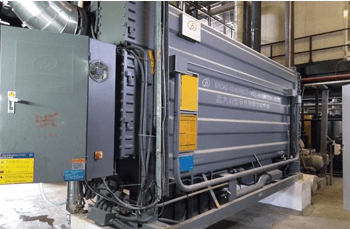 Textile
Surat, Gujarat· 2019–20
Kejriwal Geotech Pvt Ltd
1,200 TR · 7-month payback
1,200 TR of process cooling from waste CP steam
Read case study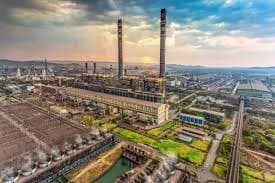 Steel
SteelBellary, Karnataka
JSW Bellary Steel Complex
500 TR Cooling Capacity
500 TR cooling capacity via waste heat recovery
Read case study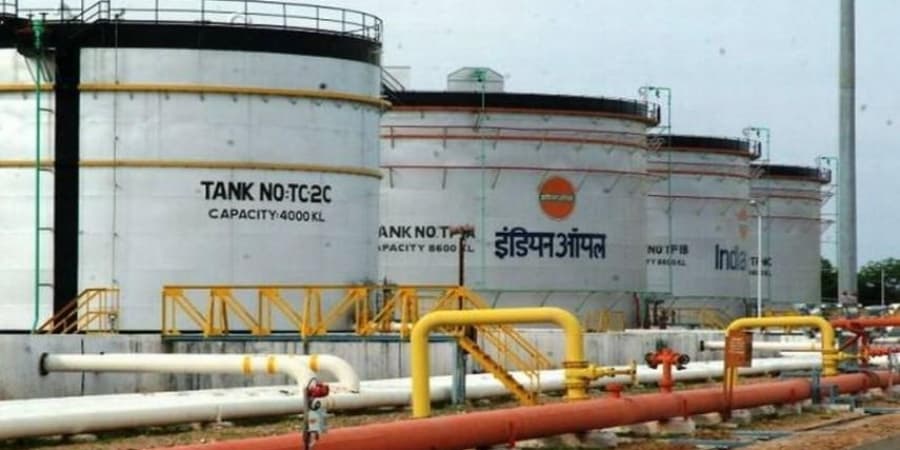 Oil & Gas
Vadodara, Gujarat
Indian Oil Corporation
Waste Heat Recovery
Refinery waste heat converted into chilled water
Read case studyFrequently Asked Questions
What COP range does a BROAD two-stage absorption chiller achieve?
What is the difference between a two-stage and a single-stage absorption chiller?
What heat sources can drive a BROAD two-stage chiller?
Request a Quote
Get custom pricing and engineering specifications for the Two-Stage Absorption Chiller.