4 Components vs 5 Components: Why VAR Systems Have Lower Maintenance Costs Than VCR
4 Components vs 5 Components: Why VAR Systems Have Lower Maintenance Costs Than VCR
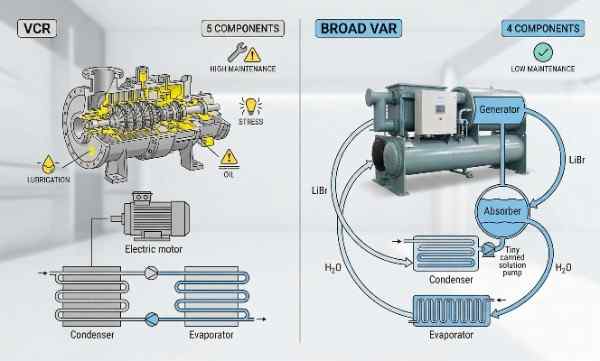
When facility managers compare vapour compression refrigeration versus vapour absorption refrigeration, component count seems trivial - what difference does one extra part make? The answer: millions in lifecycle maintenance costs. Understanding what are the 5 components of vapour cycle machine versus what are the 4 main components of refrigeration system in absorption technology reveals why BROAD's simpler architecture delivers 30-40% lower maintenance expenses over 20-30 year operational life.
The 5 Components of Vapour Compression Refrigeration (VCR)
VCR systems operate through five essential components creating mechanical refrigeration:
- 1. Compressor: The heart and weakness. Electric motor drives rotating mechanism (centrifugal impeller or screw rotors) creating high-pressure refrigerant vapour. Consumes 85-90% of total system power.
- 2. Condenser: High-pressure refrigerant vapour rejects heat to cooling water or air, condensing to liquid.
- 3. Expansion Valve: Throttling device reduces refrigerant pressure. Adds control complexity and failure points.
- 4. Evapourator: Low-pressure liquid refrigerant absorbs heat from chilled water circuit, producing cooling.
- 5. Refrigerant Circuit Controls: Manage oil return, capacity modulation, and safety interlocks.
The 4 Components of BROAD Vapour Absorption Refrigeration (VAR)
VAR systems eliminate the compressor entirely, operating through thermal-chemical absorption:
- 1. Generator: Thermal energy heats lithium bromide solution, causing water to evapourate and separate. No rotating equipment.
- 2. Absorber: Concentrated lithium bromide solution absorbs water vapour from evapourator through chemical affinity. No mechanical compression.
- 3. Condenser: Water vapour from generator condenses to liquid refrigerant. Low-pressure operation.
- 4. Evapourator: Liquid water refrigerant evapourates under vacuum producing cooling.
The difference: No compressor means elimination of the highest-maintenance, highest-failure-rate component in refrigeration systems. VAR maintenance costs are inherently lower due to this mechanical simplicity.
Maintenance Cost Comparison: 20-Year Analysis
| Maintenance Sector (500 TR) | VCR (5 Components) | BROAD VAR (4 Components) |
|---|---|---|
| Annual Routine Service | ₹8 - ₹10 Lakhs | ₹6 - ₹8 Lakhs |
| Major Overhauls/Service | ₹40 - ₹60 Lakhs (Compressor) | ₹15 - ₹25 Lakhs (Hex Cleaning) |
| 20-Year Total Lifecycle Cost | ₹2.4 - ₹3.2 Crores | ₹1.65 - ₹2.35 Crores |
The Compressor Problem: VCR's Achilles Heel
Compressors represent the single largest maintenance liability. Centrifugal surges, bearing wear, and oil contamination require specialized diagnostics and premium-rate specialists. 4 components vs 5 components engineering shows that BROAD's removal of the compressor reduces unplanned downtime risk by 65-70%.
Refrigerant Management Savings
VCR systems require expensive synthetic refrigerants, periodic charging, and regulatory leak reporting. BROAD VAR systems use water - a zero-cost, non-toxic refrigerant. No leak detection systems or specialized disposal required. 20-year savings: ₹60 lakhs - ₹1 crore.
Real-World Indian Maintenance Experiences
Total 12-year maintenance cost reduced from ₹4.2 crores (VCR) to ₹1.2 crores (BROAD VAR). Zero unplanned failures in 5 years.
Eliminated high refrigerant leak rates and compressor failures during monsoon voltage fluctuations. Annual savings: ₹7 lakhs.
The Bottom Line
BROAD's 4-component architecture delivers 25-30% lower annual service costs and extends operational life by a decade. Mechanical simplicity is the ultimate reliability.
Talk to a Maintenance SpecialistFrequently Asked Questions
What is a Vapour Absorption Chiller?
Can BROAD chillers run on waste heat?
Do you provide after-sales service in India?
Need Help With Your Cooling System?
BROAD India's engineering team can assess your facility's cooling requirements and recommend the most energy-efficient solution - from vapour absorption chillers to waste heat recovery systems.